
2026.6.15
Zen Words for Everyday Life Vol. 14
“Anjin”
Anjin is a Zen term referring to a state of peace and steadfast tranquility achieved through faith and spiritual practice, enabling one to remain unmoved, no matter what happens.
It is written with the same kanji characters as the word anshin (安心), which is used far more frequently in everyday Japanese and is defined in the Kojien dictionary as “a state of being free from worry or anxiety, in which the mind is at ease; also, a state of tranquility.” Although the meanings may appear similar, anshin is distinct in that it refers only to a temporary state of mind.
Anjin originates from an exchange between Bodhidharma, the founder of Zen, and his successor, Taiso Eka (Dazu Huike), and bears a deep connection to the story we discussed in the episode on the phrase menpeki kunen (“facing a wall for nine years”—for a more thorough understanding of the stories associated with Bodhidharma, read the articles in this series in order, starting with Mukudoku).
Eka, who would later become the Second Patriarch of Chinese Zen Buddhism, was a man of exceptional talent and profound curiosity. He exhaustively studied all manner of texts, including the Confucian Four Books and Five Classics. His goal was to attain a deep, fulfilling state of inner peace. However, his studies failed to satisfy him, and he continued to seek the deeper truths that lay beyond.
Rumors reached him that Bodhidharma had traveled from India to China and was practicing asceticism in seclusion up in the mountains. One winter day, Eka set out to visit Bodhidharma. The following episode comes from Case 41 in the Zen text The Gateless Gate.
Bodhidharma sat facing a wall. The Second Patriarch stood in the snow. He cut off his arm at the elbow and cried out, “The mind of your student has yet to find peace. I beg of you, master, give me peace of mind (anjin).” Bodhidharma said, “Bring me your mind, and I will pacify it for you.” The Second Patriarch replied, “I have searched for my mind, but I cannot grasp it.” Bodhidharma said, “Then your mind is already at peace.” (Case 41 in the Zen text The Gateless Gate).
Bodhidharma simply remained seated in Zen meditation, facing a cliff wall, and did not respond, no matter how much Eka called out to him. Nevertheless, Eka continued to wait for the master to turn around, even as the snow began to fall. Just when he thought that the master had finally turned to face him, the first words out of Bodhidharma’s mouth were cold and unwelcoming: “Why did you come here?”
Undeterred, Eka pleaded, “Please teach me the truths of Buddhism that have been passed down since the time of Shakyamuni Buddha.” Bodhidharma rebuffed him, however, saying, “This is not something that can be grasped on a passing whim; it is something that can only be understood by training as if your life depended on it.”
To prove his resolve, Eka severed his own arm on the spot and presented it to Bodhidharma. The master had no choice but to acknowledge Eka’s resolve, and finally replied, “What is it that you truly seek?”
Eka described how he had read every book he could find, learned virtually everything there was to learn, and explored every available path, yet his mind remained unfulfilled and unsettled. Bodhidharma replied, “Then bring me that troubled mind.” Eka searched, but could not find his mind. The mind is obviously not something tangible that can be carried around.
At that moment, it dawned on Eka that he had been tossed about and tormented by something invisible—something that did not “exist” in any particular time or place. This realization granted Eka the state of peace and steadfast tranquility that he had sought.
It was precisely because Eka had persevered in his search for truth, overcoming his intense struggle, that this single remark from Bodhidharma was able to bring him to enlightenment. It was thus that he became Bodhidharma’s successor and went on to spread the teachings of Zen throughout China.
It is exceptionally rare for people to suddenly attain enlightenment like Eka did. Nevertheless, this episode teaches us a way to alleviate the turbulence that can afflict our minds.
Anxiety is something that swells within us when we dwell on things that haven’t actually happened yet. We fret as we ask ourselves, “What if it doesn’t work out?”
Contemporary society offers a wide assortment of entertainment options so that we can distract ourselves from our anxieties and carry on with our lives. We can forget our worries, at least for a while. However, as soon as we return to our regular routines, the feelings of anxiety come bubbling up again.
In such moments, it can be helpful to explore whether you can assign your anxiety some tangible form. You will then realize that you have been pushed around and manipulated by something that does not have any actual substance.
Set aside your concerns about the past and the future, take on the challenges before you, and do whatever you can right now to the best of your ability. Do that, and your anxieties should fade away before you know it.
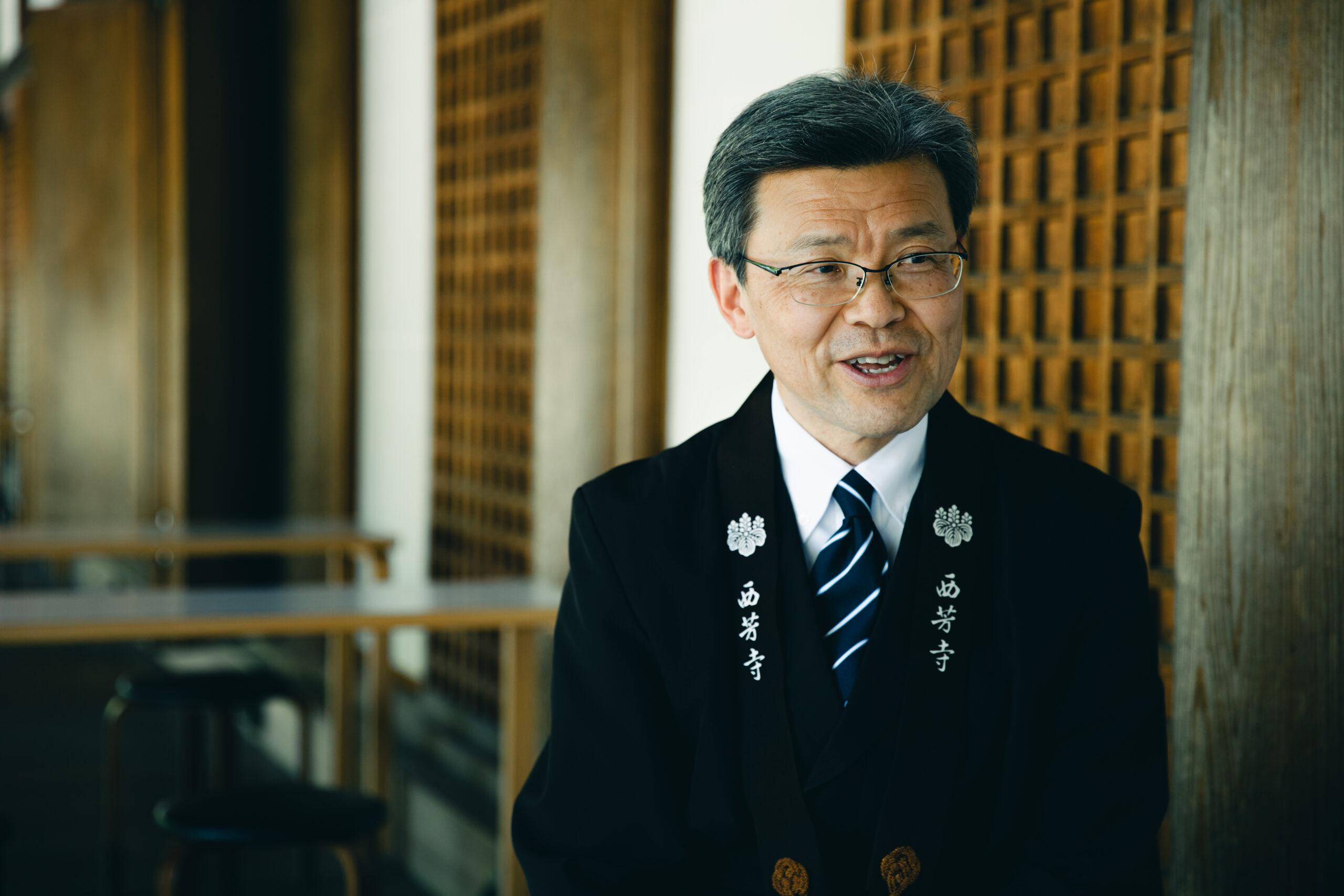
Saihoji FUJITA Ryuko