
2026.6.20
Winds of Gold—A Hundred Views of Saihoji Vol. 26
Peter MacMillan / a translator, scholar, poet
In this series of essays on Saihoji the renowned translator of Japanese poetry and poet Peter MacMillan records his impressions of and reflections on his visits to the garden throughout the four seasons. We hope that through these essays you the readers and fans of Saihoji can feel as if you are also present in the magical garden even when you cannot visit us.
Abstracting the World of the Buddha—The Art of Domoto Insho II
Have you ever thought about what makes the medium of fusuma paintings different from other paintings? Recently I attended a talk by Professor Furuta on the screens of Saihoji and my essay is based on the answers to that question in his brilliant and incisive talk. (Click here for the first part)
What makes fusuma paintings especially significant is that they resist the static viewing conditions associated with paintings that are hung on walls or those in museums. Unlike framed works fixed to a wall, fusuma paintings are inherently dynamic because they are painted on sliding doors. As the doors open and close, the composition itself changes. As viewers move through the room, the sense of depth, balance, and rhythm shifts. Natural light further transforms the work, altering color, texture, and mood according to the time of day or weather. These paintings are therefore experienced not as isolated images, but as events unfolding through the interaction of space, time, and movement.
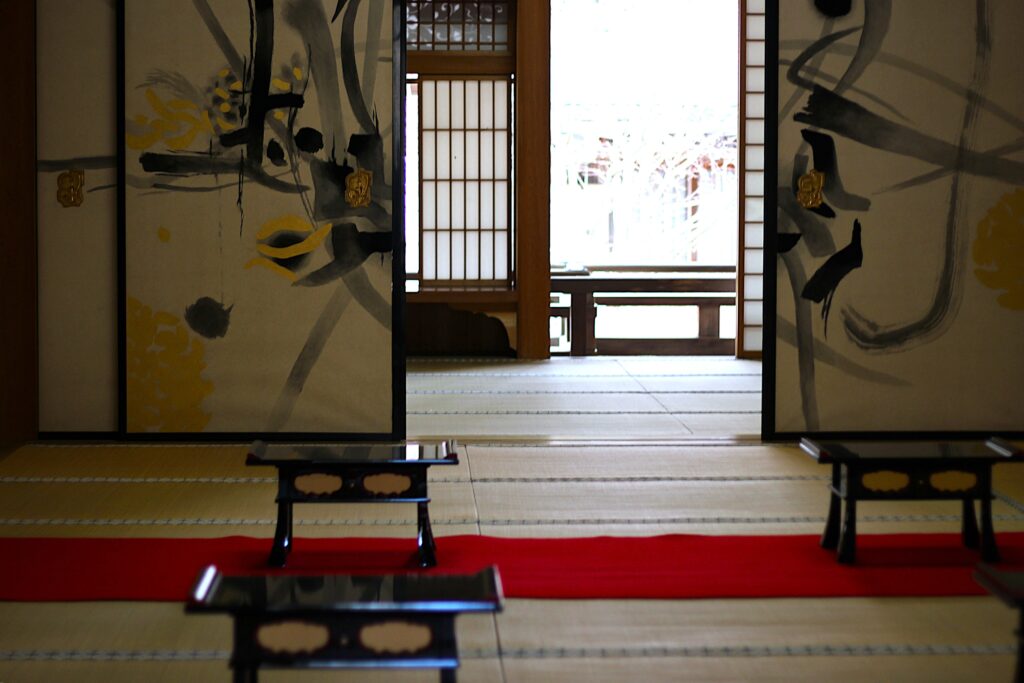
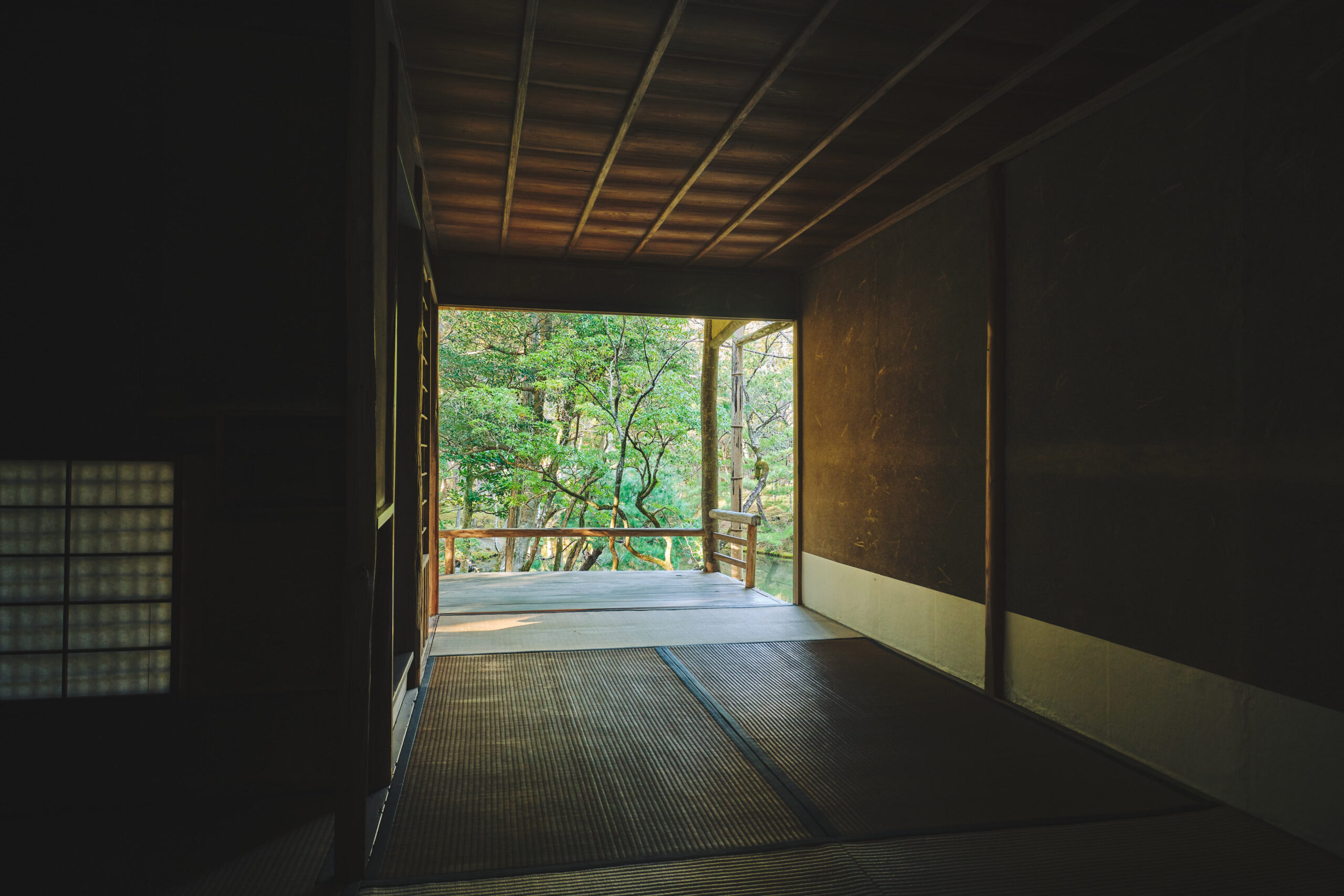
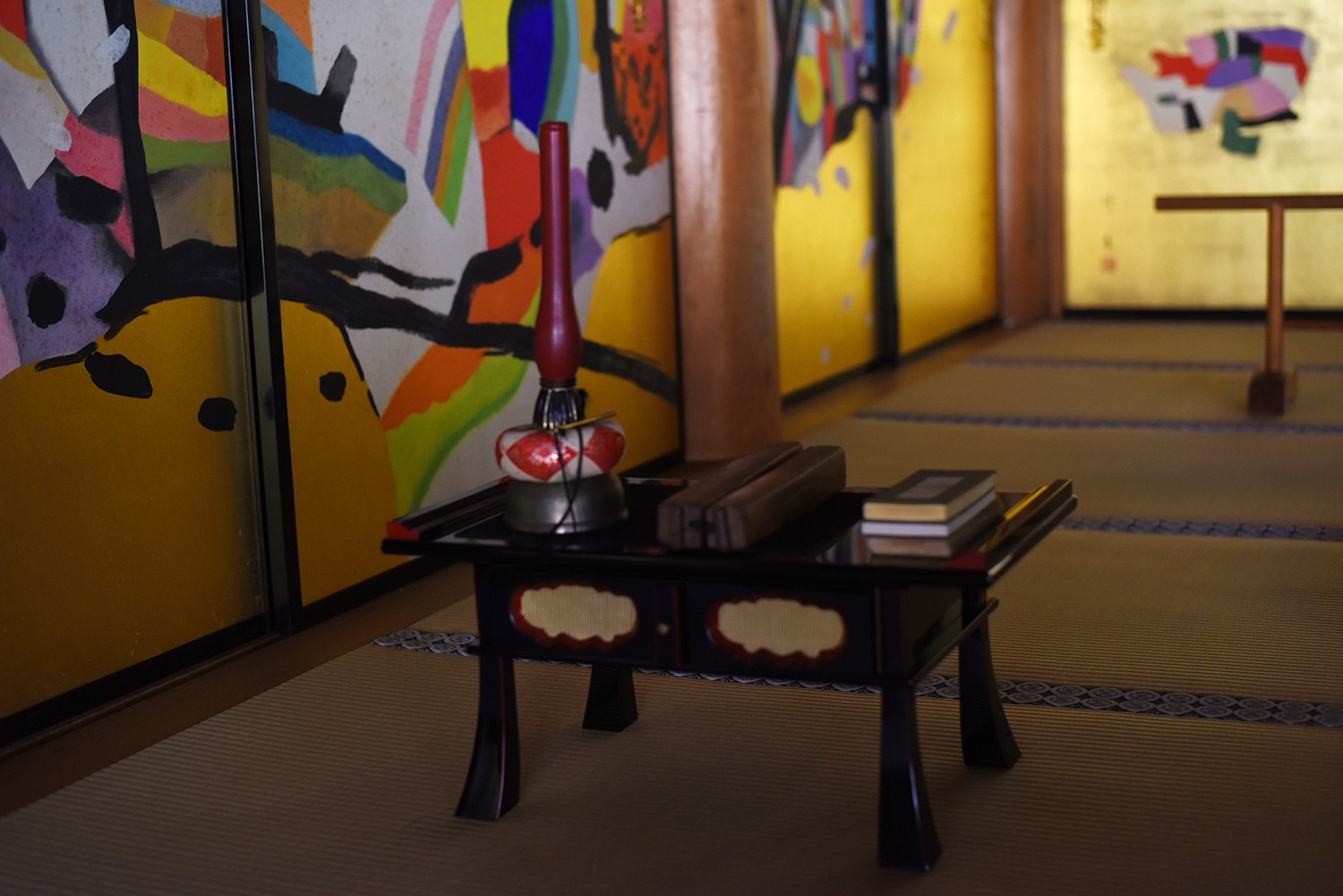
Saihoji offers a particularly compelling example of this temple-specific mode of viewing. Here, the artwork is inseparable from the architecture itself—from the layout of rooms to the pathways that guide the viewer’s body. Gold backgrounds catch and reflect incoming light, while ink wash elements emerge more fully within shadowed spaces, suggesting that the paintings were carefully calibrated in relation to the building’s structure and atmosphere. The same image reveals different expressions depending on the hour and the angle of light, while the viewer’s movement through the main hall continuously alters the emotional resonance of the work. Such paintings feel less like independent objects and more as if the Main Hall is breathing and interacting with the viewer and with nature and the universe itself.
Equally fascinating is the way these works hover between abstraction and recognition. Though abstract in form, they still evoke the presence of something tangible—lotus flowers, spiritual landscapes, traces of Buddhist symbolism. Visible brush momentum and textured strokes preserve the energy of the artist’s gesture, preventing geometry from becoming purely formal. The lotus motifs in particular suggest a grounding in Buddhist teachings and Zen thought. Rather than presenting doctrine directly, the artist deconstructs inherited symbols and reconstructs them into new visual languages. In this way, the paintings embody a profound balance—breaking away from the notion of “how things should be” while continuing to cherish the spiritual essence at their core.
And if you go to the temple on many occasions each time the screens will appear different as your experience of the pain of life deepens and you come to bow your head a little like rice stalk heavy with grains. The light and the shades of the Buddha’s world depicted in the screens change and undulate to the light and shadows of the world and appear different when breezes caress the paint, when enveloped in the sounds of falling rain, or against the backdrop of a garden covered in snow.
Domoto’s screens found their perfect home at Saihoji. Thanks to them, the message of Saihoji became richer and deeper. They added a totally new world, but also a world that was totally connected to the one that existed for almost a thousand years. They will provide energy and inspiration for Saihoji’s mission for the next one thousand years.
Peter MacMillan
Peter MacMillan is a prize-winning translator, scholar, poet, and President of The Moon is a Boat Co., Ltd.
His translation, One Hundred Poets, One Poem Each (Hyakunin Isshu), was published in 2008, winning prizes in both Japan and the United States. After that, he completed an English translation of The Tales of Ise (Ise Monogatari), which was published by Penguin in 2016. He has also published a collection of poetry entitled Admiring Fields.
Awards:
Recipient of the Donald Keene Center Special Prize for the Translation of Japanese Literature
Recipient of the 44th Special Cultural Translation Prize from the Japan Society of Translators
Nominated for the PEN Award for Poetry Translation for the English translation of The Tale of Ise (Ise no Monogatari)
Up next
Most read