

2026.5.10
What Little Moss Teaches Us
(Second Part)
Prof. Oishi & Mr. Fujita
A lecture by Professor Oishi exploring the charm of moss, which lives with both delicacy and resilience. In the first half, he spoke about the history of moss, shared fascinating facts, and explained its importance in an age of accelerating climate change. In the second half, joined by the monk Fujita Ryuko, the talk introduces the moss of Saihoji and the Zen way of living reflected in its form.
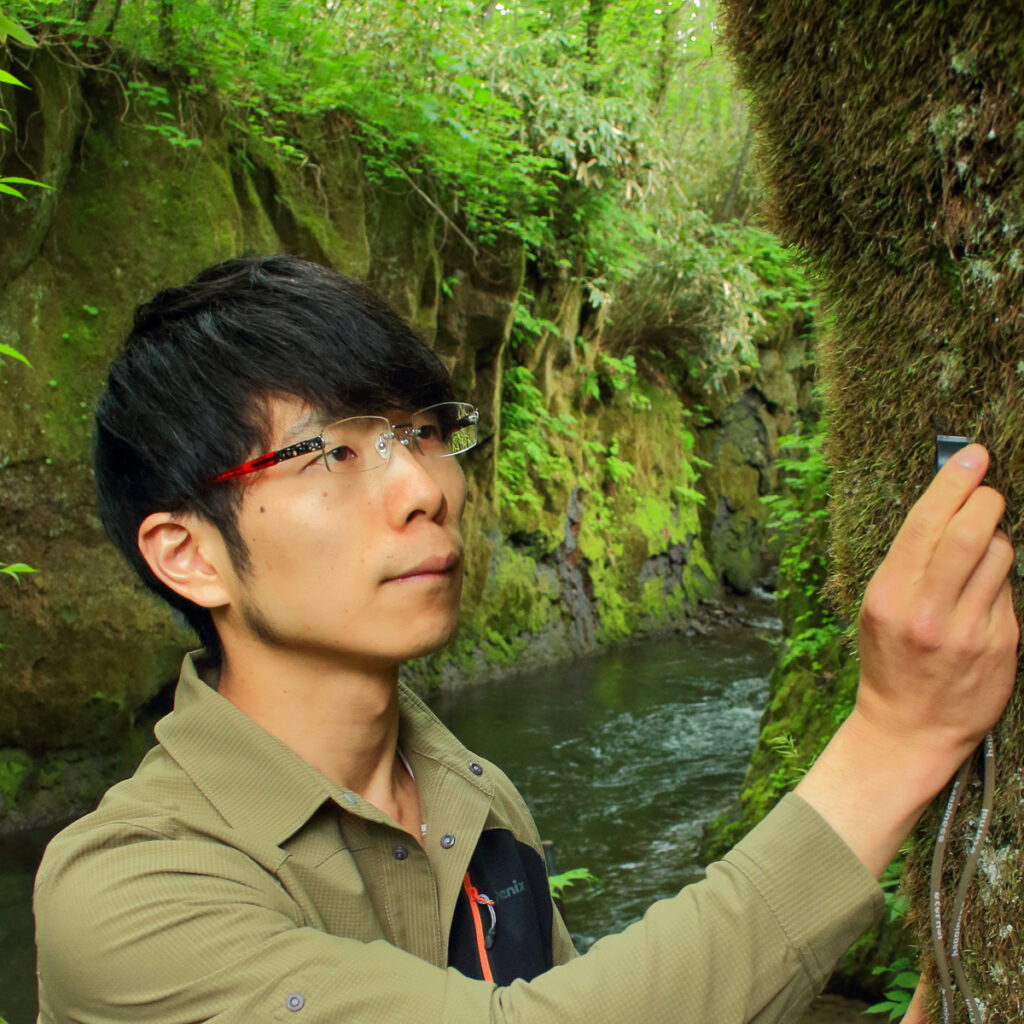
Oishi Yoshitaka
Born in Shizuoka Prefecture. He graduated from the Graduate School of Science at Kyoto University and completed the doctoral program at the Graduate School of Agriculture at Kyoto University, earning a Ph.D. in Agriculture. He is currently a professor in the Faculty of Dinosaur Paleontology at Fukui Prefectural University. He specializes in the biology of bryophytes including moss. Traveling across Japan, he unravels the secrets of how these tiny yet resilient mosses thrive. His publications include Koke ha nazeni utsukushi (Why is Moss Beautiful?) NHK Publishing, Jikkuri kansatsu tokucho ga wakaru koke zukan (A Field Guide to Mosses for Close Observation) Natsumesha, Koke zanmai mokomoko, uruuru, terameguri (Immersed in Moss: A Tour of Fluffy, Dewy Temples) Iwanami Shoten, and Koke no koe (Hear the Moss Speak: The Lesser-Known Facts About Moss) an original publication by Saihoji.
How is the moss at Saihoji cared and maintained
Oishi: Saihoji has a unique method for managing its moss during the winter. In most cases, fallen leaves are swept away from moss-covered ground, but at Saihoji they are intentionally left as they are.
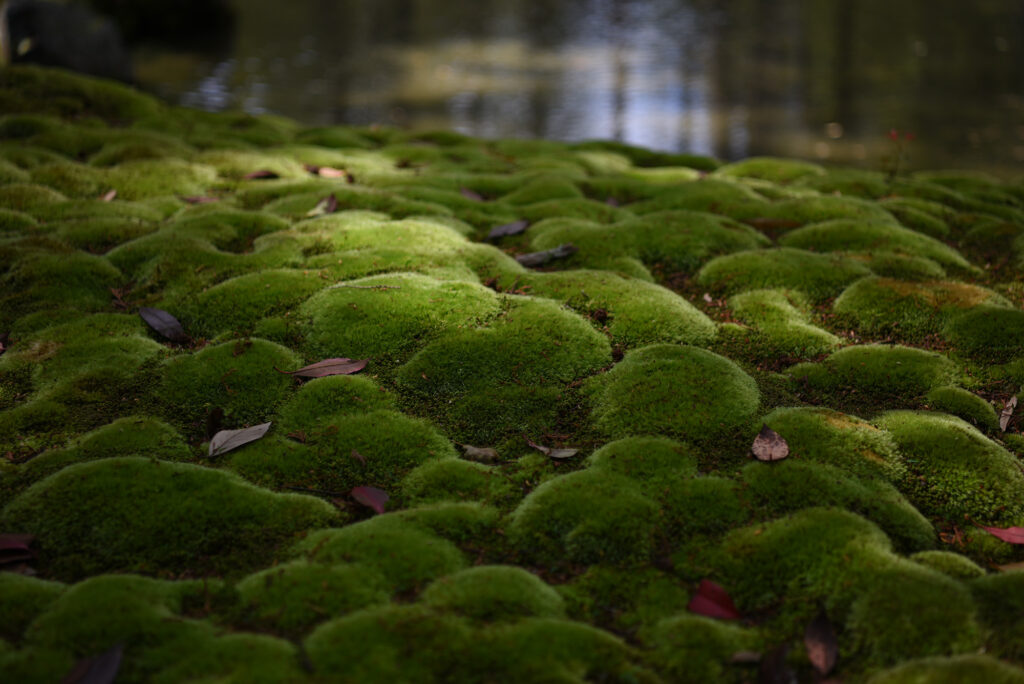
Fujita: During the winter, we keep sweeping to a minimum. Because being stepped on puts stress on the moss, we restrict access and allow the garden to rest. In addition, frost columns sometimes form in the moss-covered ground, and if they are stepped on at that time, the moss can break.
Oishi: The winter air is also very dry, so the fallen leaves help the moss retain moisture. Of course, if we left them there year-round, the moss would not be able to photosynthesize and would eventually die when spring arrives. It would also become too humid underneath during the summer. That is why we sweep the leaves away once spring comes. In winter, however, the leaves act as a protective blanket for the moss.
It’s not as common anymore, but people also used to protect the moss with a layer of pine needles. Frost columns can lift the moss and detach it from the ground, but the fallen leaves help prevent them from forming in the first place. In that respect, not sweeping during the winter makes perfect sense.

Fujita: Outside of winter, we maintain the garden primarily through sweeping and weeding. In principle, using a leaf blower to blow away fallen leaves might reduce the number of times we step on the moss and therefore lessen the damage to it. However, we also want to remain attentive to any changes or problems in the garden. For that reason, we deliberately sweep by hand so that we can keep a careful eye on the moss.
Professor Oishi, is there anything else we should be mindful of from your perspective?
Oishi: I’d say the most important thing is to avoid stepping in the same place repeatedly. In many gardens, you can see paths where the moss has worn away. Those are the routes the gardeners take during maintenance. If you walk on the same spot over and over, the moss will inevitably die off.
Fujita: The gardeners at Saihoji make a point of taking a different route each time. That’s how we prevent bare patches from forming. This is part of our thoughtful approach—or rather, our way of being in conversation with the garden.

The Main Mosses of Saihoji
Oishi: So, what specific kinds of moss can we see at Saihoji? Let me introduce ten different types.
First are the well-known hair-cap moss (cedar moss in Japanese). At Saihoji, you’ll find two types: Polytrichastrum formosum and Polytrichum commune. There is also Pyrrohobryum dozyanum (cypress moss), which thrives in moist environments and is nicknamed “weasel tail.” It’s quite beautiful and fluffy, like the tail of a small animal.
The most common moss on the grounds is the whitish Leucobryum moss (white hair moss). It has a fluffy, cushion-like appearance. The species growing at Saihoji are primarily Leucobryum juniperoideum or Leucobryum bowringii.
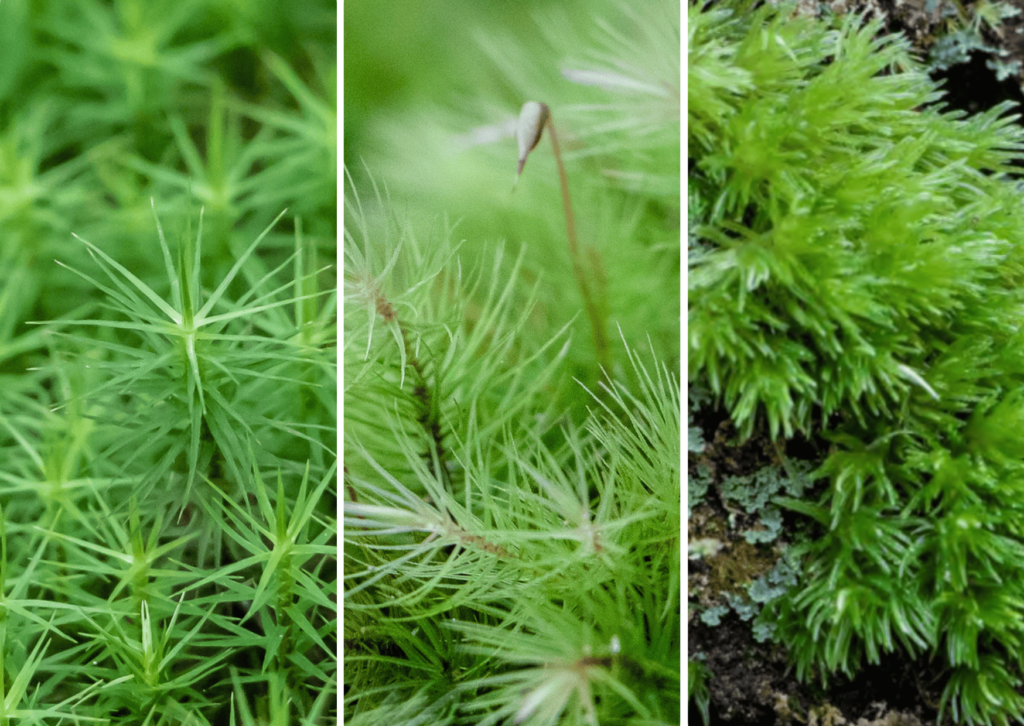
Fujita: When you sweep, you find these bits of moss that look just like white hair. I used to rake them up with the fallen leaves, but you explained how important they are. Now, I’ve started separating them and returning them to the garden. Their fluffy texture is so lovely that it makes the extra effort worthwhile.
By the way, is white hair moss the one that likes acidic water?
Oishi: That’s right. At Saihoji, that’s why it grows in fluffy mounds at the base of cedar and cypress trees. Rainwater becomes more acidic as it trickles down the trunks.
There’s also a very beautiful moss called Dicranum japonicum (tail moss). You don’t see it often in Kyoto gardens, but at Saihoji, it forms a large, impressive colony next to the Shonantei Pavilion.
We also have Calohypnum plumiforme (crawling moss), which thrives in dry areas. If you look at it with a magnifying glass, you’ll see the tips of its leaves are curled. It likes sunny spots and is often used for rooftop greening. It’s also the type of moss most people use to make moss balls.
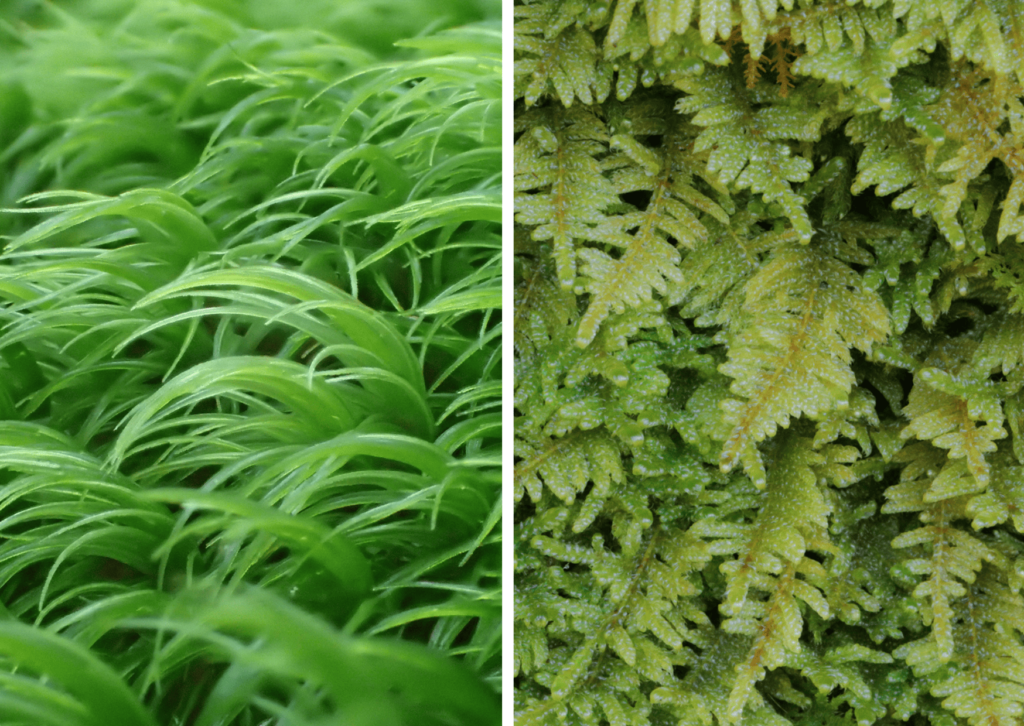
Fujita: We rarely plant moss artificially at Saihoji, but crawling moss is helpful for preventing soil erosion on slopes. I’ve found it to be a very resilient moss.
Oishi: The use of crawling moss is becoming more common in Kyoto. While gardens in the past often featured cedar moss, the types of moss being used are shifting in response to environmental changes.
Unique Mosses with Interesting Names and Appearances
Oishi: Now, I’d like to introduce a few of the more interesting mosses.
For example, there’s Bazzania liverwort (whip moss), which has a whip-like growth extending from its underside. Another is Trachycystis microphylla (small leaf lantern moss). While most plants start budding between late February and March, the small leaf lantern moss puts out new shoots around December. It does this to avoid competing with other plants for sunlight; by sprouting while others are dormant, it can get all the light it needs to survive. These new shoots are a pale emerald green, making them quite easy to spot.
Near the water, you can find Sphagnum palustre (large water moss). Gardeners might be familiar with “peat moss” as a soil conditioner. Although this species is rare, it grows in abundance here at Saihoji near the water, so be sure to look for it. It’s white and fluffy.
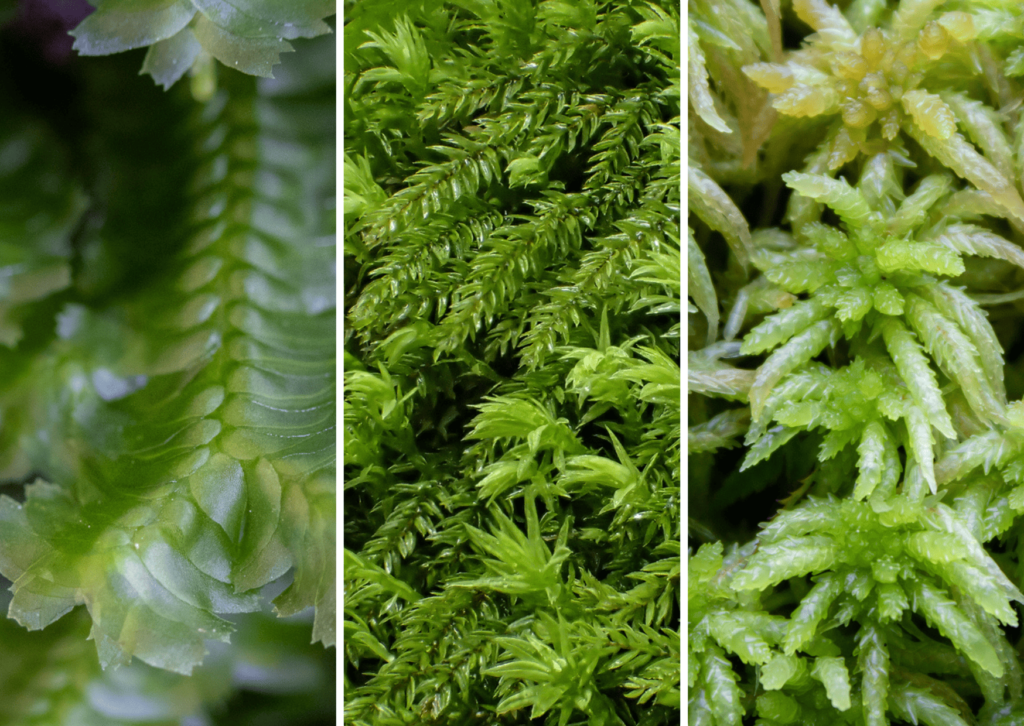
Some mosses have more elegant names, like Fissidens nobilis. Known in Japan as ho-oh-goke (phoenix moss), it is shaped like a phoenix’s tail. Then there’s Haplomitrium mnioides, also known as komachi moss, a generally round and translucent variety with a graceful presence, named after the beautiful poet Ono no Komachi.
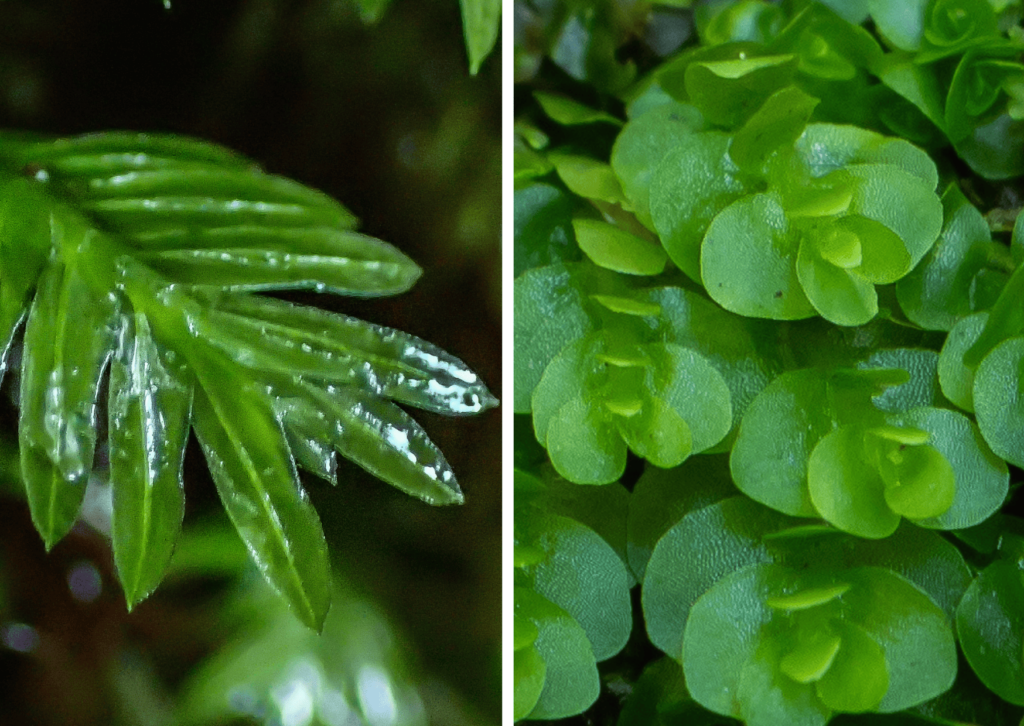
Many of the Japanese names are quite elegant. Of all the mosses at Saihoji, I personally find komachi moss to be the most beautiful name. It’s quite rare, so if you happen to spot it, consider yourself lucky.
Continually asking how to live in your given place.
Fujita: Whenever I hear Professor Oishi talk about moss, I always feel that its way of life could be the subject of a Dharma talk. The life of moss holds lessons for us humans as well. So this time, as a new challenge, I’d like to introduce some Zen phrases that we can learn from its example.
Oishi: First, there’s Hyophila propagulifera. It grows on concrete surfaces like roads, an extremely harsh environment that dries out easily and gets hot in the summer.
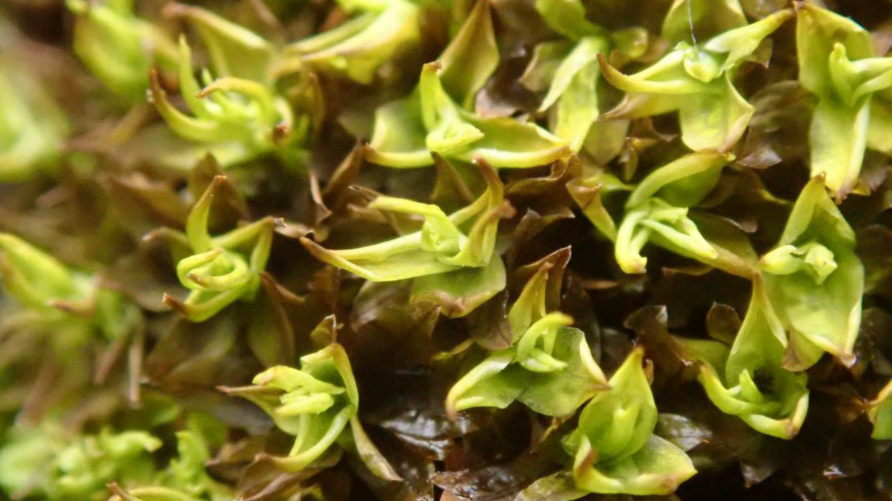
To adapt to this environment, this moss has a clever strategy. Since it dries out almost immediately after it rains, it neatly curls its leaves from the tip to retain water in the center. This allows it to hold onto moisture until the very last moment, even during the dry summer months.
By adapting to dryness this way, it can live in places where other plants struggle to take root. It’s a very admirable way to live.
Fujita: To me, this way of life reflects “hoho kore dojo,” a Zen term meaning our daily life itself is our training ground.
One important aspect of Zen practice is resourcefulness. You’re constantly challenged to consider how to engage with what’s right in front of you. You can’t just space out or mindlessly go through the motions.
Even during “samu,” the work practice at a temple, you must always be resourceful. When sweeping the garden, for example, you’ll damage the moss if you only sweep the same spot. It’s important to constantly consider the impact of your actions, keep the bigger picture in mind, and find the most effective way to do the work.
Moss can’t move from where it began its life. As a result, it must quietly contemplate how to survive right where it is. We humans also have to consider how to fulfill the roles we are given. I believe that trying to live with ingenuity in the place we find ourselves is part of the shared DNA of all living beings.
Living in Harmony with Nature
Oishi: Let me introduce two more. The next is the white hair moss I mentioned earlier. In the summer, it can dry out and cracks, completely changing its appearance. It may look dead, but the moment it gets some water, it returns to its vibrant state.
Because moss lacks a developed root system, they can’t absorb water from the soil. During long periods of sunshine, they have no choice but to wait for rain to survive, surrendering to nature.
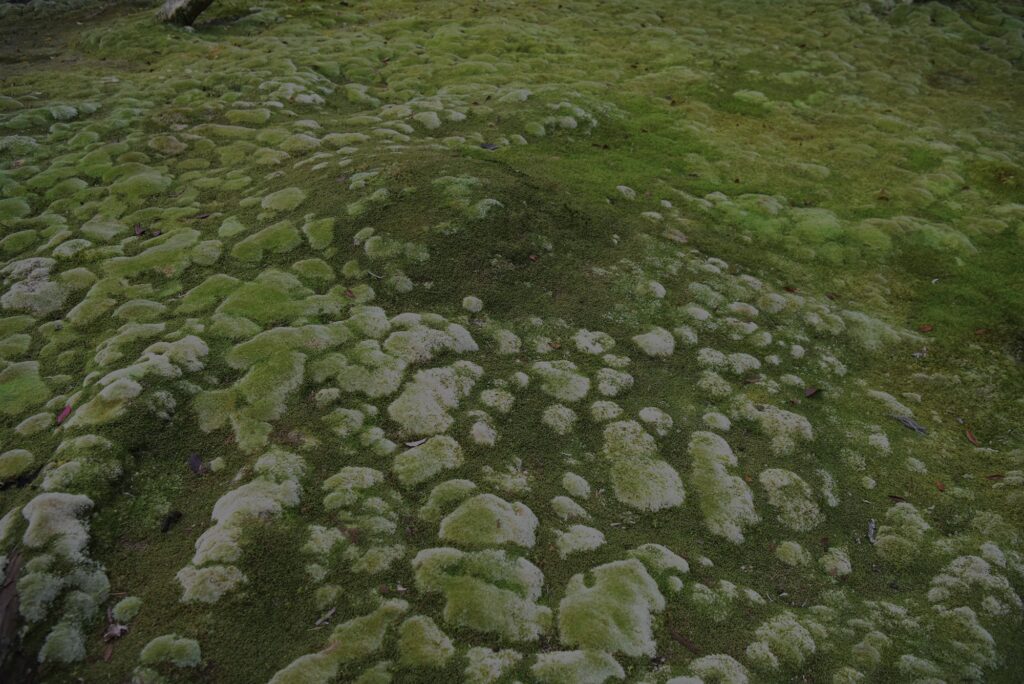
Fujita: This reminds me of the Zen phrase, “haru kitarite kusa onozukara shozu.” This saying describes the natural unfolding of events in nature that grass simply sprouts on its own when spring arrives. In the same way, the sight of moss cracking yet continuing to live embodies an existence that accepts the laws of nature rather than fighting them.
Our lives today are incredibly convenient. With convenience stores and online shopping, we can get what we want almost instantly. This can easily lead to high expectations and the illusion that we can do anything. However, when our expectations grow too large, they give rise to desire, and that desire can in turn lead to suffering.
In contrast, Buddhism has the concept of the “four kinds of suffering (shiku).” These are the fundamental hardships of birth, old age, sickness, and death, which are an unavoidable part of life. In fact, in Buddhism, life itself is considered suffering. When you reflect on this, you can’t help but feel a sense of reverence for the white hair moss, which endures silently, accepting great difficulties without resisting the laws of nature. Asking ourselves what we can learn from such a sight might be a new way of engaging with moss.
Accepting what cannot be changed
Oishi: Finally, I’d like to introduce Scopelophila cataractae (copper moss). This is a very special moss that grows in soil contaminated with copper, which is toxic to other organisms. Since temples often use copper for their roofs and rain gutters, you can sometimes find it growing beneath the buildings.
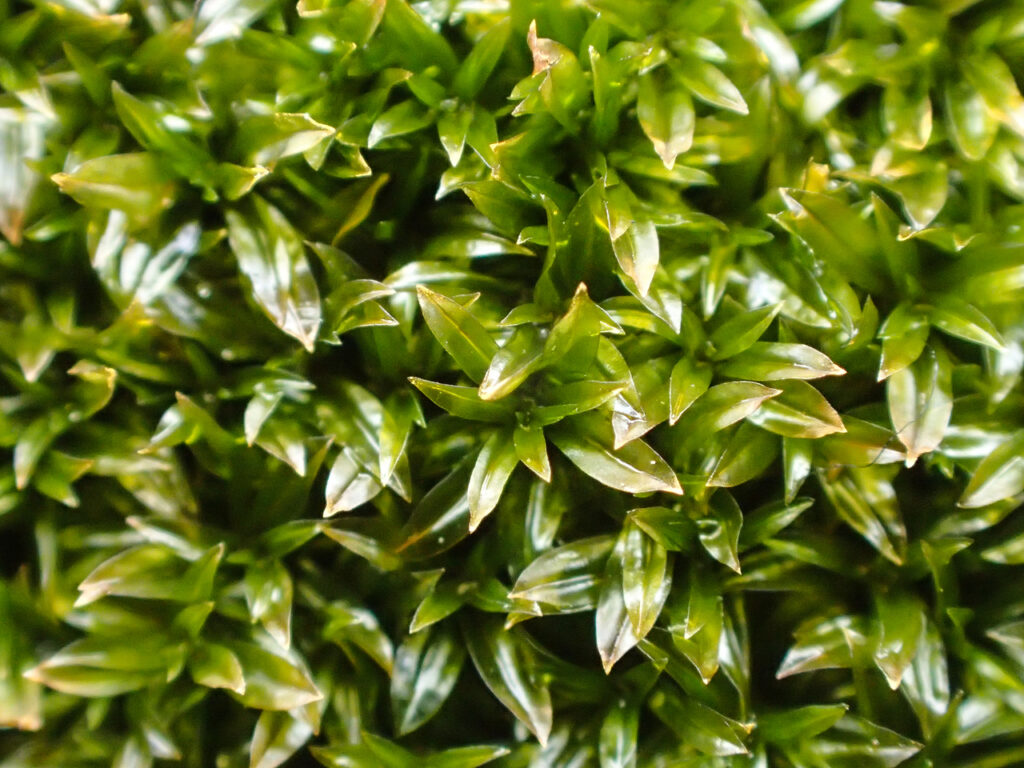
This moss probably wanted to thrive in a better environment, but those places are always home to tougher plants. Unable to compete against such strong opponents, it had no choice but to venture into an environment where other plants couldn’t survive. Now, that very ability to adapt to adversity has become its strength.
Fujita: Speaking of adapting to adversity, there’s a Zen term, “genjo juyo,” which teaches us to humbly accept the things we cannot change. I believe this concept perfectly embodies the history of Saihoji.
The moss at Saihoji began to grow after the temple endured a period of hardship—it was devastated during the Onin-Bunmei War and repeatedly flooded by a river. By withstanding those difficult times, the garden was covered in the moss that now draws people from all over the world. This is a true embodiment of genjo juyo, the very concept that defines Saihoji’s story.
Like the copper moss, we all face moments in life where we feel completely helpless or believe we are suffering alone. In times like these, I want you to remember that there is moss that finds a way to survive against the odds, and a temple that has endured for 1,300 years.
Seeing the garden through the eyes of moss
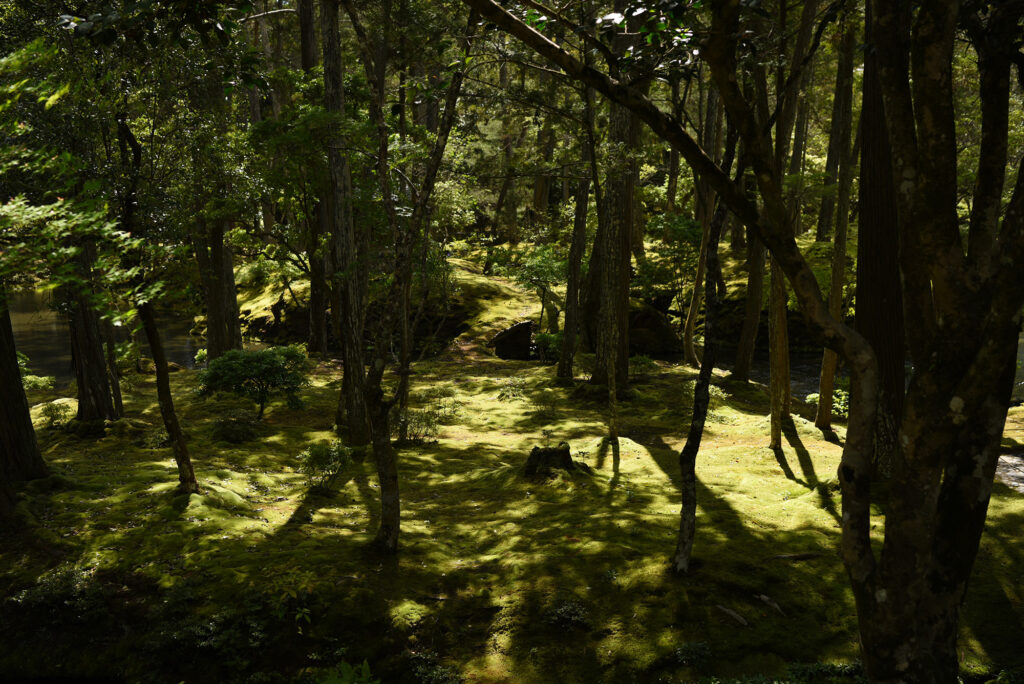
Fujita: When you compare the life of moss to our own, you start to see the parallels. We have our own vulnerabilities, yet we find a way to persevere.
Oishi: That’s right. At its core, moss is a delicate plant. Since we humans share that vulnerability, perhaps we feel a certain sympathy for how bravely it survives despite its fragility.
Fujita: It’s delicate and weak, but it also has an incredibly tenacious and powerful side. Perhaps that’s another quality we share with moss.
Oishi: I agree. Although I mentioned its vulnerability to environmental changes, it has evolved ways to store water in its leaves. It can withstand drying out completely, patiently waiting for rain to bring it back to life. When you see that resilience, I think your impression of the moss and the garden will change completely.
A Message from the Saihokai Association
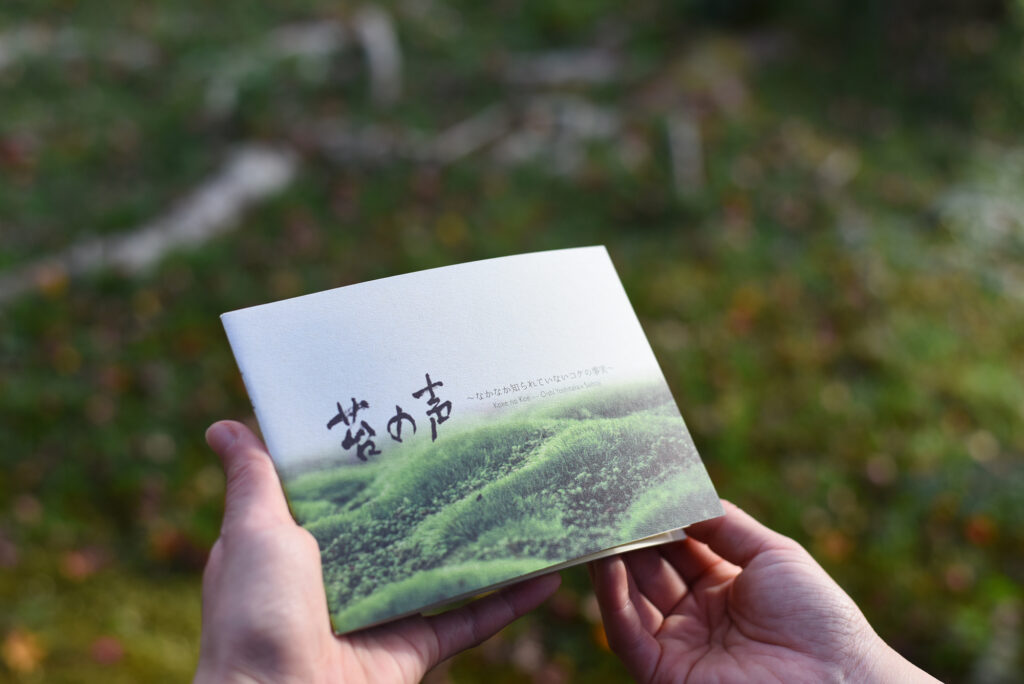
On the temple grounds, we offer a booklet introducing the 10 types of moss found at Saihoji. We invite you to use it to take a closer look at each variety. You might just discover something you’ve never noticed before.
Edited by: MIYAUCHI Toshiki
Written by: FUKUDA Anna
Photographed by: Editorial Department
*These photos were with permission.
Up next
Most read