
2026.4.30
What Little Moss Teaches Us
(First Part)
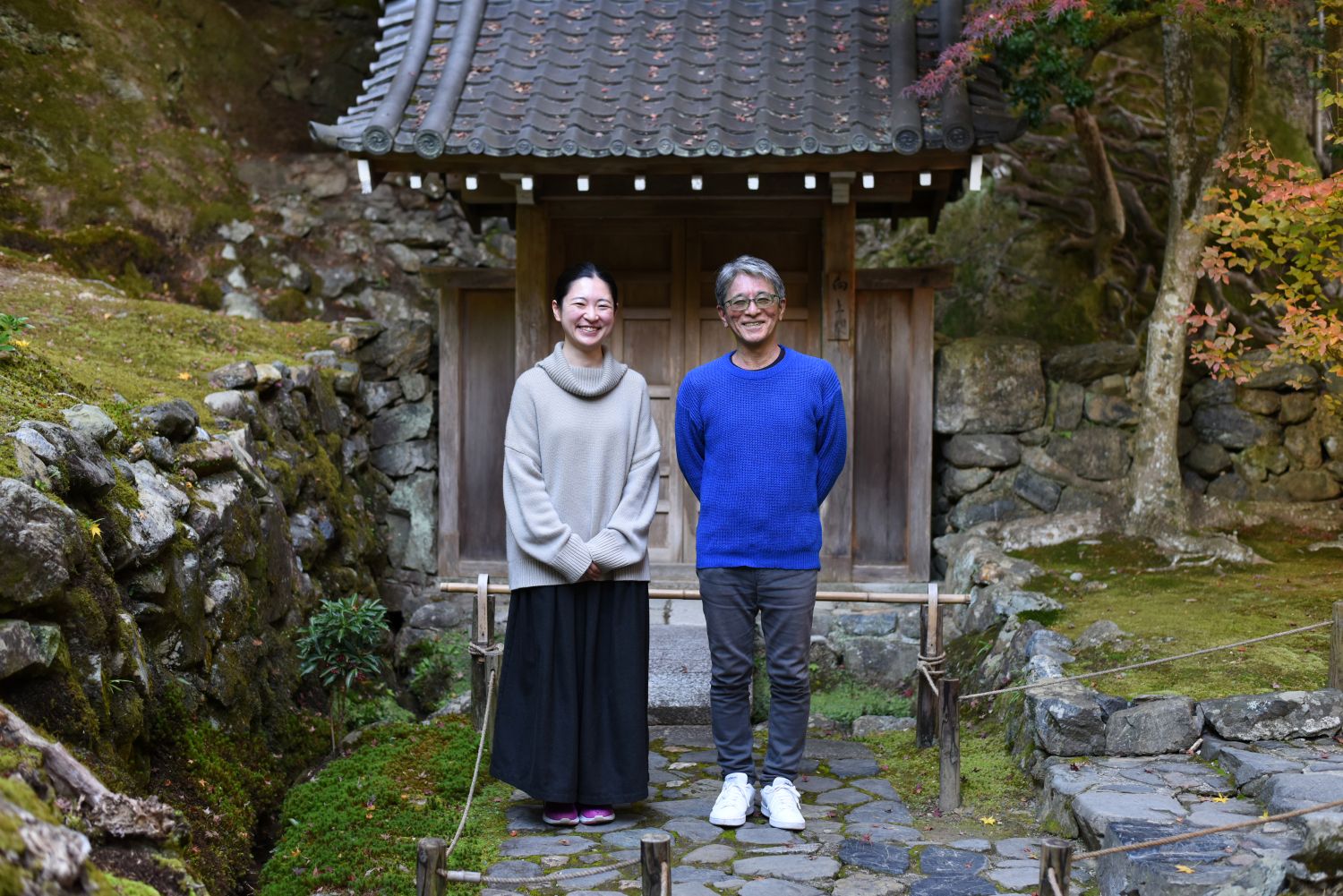
Oishi Yoshitaka
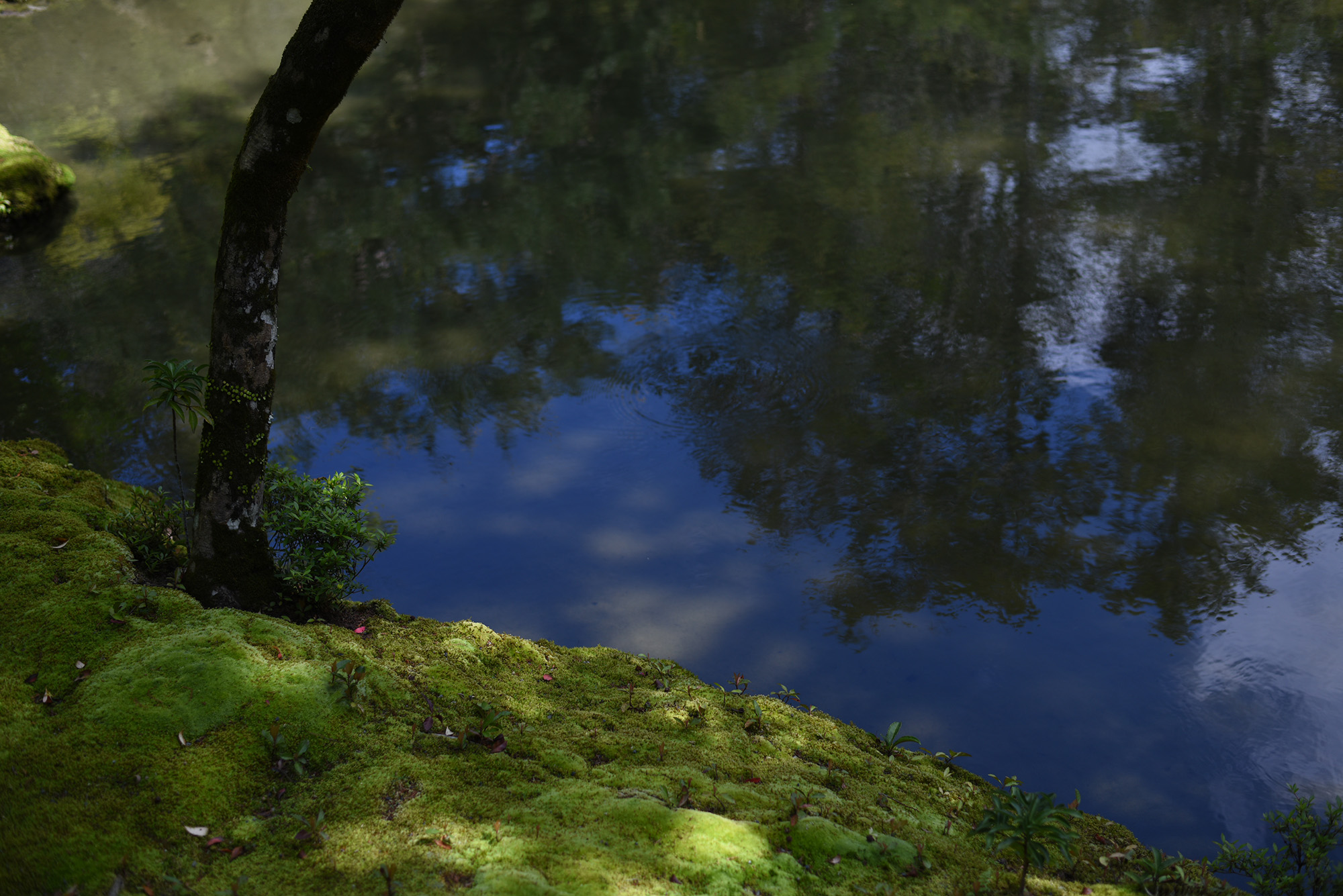
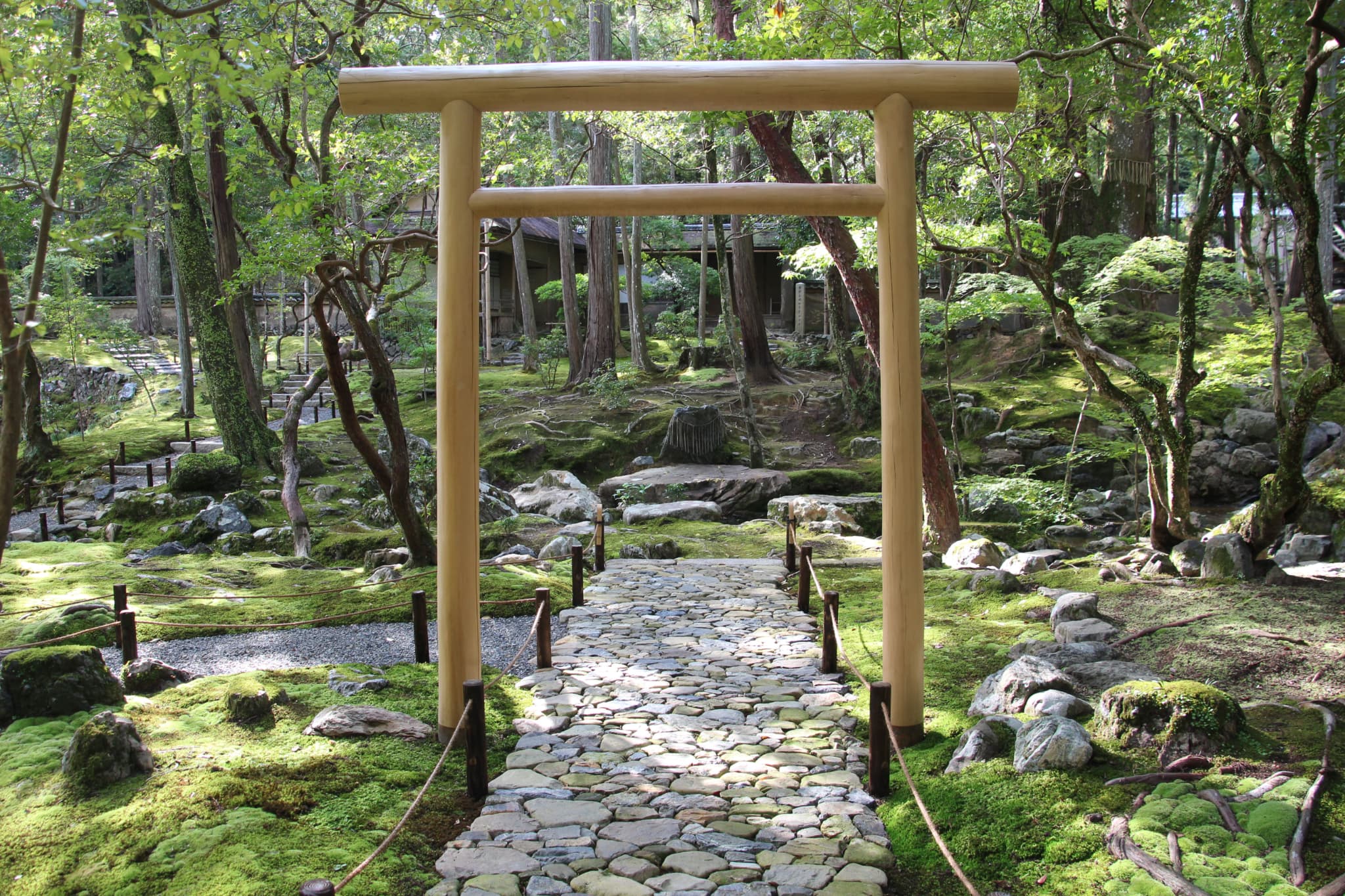
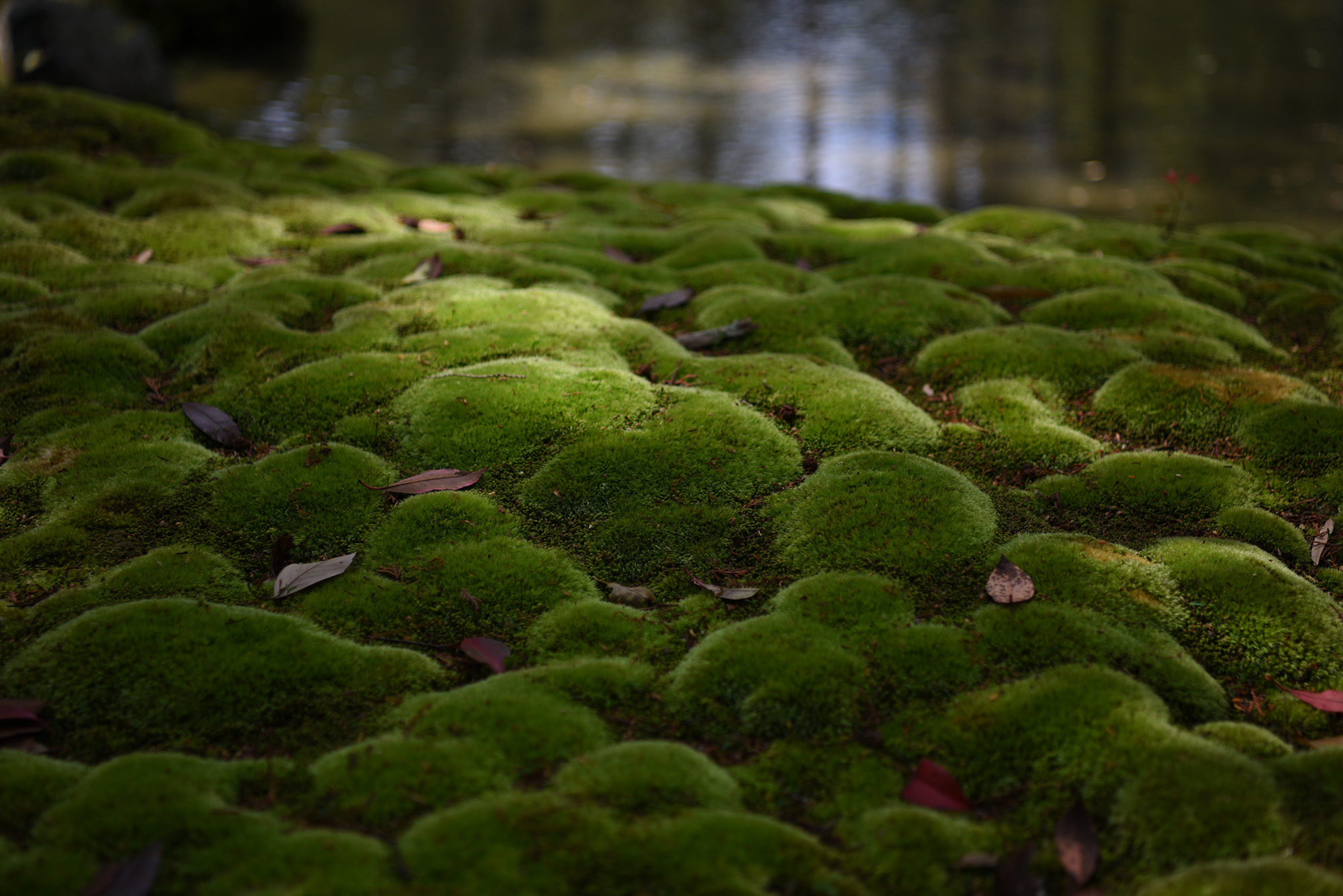
The moss covering the gardens of Saihoji may seem fluffy, small, and adorable, but these organisms are both delicate and resilient. In October 2025, moss expert Professor Oishi Yoshitaka gave a lecture on this very topic.
Drawing on his expert insights, we will take a closer look at the unique appeal of moss.
Oishi Yoshitaka
Born in Shizuoka Prefecture. He graduated from the Graduate School of Science at Kyoto University and completed the doctoral program at the Graduate School of Agriculture at Kyoto University, earning a Ph.D. in Agriculture. He is currently a professor in the Faculty of Dinosaur Paleontology at Fukui Prefectural University. He specializes in the biology of bryophytes including moss. Traveling across Japan, he unravels the secrets of how these tiny yet resilient mosses thrive. His publications include Koke ha nazeni utsukushi (Why is Moss Beautiful?) NHK Publishing, Jikkuri kansatsu tokucho ga wakaru koke zukan (A Field Guide to Mosses for Close Observation) Natsumesha, Koke zanmai mokomoko, uruuru, terameguri (Immersed in Moss: A Tour of Fluffy, Dewy Temples) Iwanami Shoten, and Koke no koe (Hear the Moss Speak: The Lesser-Known Facts About Moss) an original publication by Saihoji.
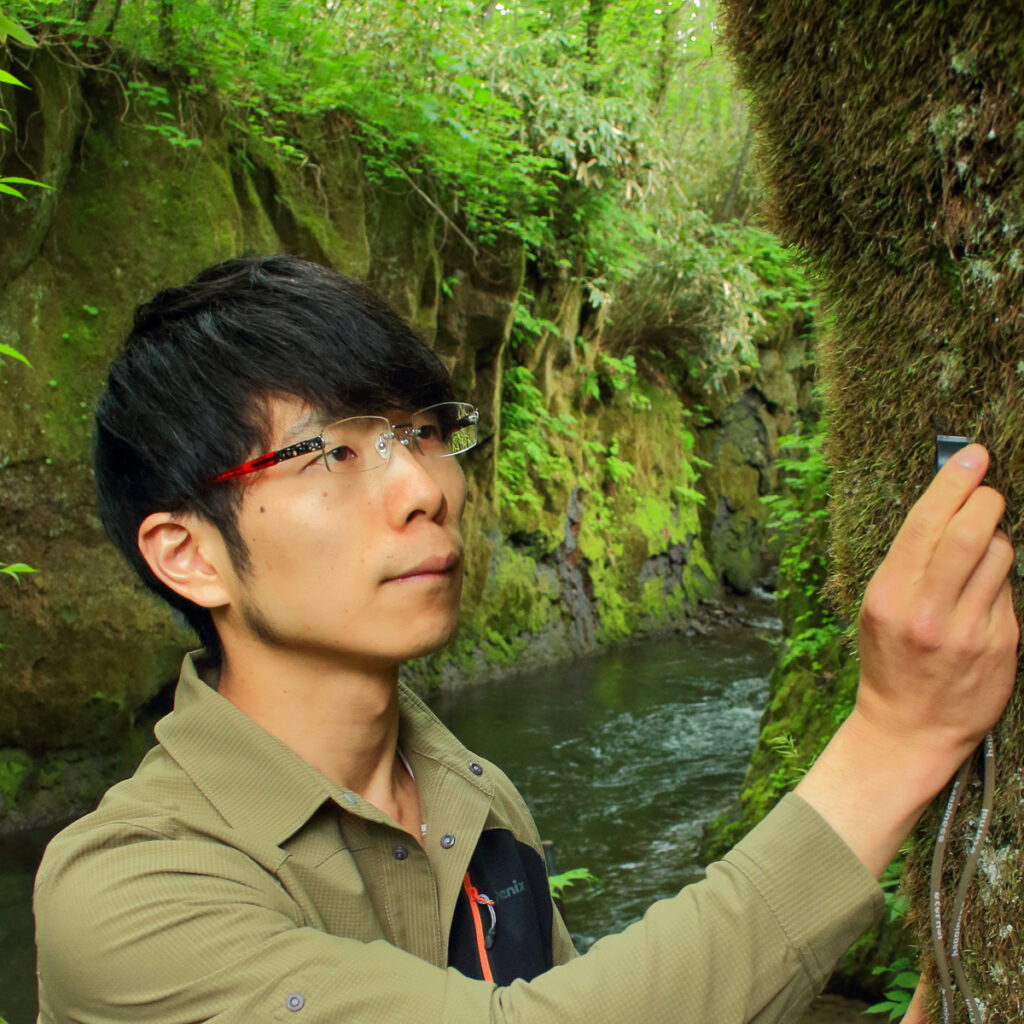
Moss: the first life to adapt to land

First, let’s explore the significance of moss in natural history. The Earth formed 4.6 billion years ago, and the first life appeared between 4 and 3.5 billion years ago. Then, about 3 billion years ago, Cyanobacteria emerged. Organisms that incorporated these Cyanobacteria evolved into algae, which thrived in the oceans. Having conquered the water, life began to move onto land, but it faced a major obstacle: desiccation.
In algae the fertilized egg generally becomes independent from the parent immediately after it is formed. The organism that develops from the fertilized egg has very few cells and does not possess mechanisms sufficient to withstand drying. As a result, living organisms were unable to expand onto land for a long time.
Then, about 470 million years ago, a plant with adaptations to dryness appeared. That was moss.
A new form of life that began with moss
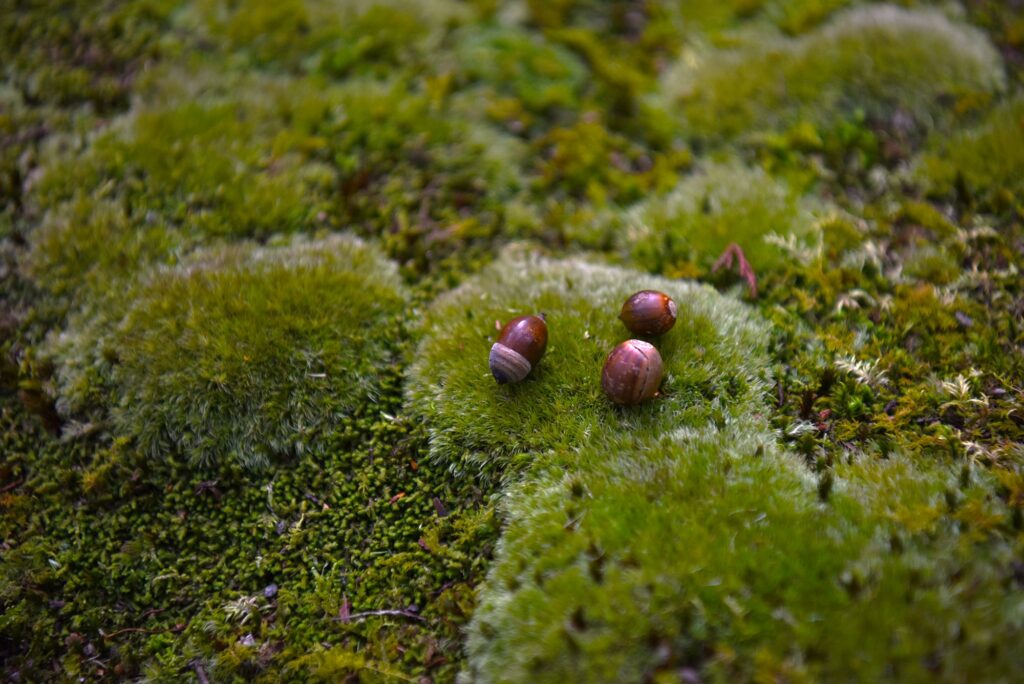
Moss overcame the challenge of living on dry land by protecting and nurturing its offspring within the parent plant.
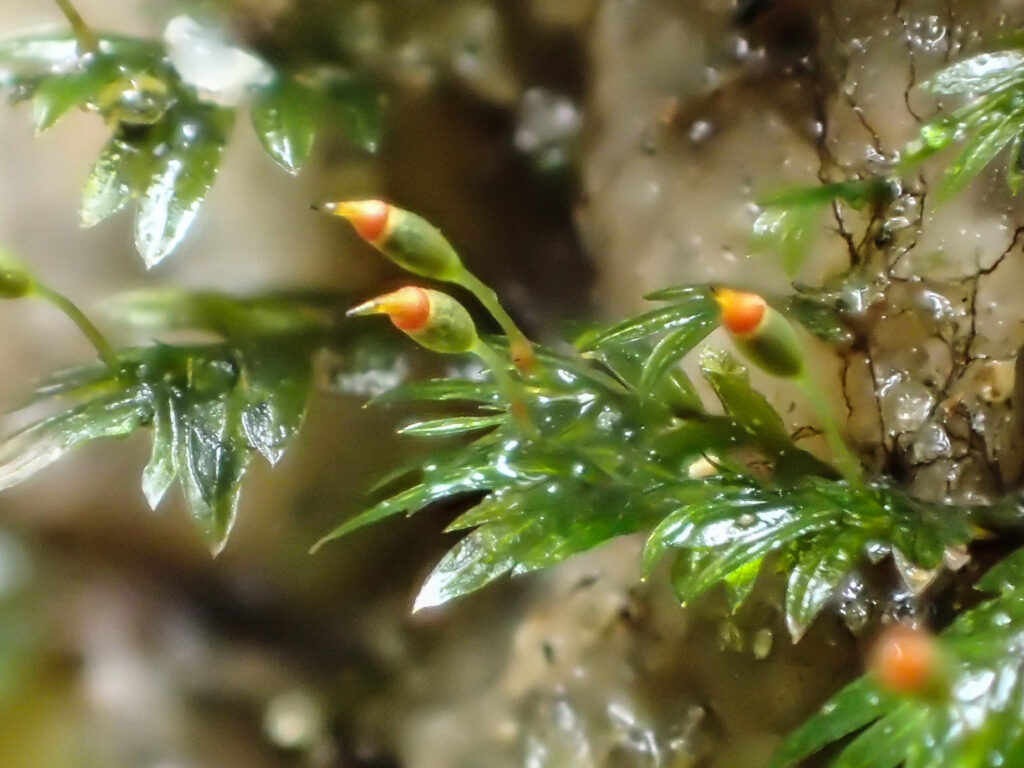
Unlike algae, whose fertilized eggs immediately become independent, moss nurtures its young within the parent plant. This evolutionary strategy—releasing its offspring only after they have grown sufficiently—enabled moss to spread across dry land. If you look at moss in the spring or fall, you might notice a small, roundish bulge at its tip. Often called a "flower of moss," this is actually the offspring generation. The next time you see one, remember that you’re witnessing a remarkable adaptation for survival in a dry environment.
However, their adaptation to dry conditions was still incomplete. Moss is a very small plant, making them highly susceptible to environmental changes, largely because of how they absorb moisture and nutrients. Since they have underdeveloped roots, they absorb rain and fog directly through their surfaces. While they thrive with rainwater, they struggle to grow when sunny weather continues.
This was a clear disadvantage. Consequently, about 420 million years ago, the ancestors of ferns evolved. These new plants developed roots and tubes called vascular bundles to transport water.
A cross-section of their leaves clearly illustrates this difference.
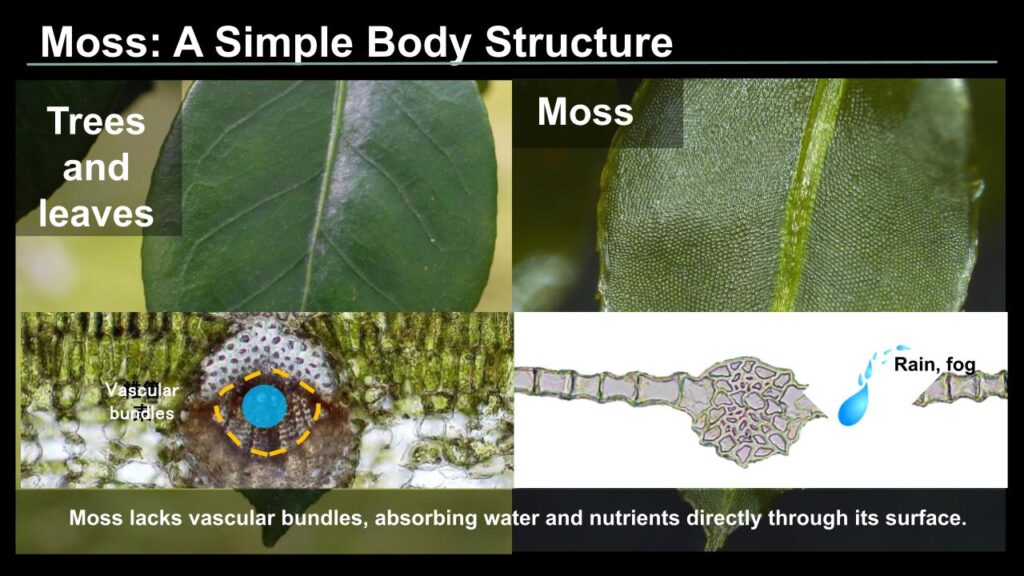
Unlike trees and grasses, which have a complex structure with vascular bundles that transport water from the roots, moss has a much simpler design. While some mosses may have a central strand that looks complex, it functions more like a skeleton for structural support. Instead, moss absorbs water and nutrients directly through its surface.
Depending on the species, you can mist moss with a spray bottle and watch its leaves instantly unfurl. If it absorbed water through roots like other plants, its leaves couldn’t open fast enough for the human eye to see. This dramatic transformation between its dry and wet states is one of the unique features of moss.
This timeline highlights the crucial role moss played in plant evolution. It took about 1.6 billion years from Earth’s formation for the first photosynthesizing organisms, Cyanobacteria, to appear. Another 2.5 billion years passed before moss emerged. The subsequent evolution from moss to flowering plants took about 300 million years, with another 150 million years leading to the present day.
This perspective truly underscores what a monumental achievement it was for life to adapt to land—a feat first accomplished by moss. Knowing this might just change the way you look at moss.
The spirit of wabi-sabi in the delicacy of moss
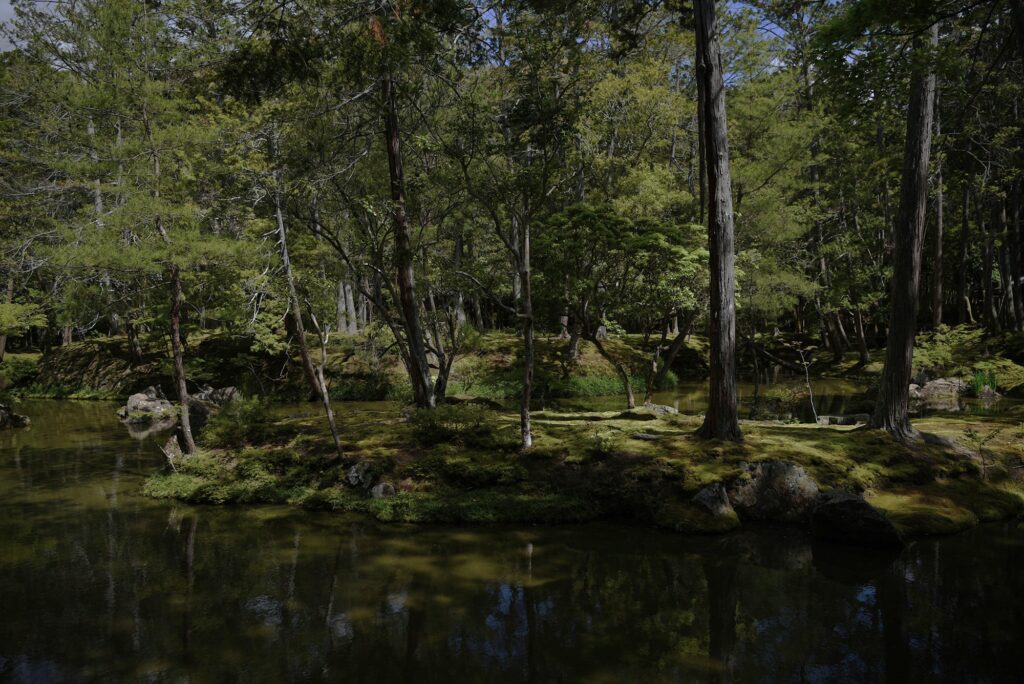
Moss has long been an important ground cover in Japanese gardens. Due to its simple structure, moss has characteristically thin leaves. This makes them translucent, allowing light to pass through and create an atmosphere of purity—an atmosphere that connects with the elegant simplicity of wabi-sabi (a Japanese aesthetic that finds beauty in simplicity, imperfection, and transience).
In fact, Japan is the only country with a culture of using moss in gardens; you won’t find it in neighboring countries like China or South Korea. While some Japanese-style gardens in North America use moss, they are imitations and not a practice that originated from the local culture. When you think about it, the moss garden is a rare phenomenon in the world, and it’s truly fascinating.
So, why did moss become such a prominent feature in Japanese gardens? The earliest Japanese gardens date back to the Nara (710 to 794) period, but while records show it was used sparingly, it wasn’t the widespread groundcover we see today.
The practice of covering entire gardens with moss began in the Muromachi period (1336 to 1573). From then through the Edo period (1603 to 1868), the influence of Zen and the tea ceremony gave rise to the aesthetic of wabi-sabi. The art of moss gardening developed within this unique delicacy, and it’s thanks to this history that we can enjoy these beautiful moss gardens today.
The hidden vitality of tiny moss
Now, let’s explore some interesting facts about moss.
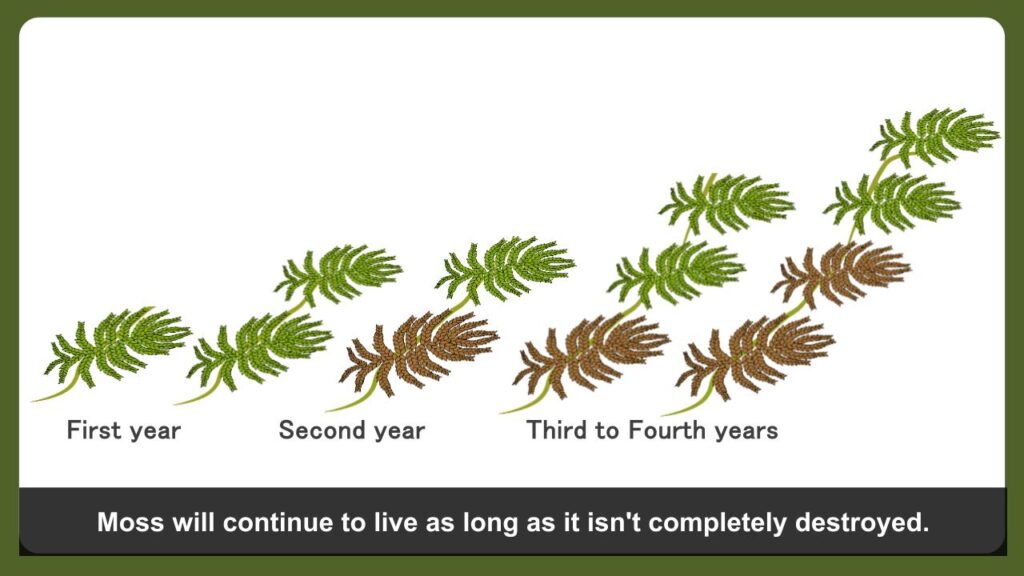
People often ask me about the lifespan of moss. Moss is constantly growing, putting out new shoots every year. While older parts naturally die off, new ones are always taking their place. So, unlike humans, as long as the organism itself doesn’t die, it will continue to live. In a sense, you could say it has an eternal lifespan.
I’m also often asked about the best time to see moss. One peak season is during the rainy season, from June to July. The frequent rain keeps the moss constantly moist, bringing out its deep green hues.
Another great time is from November to December. To begin with, the contrast between the red of the fall foliage and the vibrant green of the moss is truly stunning. As winter sets in, the cooler temperatures help keep the moss from drying out. In fact, while moss is vulnerable to the summer sun, it’s surprisingly resistant to the cold. It remains lush and green even under a blanket of snow—a truly beautiful sight.
The changing face of Japanese gardens
As mentioned earlier, moss is essential to the wabi-sabi atmosphere of Japanese gardens. In recent years, however, this timeless beauty has begun to fade due to a changing global environment.
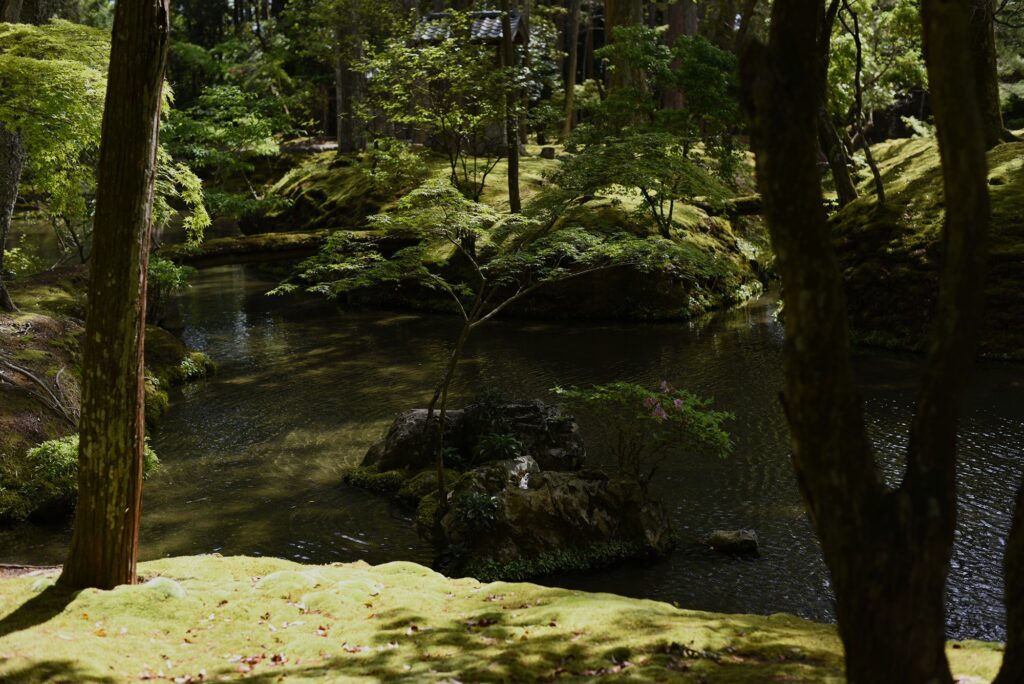
In Kyoto, the average temperature has already risen by 1.4°C over the last 50 years and is predicted to climb another 4.3°C in the next 75 years. In other words, the total temperature increase will be 5.7°C over 125 years. To put it in perspective, the average temperature difference between Kyoto and Kagoshima is about 3°C, and between Kyoto and Okinawa, it’s about 7°C. This means that within this timeframe, Kyoto’s climate will become warmer than Kagoshima’s and begin to resemble that of Okinawa.
A primary cause is the heat island effect. This phenomenon, distinct from global warming, occurs when urban areas full of artificial materials like buildings and asphalt pavement retain heat. Cities absorb the sun’s warmth during the day and then slowly release it from evening into the early morning. As a result, the temperature difference between day and night has diminished. You may have noticed that fall foliage hasn’t been as vibrant in recent years; this is also thought to be a consequence of the smaller daily temperature range.
The appearance of moss gardens is also changing dramatically. When the daily temperature range shrinks, fog and morning dew become less common. Back in 1960, when Kyoto was less developed, fog was observed about 60 times a year. Today, that number has dropped to nearly zero. In this new environment, the moss must endure intense heat stress while being deprived of essential moisture from fog and dew. In fact, some Kyoto gardens where moss was lush and green in the 1960s are now almost completely barren. This phenomenon is occurring all across Japan as its iconic moss slowly vanishes.
Moss is sounding a quiet warning
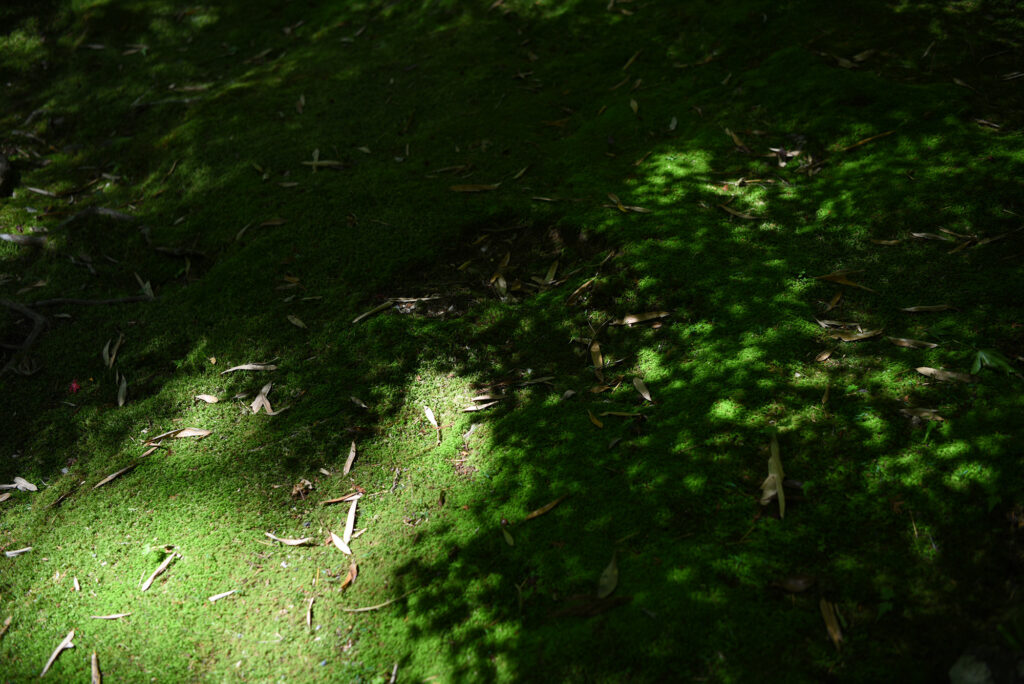
Moss has a simple structure, making it highly sensitive to environmental changes. This sensitivity is precisely what makes it so important—it can alert us to coming changes and the actions we need to take.
Think of it like a human relationship. When a relationship is stable, you can weather minor disagreements and reconcile. But if a crisis occurs when that relationship is already fragile, things can deteriorate quickly, making them difficult to mend. The same is true for nature. A healthy environment has the resilience to regenerate even after a typhoon. But if it’s already under stress, any new damage makes it far harder to return to its original state.
That’s why we must recognize this fragile state and act to restore balance. For now, the heat island effect might seem like a minor inconvenience. If it’s hot in the summer, we turn on the air conditioner. If the fall foliage is late, we simply postpone our travel plans. But if conditions worsen, moss gardens and fall foliage themselves could disappear. As climate change advances globally, some regions could face food shortages, which in turn could lead to conflict.
Through its tiny form, moss sounds an alarm before we reach a point of no return. By noticing its changes and heeding its warning, we can see the actions we must take now—for the future of our lives and our world.
In the second part, Professor Oishi will explore the mosses of Saihoji and a Zen way of living that resonates with their form, together with the monk Fujita Ryuko.
Edited by: MIYAUCHI Toshiki
Written by: FUKUDA Anna
Photographed by: Editorial Department
*These photos were with permission.
Up next
Most read