
2026.4.10
Zen Words for Everyday Life Vol. 12
“Menpeki Kunen”
Literally meaning “facing a wall for nine years,” 面壁九年 (menpeki kunen) is a Zen expression that describes the importance of accepting things as they are and persistently keeping one’s goal in front of oneself for a long period of time.
The phrase comes from a legend related to the great master Bodhidharma, the founder of Zen. This episode picks up where our previous discussions on mukudoku. and fushiki.
Bodhidharma traveled from India to China, determined to spread the teachings of Buddhism. While there, Emperor Wu (the first emperor of the Liang Dynasty) invited him to answer some questions, but the two were unable to have a constructive dialogue, seemingly talking past each other the whole time. Realizing that the conditions were not yet ripe for spreading the teachings of the Buddha, Bodhidharma crossed the Yangtze River and moved to the territory of the Northern Wei, where he secluded himself in the mountains. He came to the Shaolin Temple at Mount Song, where he sat alone in contemplation, facing a wall.
After nine years of such contemplation, the Zen master Taiso Eka (Dazu Huike) appeared. He would become Bodhidharma’s successor, and as the Second Patriarch of Chinese Zen Buddhism, he is now known as the person most responsible for spreading Zen across China.
The image of Bodhidharma waiting patiently for the right moment became the origin of the expression menpeki kunen.
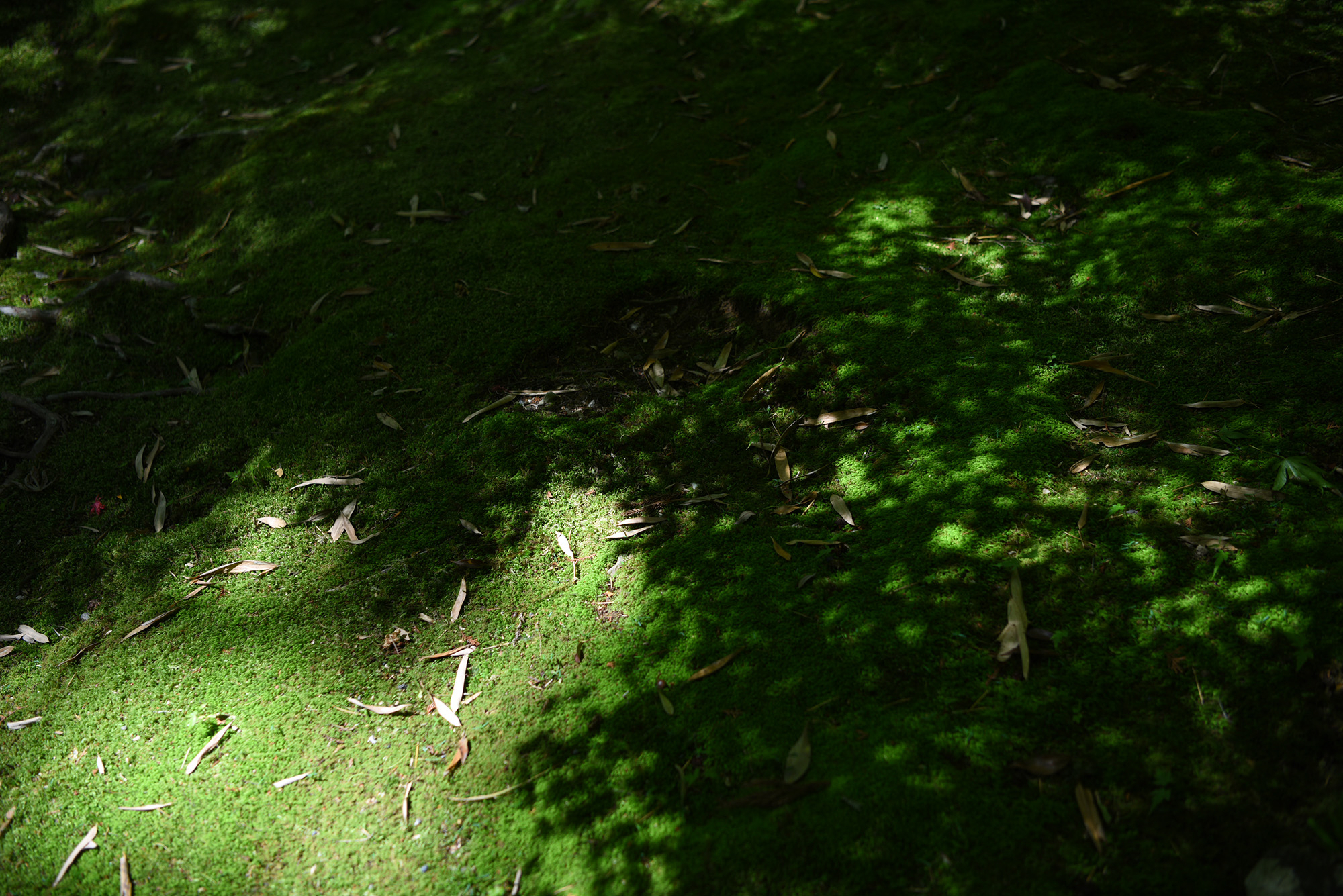
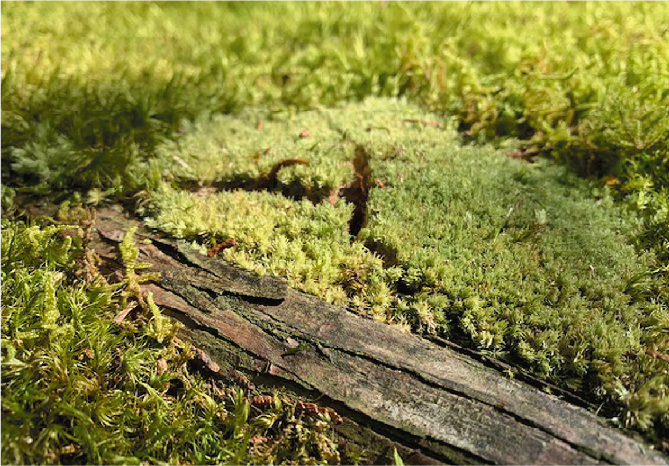
Whenever I hear this story, I am reminded of moss during the summertime. With its blazing sunshine and broiling heat, the summer is the harshest season for the mosses inhabiting the Saihoji garden. The fluffy leucobryum glaucum (white hair moss) that can be found all around the garden does all it can to prevent drying out, huddling together as it cracks and patiently enduring the heat until the next rainfall. If you wonder why it does this, imagine hanging laundry to dry. Which dry out faster? The wet clothes that have been stretched and spread out before being hung on the line, or those that have been bunched together?
Humans can move freely, so when it gets hot, we can simply relocate to a cooler room or grab a cold drink from the fridge. However, the leucobryum glaucum does not have this freedom. It must remain in the exact same spot where it first came to life. Without a word of complaint, nor any attempt to resist the laws of nature, it accepts the heat and waits patiently.
Just like Bodhidharma patiently waited for his successor, the leucobryum glaucum moss waits for the scorching heat to pass.

We modern people plan our days in meticulous detail, constantly striving to stay ahead of the curve to ensure our desired future comes to pass. However, when we fail to achieve the outcomes we had hoped for, we tend to give up on our goals, often far too quickly, before really committing ourselves to the task at hand. Alternatively, we seek only what comes easily. Have you ever looked back on your life and discovered that you have slowly drifted away from what you really wanted to accomplish, abandoning your heart’s deepest desires?
I hope that this idea of menpeki kunen—facing a wall for nine years—will remind you of the importance of accepting the present moment as it is and waiting patiently for the right time to come.
Saihoji FUJITA Ryuko
You can read the continuation of this episode from“Anjin”.
Up next

Most read