
2026.7.15
Zen Words for Everyday Life Vol. 15
“Dokuza daiyuho”
And that alone is something precious.
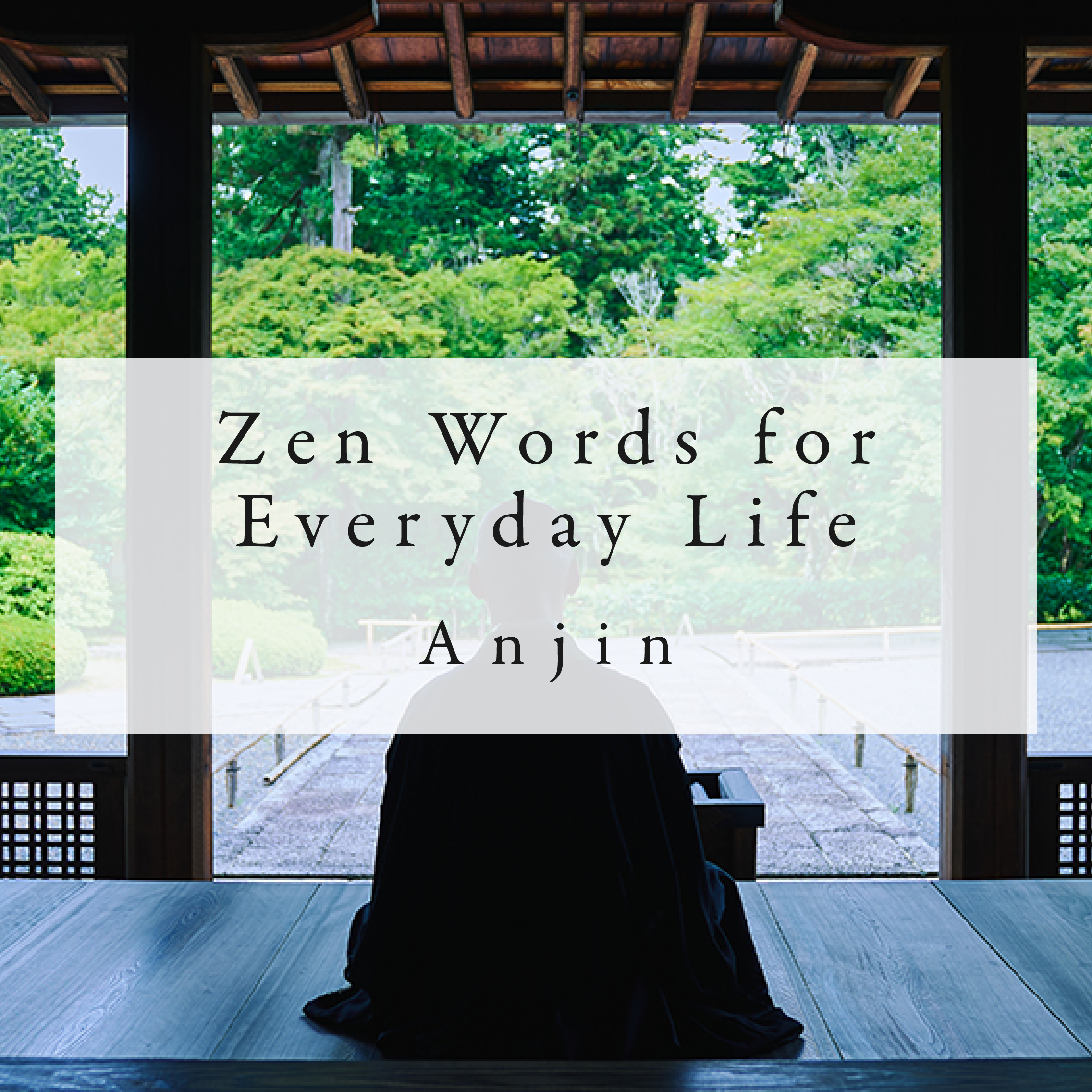
Zazen meditation is part of the daily routine for the Zen monk. It is not, however, something to be taken for granted, as being able to engage in zazen meditation presupposes that one possesses life and the freedom to manage one’s time. These conditions are underpinned by the help and support of other people who create the environment that allows a monk to devote himself to his training.
The Zen phrase dokuza daiyiho (独坐大雄峰) helps us to realize that the things we take for granted in our daily lives are anything but self-evident.
The phrase comes from a story associated with the Zen master Hyakujo Ekai (as known as Baizhang Huaihai), as described in Case 26 in the Zen text Hekiganroku (The Blue Cliff Record). A highly respected and celebrated priest, Zen Master Hyakujo lived and taught during the 8th and 9th centuries. One of his most noteworthy contributions to Zen Buddhism was his establishment of the Hyakujo Shingi (Pure Rules of Baizhang), the first ever set of rules governing communal ascetic practice for Zen monks.
A monk once asked Master Hyakujo, “What is the most wonderful thing in the world?” He replied, “dokuza daiyuho.”
“Dokuza” means “to sit alone, concentrated on zazen meditation.” “Daiyuho” can mean “high mountain,” but within this context it may be easier to think of it as “where you are right now.” In other words, when asked what the most wonderful thing was, the Zen master replied that it was “to be able to sit right here, right now, in solitary zazen meditation.”
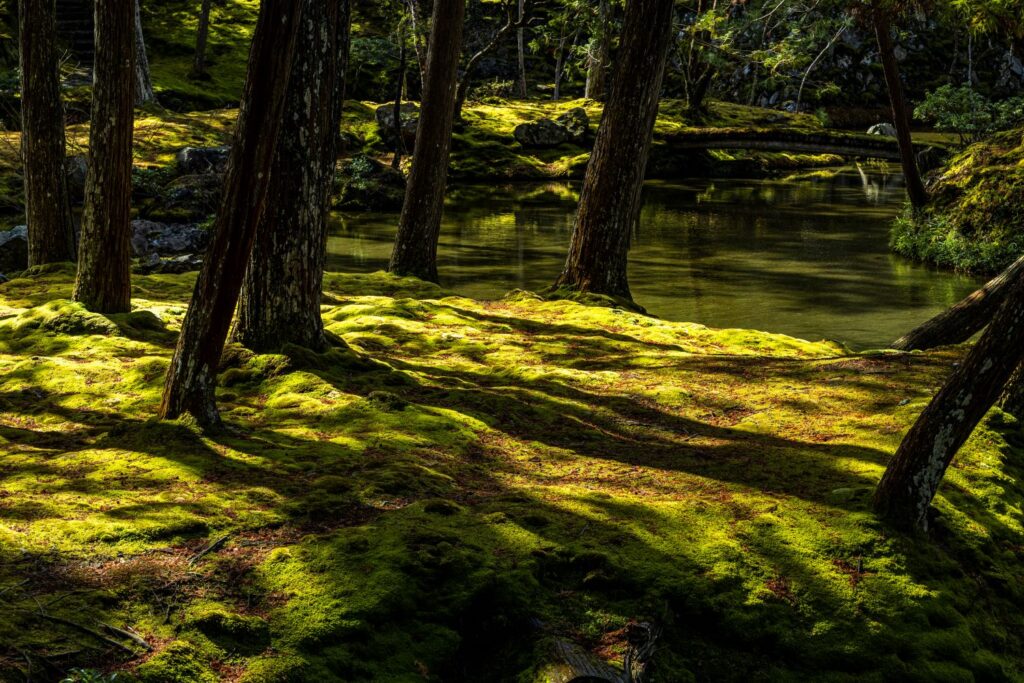
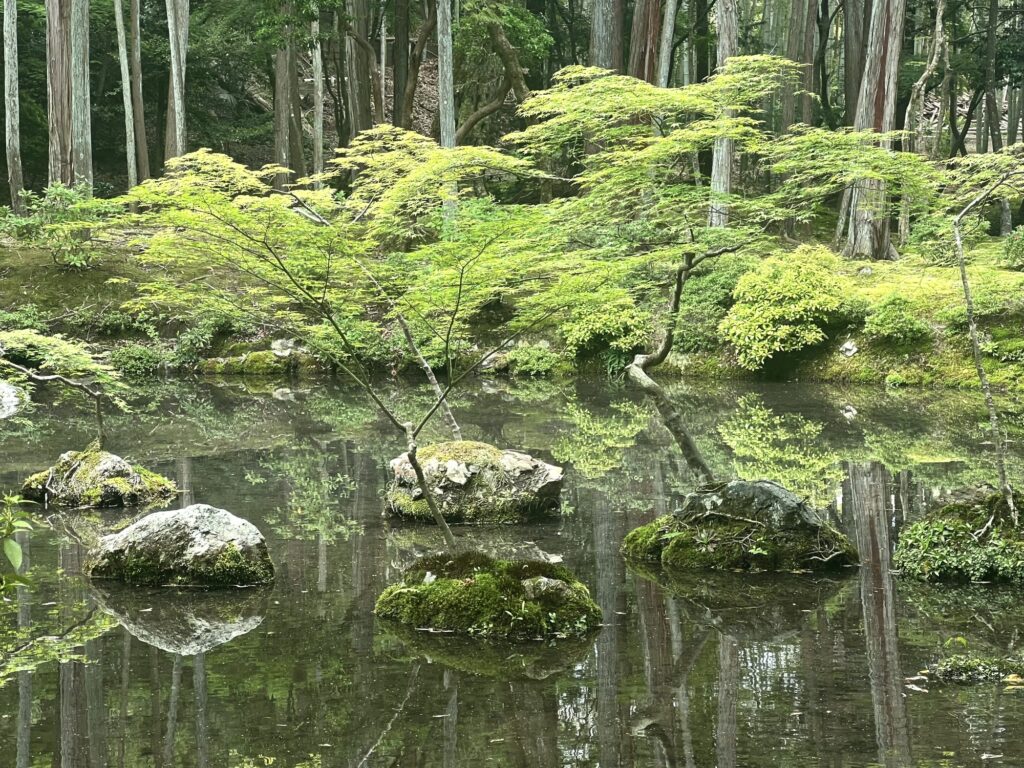
When you enter the lower garden at Saihoji, you will see a group of stones in the Golden Pond called yodomari-ishi. These stones once formed the foundation of a walkway that existed when Muso Kokushi built the garden.
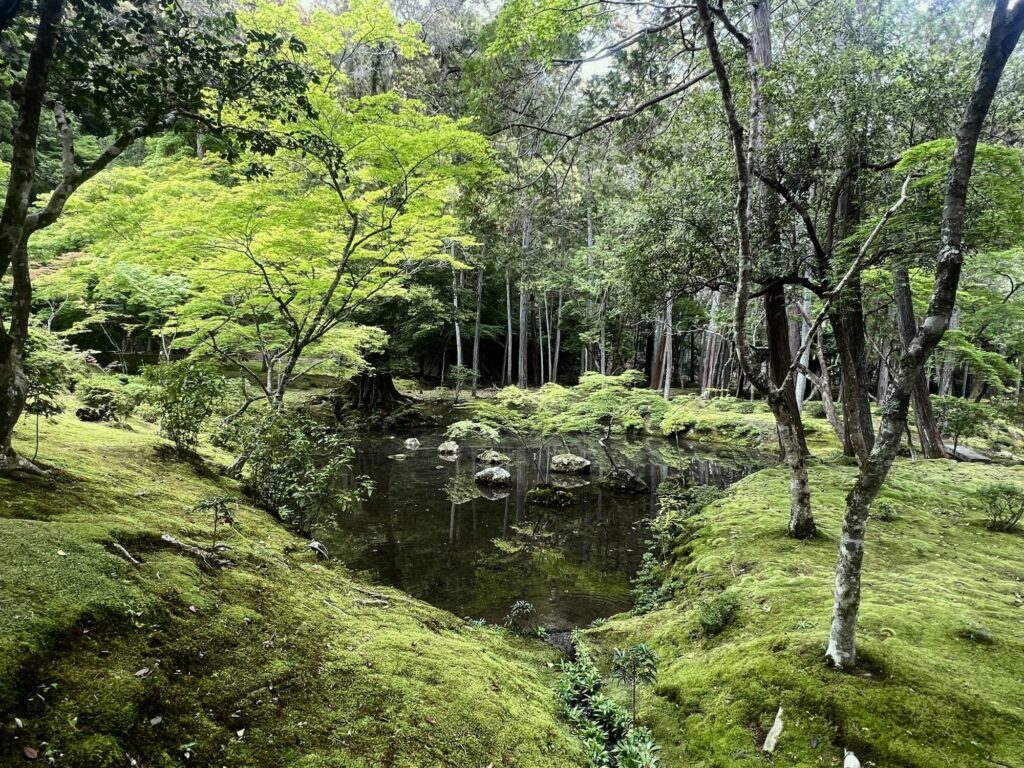
Japanese maple trees can be seen growing from some of the stones. At first glance, it may appear that they have been planted there for ornamental purposes. However, these were not the work of human hands. Fallen leaves accumulated in the cracks of the rocks, turning into soil over many years. Maple seeds carried there by the wind then sprouted and grew into trees, drawing on the extremely limited nutrients available.
Multiple miracles came together to produce these maple trees growing on the rocks. Though small, the trees are actually over 60 years old. The extreme environment has limited their size, but they still sprout new leaves every spring and turn ablaze with autumn colors in the fall.
Once you learn the background behind this seemingly inconspicuous scenery, don’t these maple trees clinging to the rocks feel all the more precious?
It is the same with us humans. Each of us receives life by a miraculous chain of events. Statistically speaking, considering the combination of genes and the complex processes involved in the formation of life, the odds of a particular human being born are said to be as low as one in 70 trillion. When you think about it that way, the mere fact of being alive is something truly precious.
Next time you visit Saihoji, spare a moment to reflect on your own life as you look at the maple trees on the rocks.
Stop pursuing all of the unnecessary things outside yourself. Instead, be grateful for the life you have been given and recognize that you are always supported by help from other people and things. Such is the dokuza daiyuho mindset.
Saihoji FUJITA Ryuko
Up next
Most read