
2026.7.20
Winds of Gold—A Hundred Views of Saihoji Vol. 27
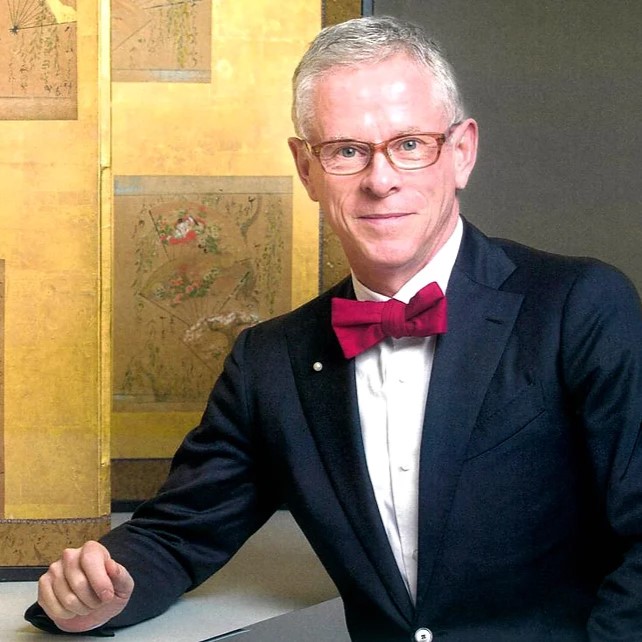
Peter MacMillan / a translator, scholar, poet
In this series of essays on Saihoji the renowned translator of Japanese poetry and poet Peter MacMillan records his impressions of and reflections on his visits to the garden throughout the four seasons. We hope that through these essays you the readers and fans of Saihoji can feel as if you are also present in the magical garden even when you cannot visit us.
History Through Snow and Clouds —Tea at Saihoji
In the full heat of summer, the sun is scorching the moss and the white snow Saihoji seen in winter feels like something from the distant past; so why write of snow in the swelter of these months? Because the garden has always been a place where time folds in upon itself—it appears unchanged, yet is forever becoming something new, the seasons passing across it as the centuries have passed across it, each leaving its trace behind. Though the snow I saw that day has long since melted, the memory of it remains cool and clear, and I offer it to you as a kind of ice cream for your soul — something to cool your heart, and to let you feel and long for through the burning heat, the peace, the cold, the white stillness of a Saihoji winter morning.
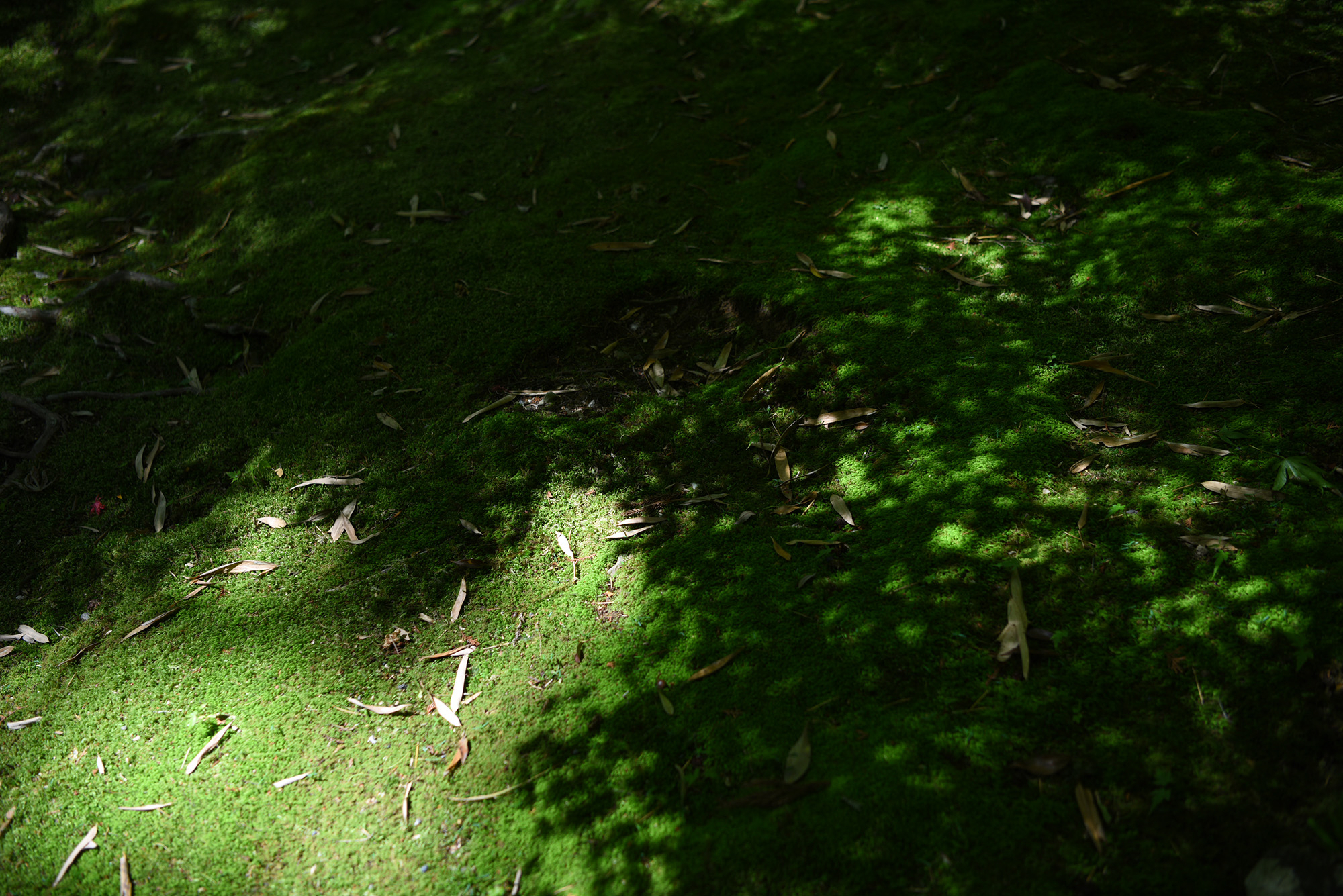
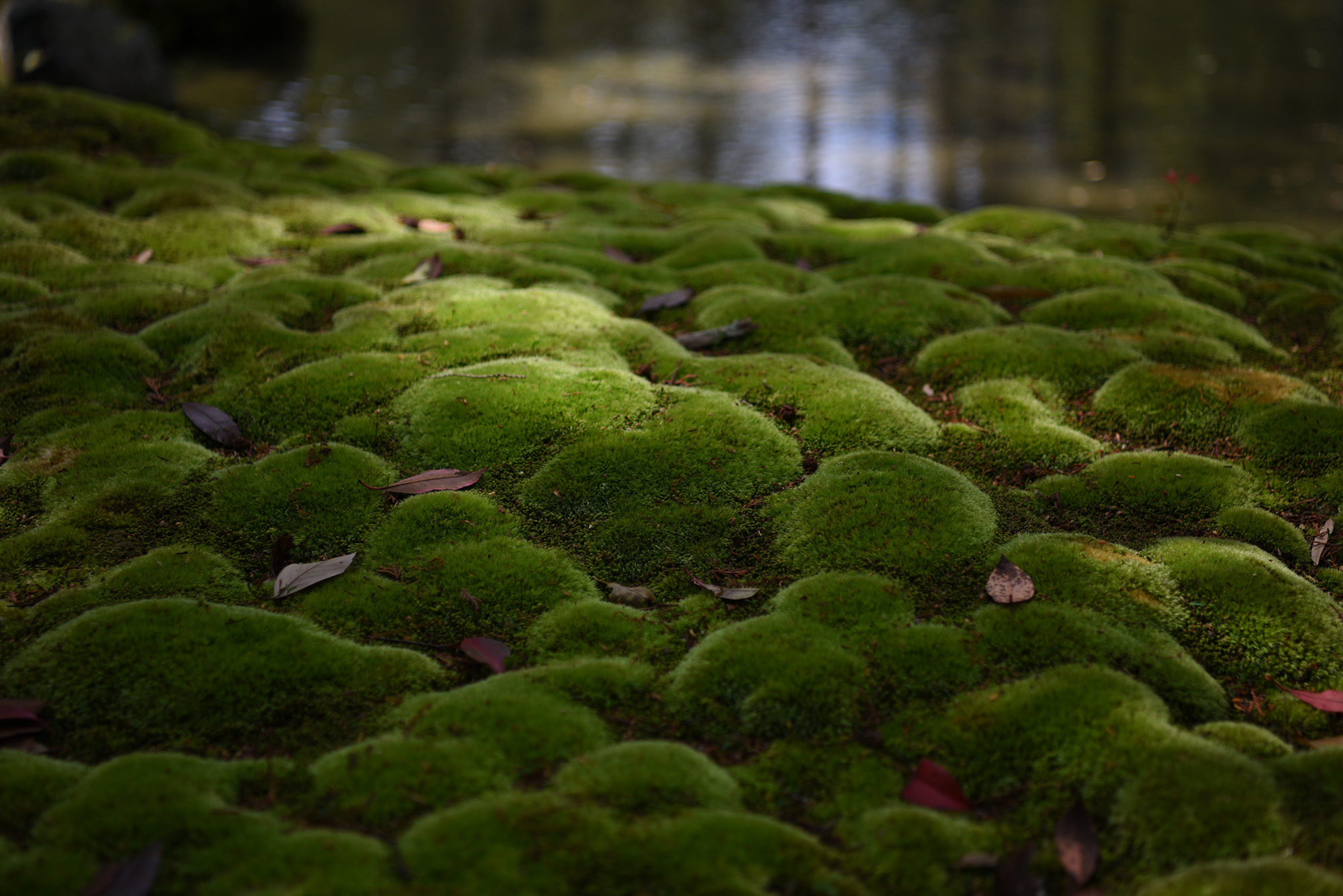
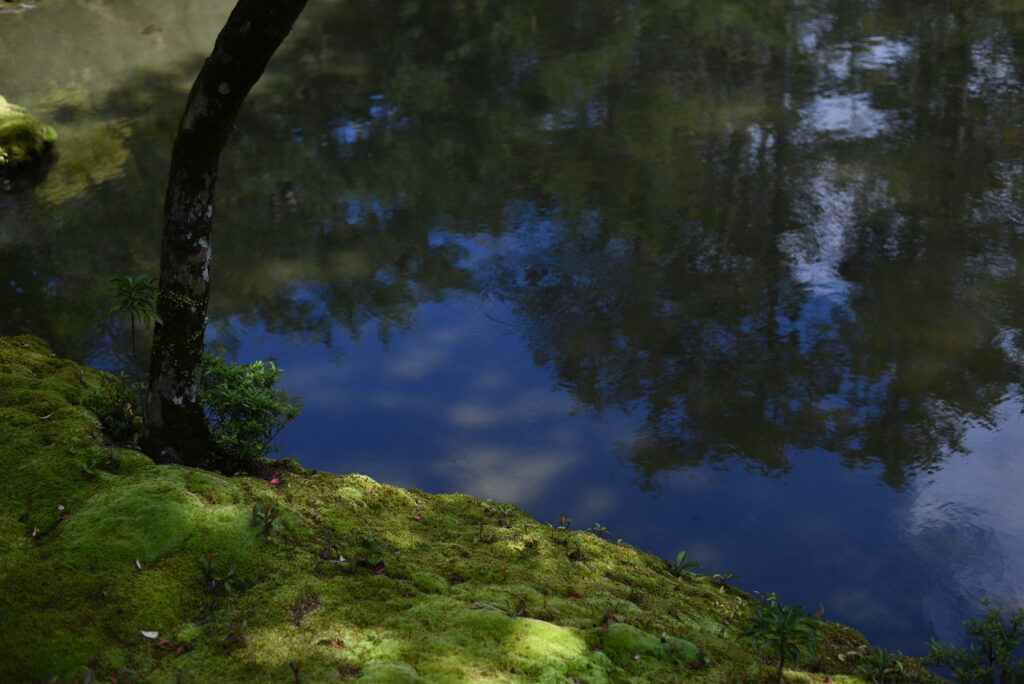
It snows so rarely on the moss that the gardeners of Saihoji can pass whole winters without once seeing it fall. The temple in the western hills of Kyoto is known the world over for a green so deep and so various that it reads less as a color than as a kind of weather — well over a hundred kinds of moss spread like felt across root and rock and the lip of the pond, fed by the damp and the mists that gather and linger in this fold of the valley. To find that green powdered with snow, the velvet gone white, is to catch the garden in a face it shows to the very few. Gasping at its beauty, I wondered what I could possibly have done to deserve to see it.
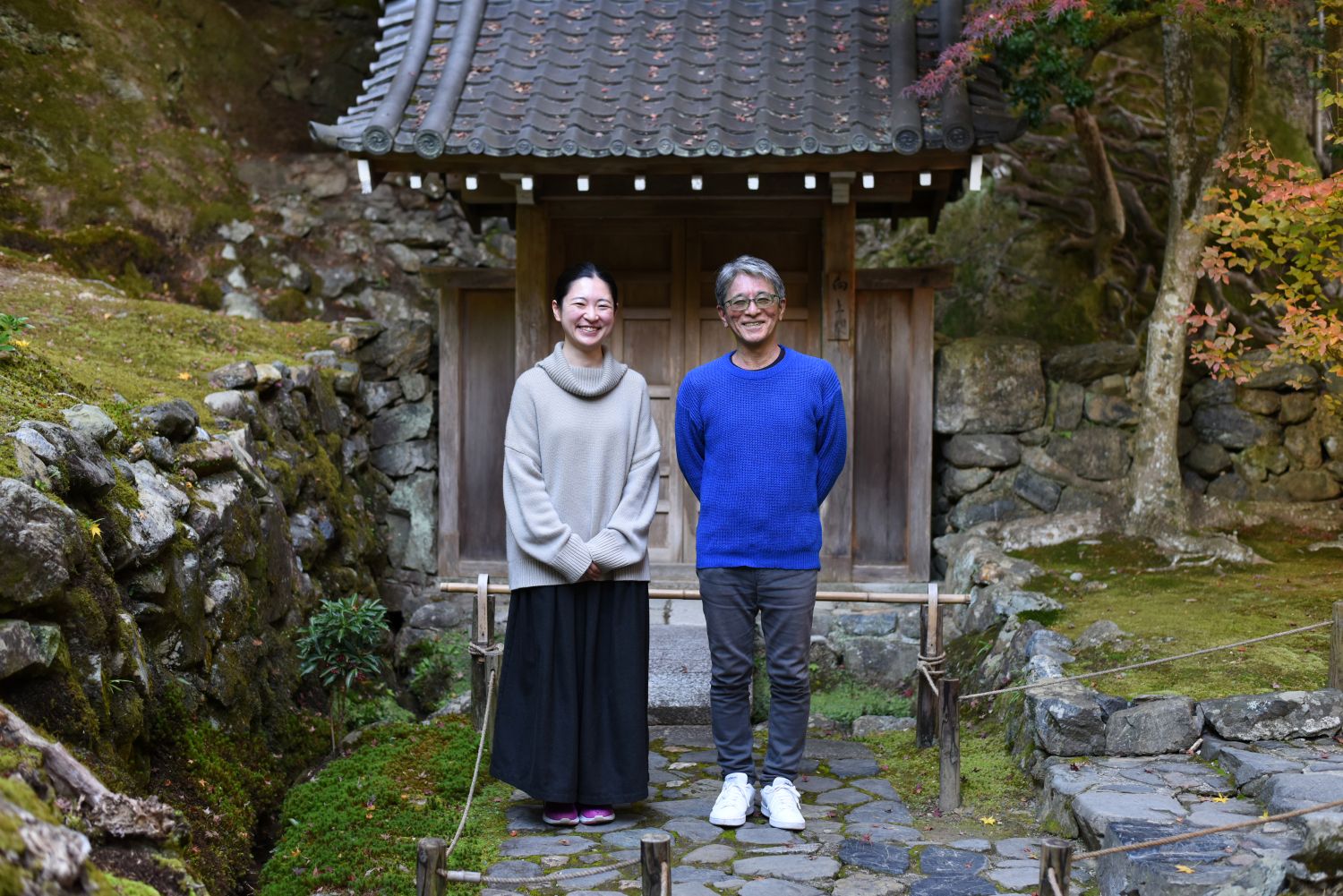
Today Mr. Sen Sooku — a descendant of Sen no Rikyu, the greatest of all Japanese masters of tea — was to give a talk on the way of tea, and Mr. Raku Kichizaemon, sixteenth-generation head of the Raku line of potters, had come to hear it. The two houses are bound at the root—the first Raku master, Chojiro, made his bowls to Rikyu’s order, and from that encounter the celebrated Raku tea bowls were born. Mr. Sen spoke to us of the long history of Saihoji, of the many changes it has passed through over the centuries, and its connection to tea; in two essays I will try to recover the heart of what he told us, in a setting of great beauty. In this history I trace the long history of Saihoji and in my next essay I will turn to the tea house, Shonantei, itself.
These hills are older than the city that later grew up to the east of them. Long before Heian-kyo was laid out on its Chinese grid, the western valley was the country of the Hata clan — immigrant aristocrats said to have crossed the sea from the continent, their lineage traced, half in legend, all the way to the first emperor of Qin. It was they who founded the great shrine at Matsunoo and the temple at Uzumasa, famous for its Miroku Bosatsu — the meditating Maitreya that became the first of all Japan’s National Treasures. There is even a tradition that says that Saihoji is the site of a villa belonging to the venerable Prince Shotoku.
Its very name remembers an older purpose. Today Saihoji is written with a character meaning “fragrant,” but it began as 西方寺, the Temple of the Western Quarter, built in imitation of the Western Pure Land of Amida — the paradise into which the dying hope to wake. It sat, fittingly, at the far western edge of the Kyoto basin, where the city runs out against the hills; and when Muso Kokushi restored the garden in 1339, it looked very different from the shadowed, moss garden we visit now. It was a garden of white sand and green pines, raked bright and open. With its elegant temple structures and lovely pond, it may have appeared much like a vision of the Pure Land itself.
Then it fell into ruin. ….And so it was that we listened to the magical history of Saihoji on a chilly afternoon in February, as though catching a hundred views of the temple through drifting clouds, each parting to open one prospect upon another.
Then tea came. In 1591 Hideyoshi ordered Rikyu to take his own life; the house of Sen was broken, its utensils confiscated, its people scattered. The man who in the end rebuilt it was Rikyu’s stepson, Shoan. He was not a blood relation, being the child of Rikyu’s second wife, married into the family and easy to overlook between the towering father before him and the famous grandson, Sotan, who came after. For three years Shoan sheltered in the far north, at Aizu, under one of Rikyu’s own disciples, before he was pardoned and allowed back to Kyoto to raise the family anew.
And it is at Saihoji, by tradition, that Shoan kept his retreat. The tea house called the Shonantei, stands in the garden still, a designated Important Cultural Property, and the temple guards a wooden image of Shoan that survives nowhere else — not even among his own descendants. There is a thread of harder evidence, too: Koshin, fourth-generation master of the Omotesenke branch of the Sen family, recorded that Rikyu, taken with the stone pavement here at Saihoji, created his own garden path based on it — the first time, it is said, that such a pavement was laid in a tea garden. It is nearly the only point at which the written memory of tea and this temple touch, and it suggests that father and son alike knew the moss.
After the talk we were given time to walk about the temple, and then I had the privilege of walking the garden in the company of Mr. Sen and Mr. Raku. Much of the snow had already melted, but here and there it still lay scattered across the garden like the clouds in a rakuchū rakugai zu, one of those old screen paintings of “scenes in and around the capital,” where Kyoto comes and goes between drifting bands of gold. Garden and history, time and seasons, seemed to appear and disappear together, like the world glimpsed through gaps in passing clouds.
It was a truly magical day at Saihoji. I felt a deep connection to the history of the temple; but what made the day so rare, and so moving, was to walk in the garden in the company of not one but two living descendants of Rikyu and of Chojiro — for it meant that this history is not finished but living, still being remade anew in every generation.
This living history is informed by an active dialogue with their ancestors, and by a sense of the tapestry of time, of summer heat and winter cold and all the elegant seasons, and hundreds of green views through the drifting clouds, one for each shade of moss.
Peter MacMillan
Peter MacMillan is a prize-winning translator, scholar, poet, and President of The Moon is a Boat Co., Ltd.
His translation, One Hundred Poets, One Poem Each (Hyakunin Isshu), was published in 2008, winning prizes in both Japan and the United States. After that, he completed an English translation of The Tales of Ise (Ise Monogatari), which was published by Penguin in 2016. He has also published a collection of poetry entitled Admiring Fields.
Awards:
Recipient of the Donald Keene Center Special Prize for the Translation of Japanese Literature
Recipient of the 44th Special Cultural Translation Prize from the Japan Society of Translators
Nominated for the PEN Award for Poetry Translation for the English translation of The Tale of Ise (Ise no Monogatari)