
2026.8.23
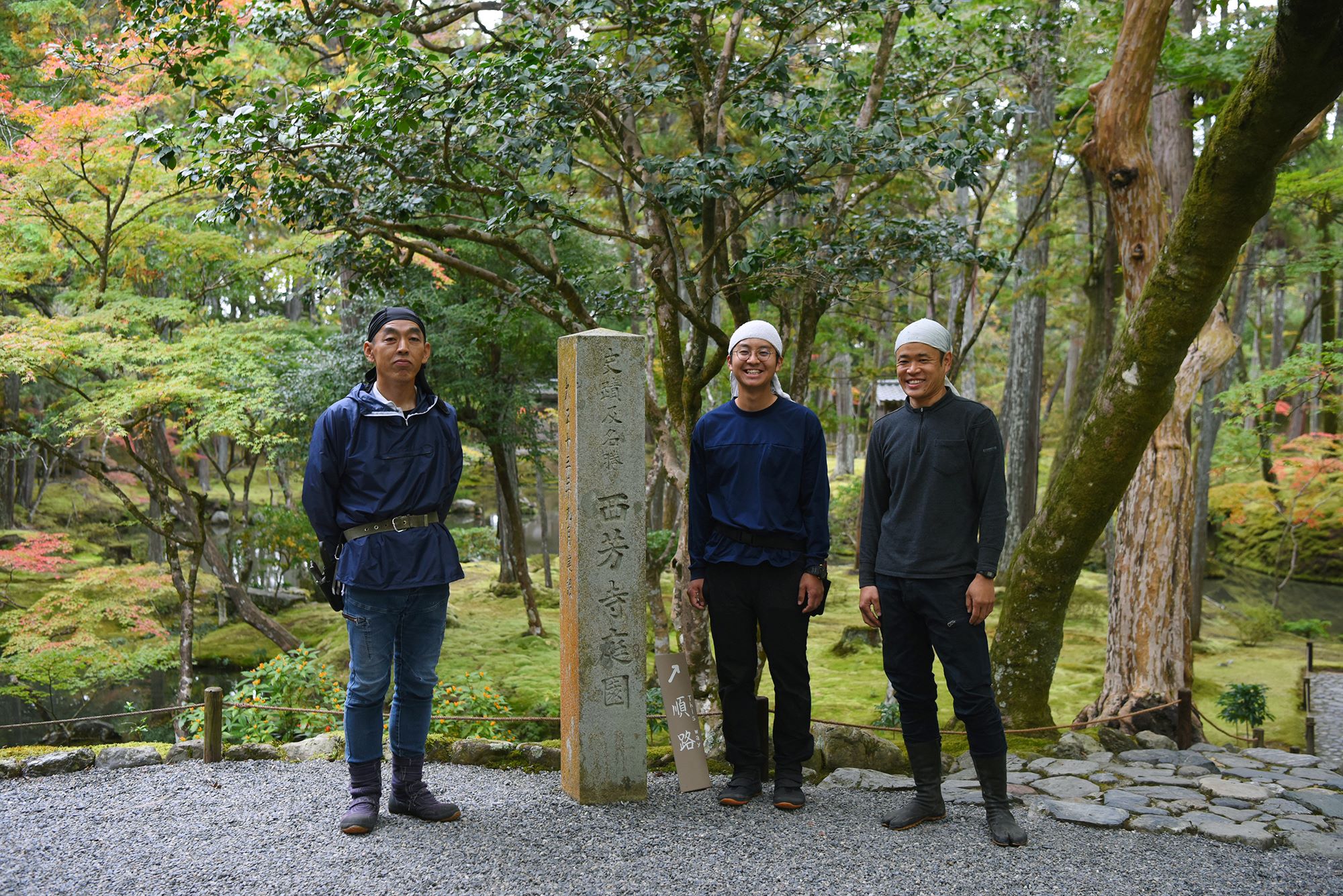
The Genii Locorum of Saihoji
(First Part)
Furuta Ryo
Domoto Insho’s Abstract World at Saihoji
The ancient Romans believed that all locations were inhabited by genii locorum —the protective spirits of places. The multilayered nature of time is a key concept for understanding the history of Saihoji. And looking over the long history of Saihoji we can feel that it is exactly such kind of place.
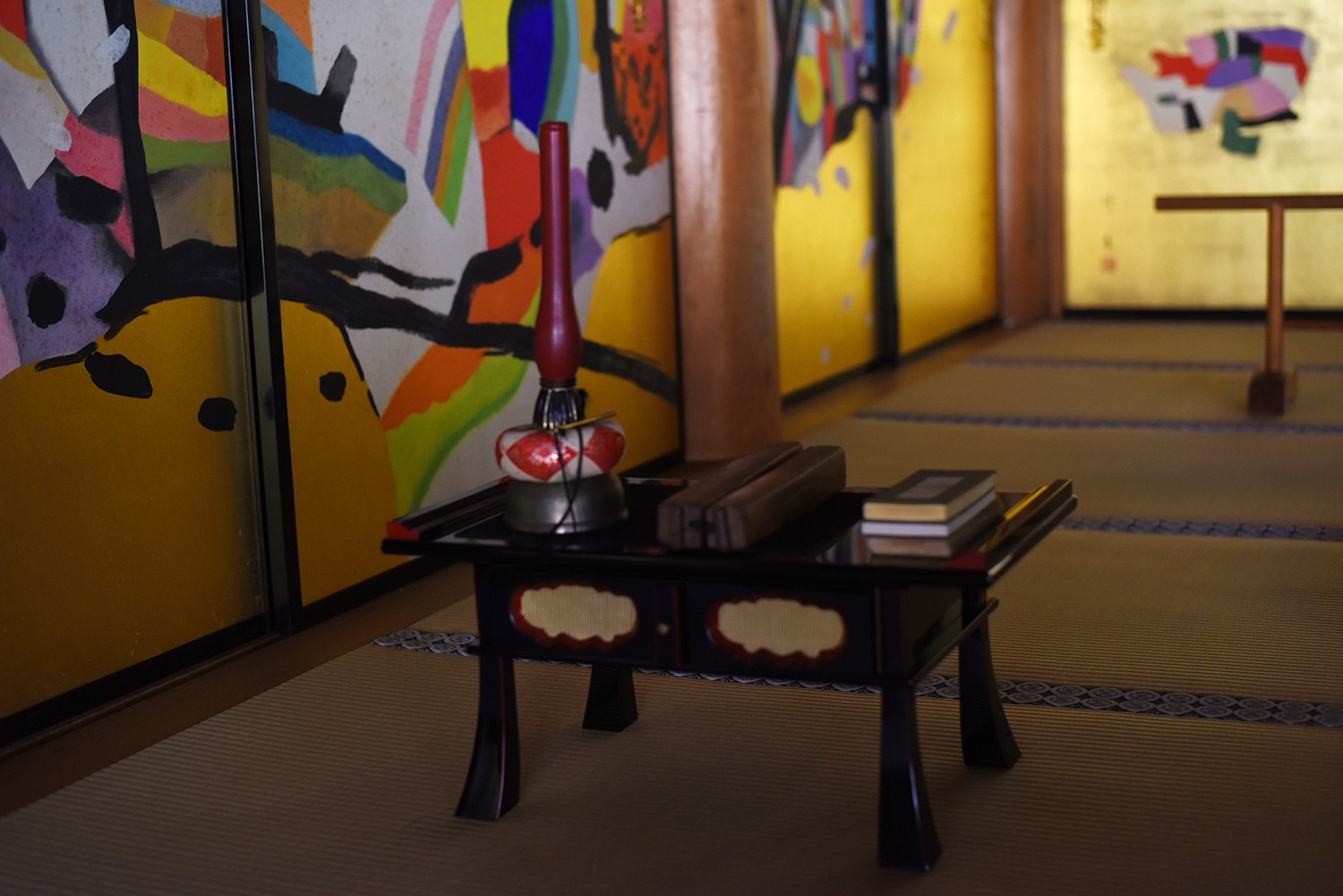
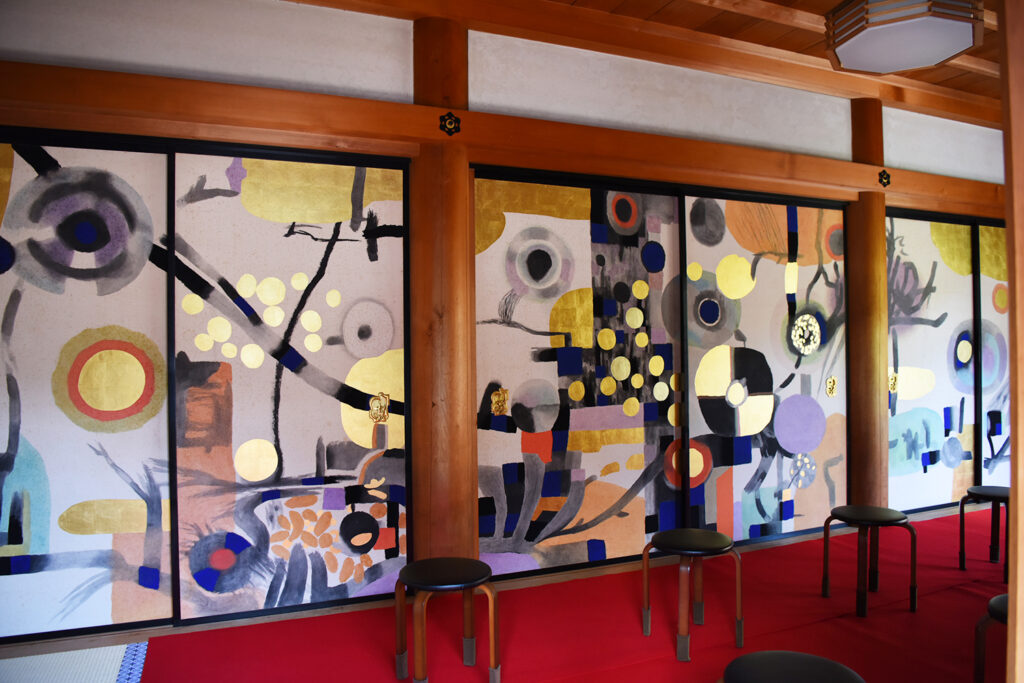
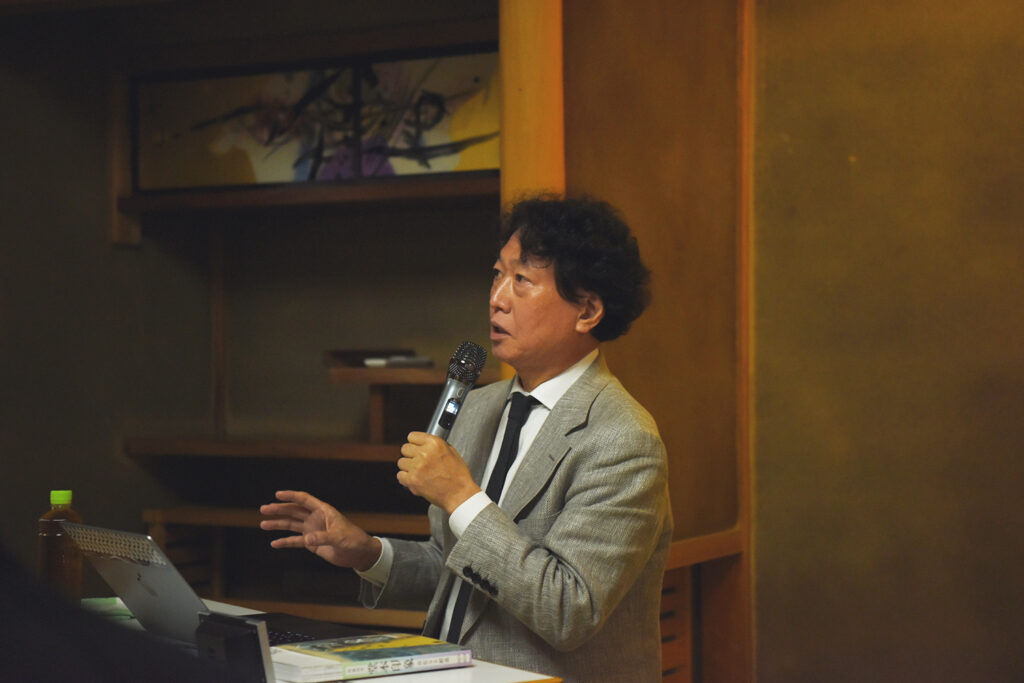
Upon entering the main hall of Saihoji, visitors are captivated by modern, dynamic fusuma paintings by Domoto Insho. But why was such striking modern art introduced into this ancient temple’s space? In February 2026, the Zen and Art Society welcomed Tokyo University of the Arts Professor Furuta Ryo to unravel the mystery.
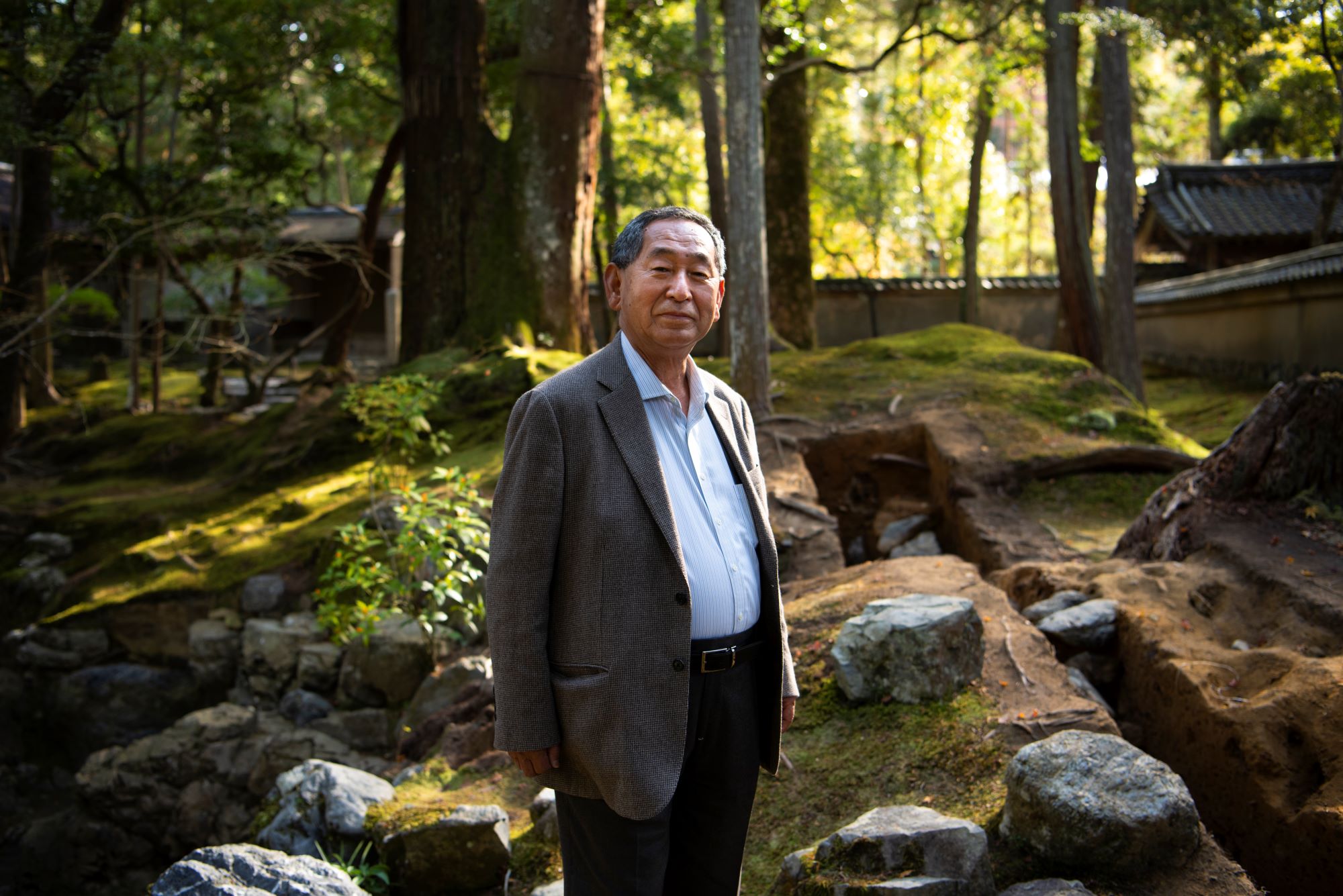
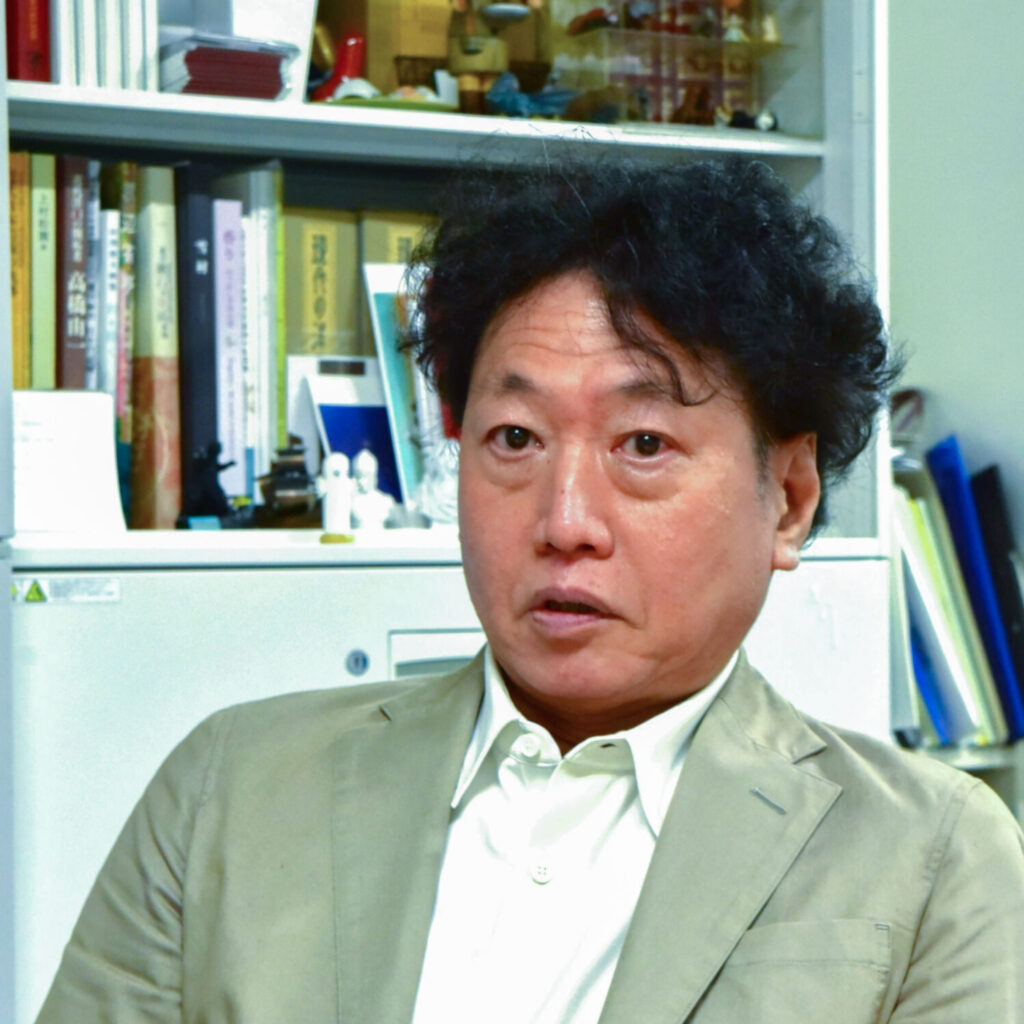
Furuta Ryo
Professor at the University Arts Museum, Tokyo University of the Arts. Following tenures at The National Museum of Modern Art, Tokyo (MOMAT), he has curated major exhibitions at the University Art Museum. Specializing in modern Japanese art history, he has organized prominent shows including Rimpa, Modernity in Flux, and Yokoyama Taikan. He authored Tawaraya Sotatsu: Rinpa no so no shinjitsu (Tawaraya Sotatsu: The Truth of the Founder of Rinpa) (Heibonsha Shinsho), which won the Suntory Prize for Social Sciences and Humanities. Additionally, he co-edited Kindai nihon no gakatachi (Modern Japanese Painters) (Heibonsha Bessatsu Taiyo), and Nihon kindai bijutsushi jiten (the Encyclopedia of Modern and Contemporary Japanese Art History) (Tokyo Shoseki Co., Ltd.).
A superhuman painter into his 80s
Today, I’ll talk about the Japanese painter, Domoto Insho, who created Saihoji’s fusuma paintings from the perspective of modern Japanese art history. Active until 84, his evolving style culminated in these late-career masterpieces
When people hear the term nihonga (Japanese-style painting developed in the late 19th century), many of them evoke works by Yokoyama Taikan or Takeuchi Seiho. And if we ask whether the fusuma paintings at Saihoji can truly be classified as nihonga, the answer is both yes and no. They are works that can be understood as, yet at the same time seem to spill beyond the boundaries of the genre altogether. In that sense, they are the kind of works that leave art historians scratching their heads.
Kyoto is home to the Kyoto Prefectural Insho-Domoto Museum of Fine Arts, designed by Insho himself, carries an atmosphere that feels almost otherworldly. Step inside, and you are greeted by a world so far removed from traditional Japanese paintings that it leaves you wondering, “What on earth is this?” Because of that, it is hard not to come away with the impression that Insho was a wonderfully eccentric character.
However, contextualized within modern Japanese art, his stylistic evolution is surprisingly clear. First, let us explore the life and character of Insho.
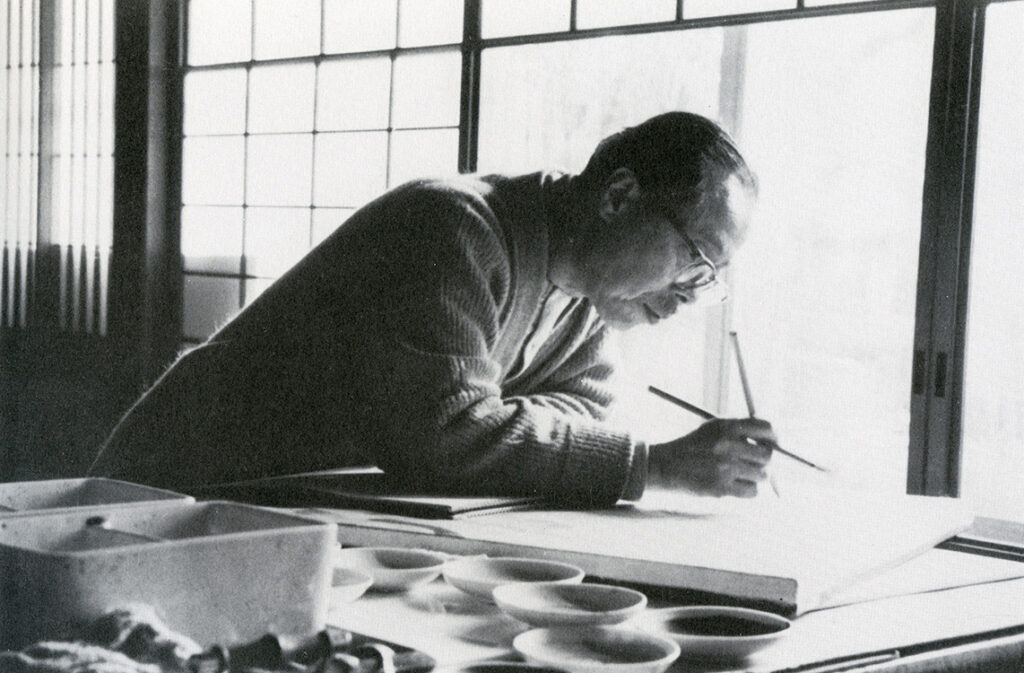
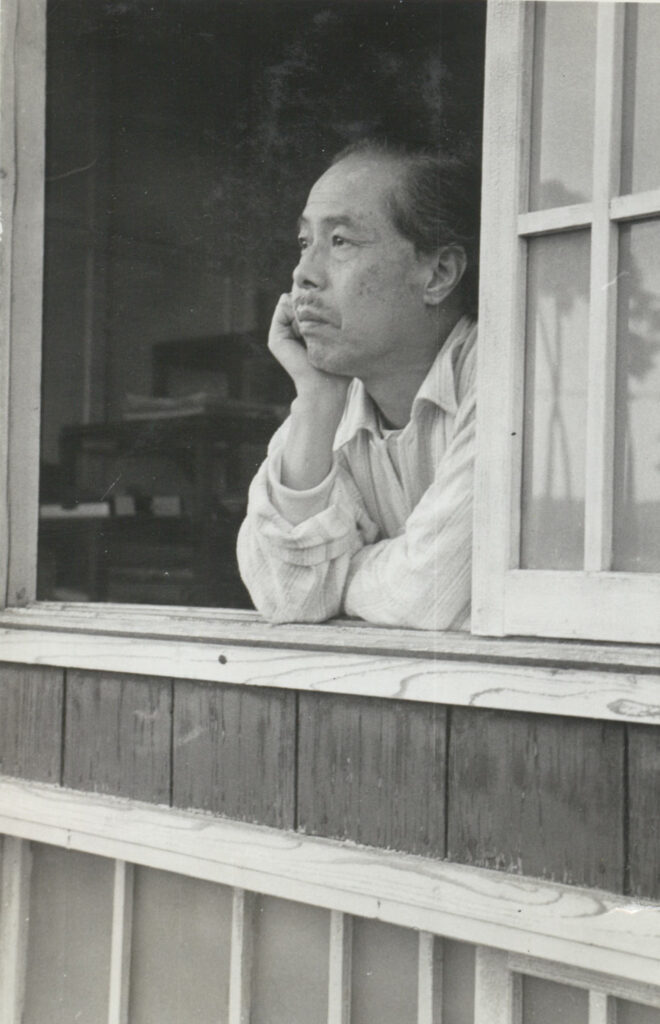
These two photographs vividly convey Insho’s character. The one on the left shows him at work, brush in hand. He was a man who never stopped painting, and his capacity for work was said to be almost superhuman.
The right image shows him gazing outside, lost in thought. His paintings exude a literary, philosophical, or religious spirituality, reflecting a mind constantly swirling with words and ideas.
Insho was born in 1891 as the third son of a prosperous liquor merchant and grew up in a wealthy household. His father was apparently quite an eccentric figure, running the family business while pursuing a wide range of interests and socializing with people from all walks of life. In later years, Insho would readily embrace new ideas rather than remain bound by Kyoto’s traditions—a trait he may well have inherited from his father.
Showing artistic talent from an early age, Insho attended an art school in Kyoto. After losing his father in his twenties, he took a job creating design sketches for the renowned Tatsumura Textile to help support his family.
Here, he likely forged a relentless work ethic through endless drawing. His recognized skill soon earned him formal training, launching his painting career with Tatsumura Textile’s full backing.
He made his debut in the Taisho period (1912–1926). Through a series of award-winning entries at the Teiten (Imperial Art Academy Exhibition), the predecessor of today’s Nitten, he gradually established his reputation in the Japanese art world.
Insho embodies both Yokoyama Taikan and Picasso.
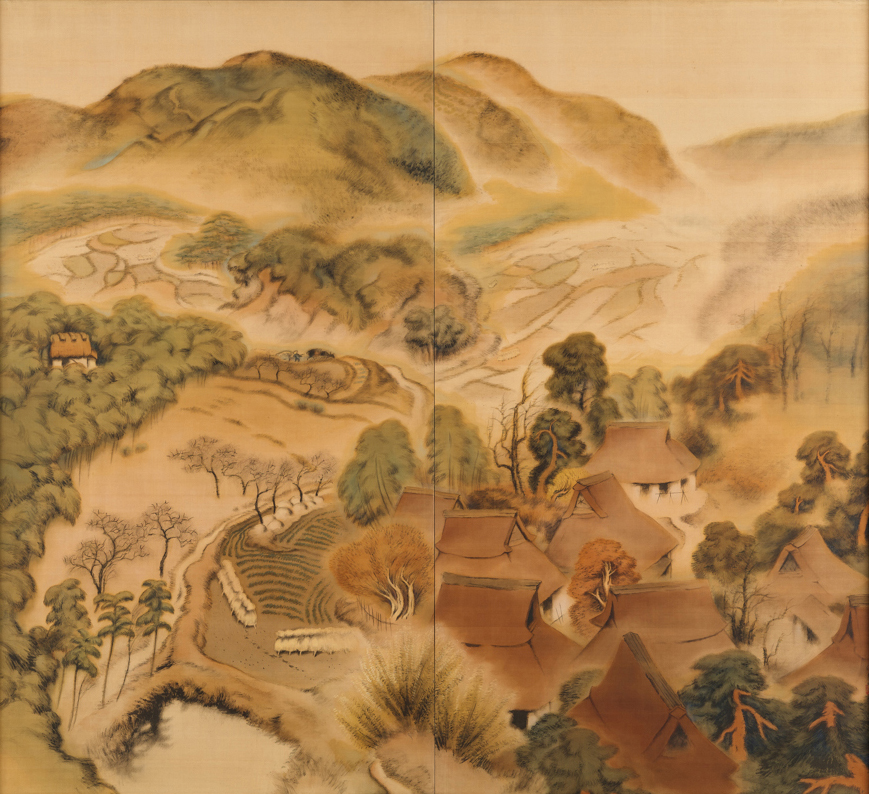
“Landscape of Fukakusa” Domoto Insho (1919). Collection of the Kyoto Prefectural Insho-Domoto Museum of Fine Arts.
Insho’s early works are firmly rooted in the nihonga tradition. They blend realism popular among Kyoto’s young contemporaries with classic Edo period lineages like the Maruyama-Shijo school.
As Western culture flowed into Japan in the early twentieth century, Insho also came under the influence of Western art, including Romanticism and Post-Impressionism, exemplified by Van Gogh. Influenced by the immense popularity of Yumeji Takehisa at the time, he even experimented with bijinga (paintings of beautiful women) in Yumeji’s distinctive style.
You can instantly tell if Insho's works date to the late Taisho period or early Showa period. His inspirations are equally obvious; one piece might channel Yokoyama Taikan, while another echoes Takeuchi Seiho. This versatility proves his technical mastery in emulating distinct styles.
This was not a matter of imitation. Keenly aware of contemporary trends and the work of fellow artists, Insho absorbed these influences and transformed them into something distinctly his own. Although highly individualistic, he remained closely attuned to the artistic currents of his time and grew alongside them.
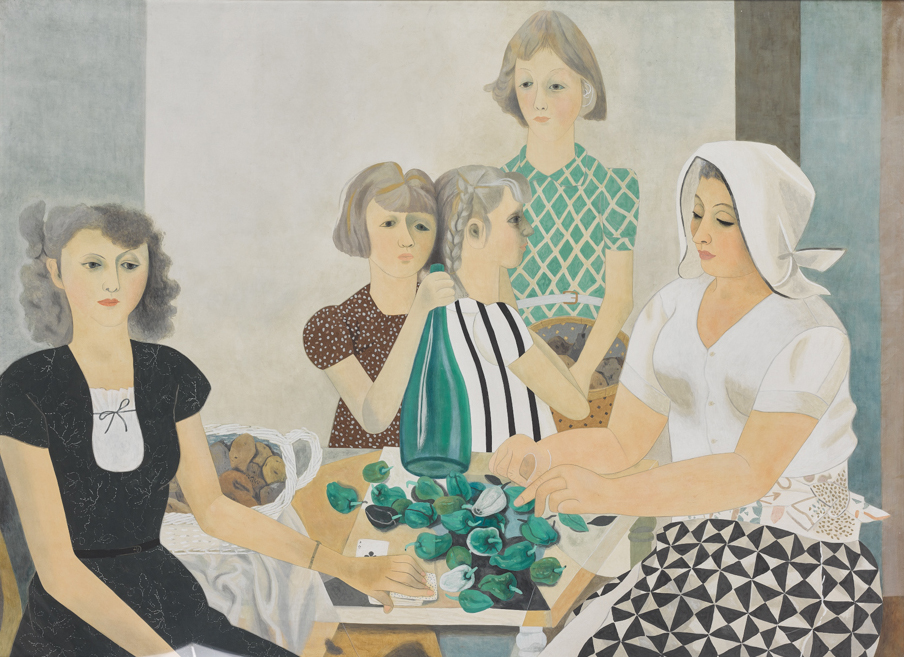
After the war, Insho’s style changed dramatically. It is hard to believe that “A Family” and “Landscape of Fukakusa” were painted by the same artist. People at the time must have wondered what had happened.
Yet it is precisely because they were painted by the same artist that such a work could emerge. Within Insho lived Yokoyama Taikan and Takeuchi Seiho, as well as Matisse and Picasso. Seen in that light, this dramatic transformation does not seem so strange after all.
Admittedly, if we focus on Insho’s work alone, this transformation can seem rather extraordinary. Yet many of his contemporaries were moving in similar directions. Takayama Tatsuo and Higashiyama Kaii turned toward European Modernism in the years following the war, while Ogura Yuki incorporated urban subjects into her work. Viewed within the broader currents of modern art history, it becomes clear that Insho was not uniquely exceptional.
Breaking down what he had built
In 1952, Insho traveled to Europe. While he surely encountered classical works in Europe, Insho engaged with the avant-garde of Western art and sought to absorb it.
Studying abroad typically involves artists in their twenties or thirties drawing on foreign cultures to forge their styles, but Insho was different. At the age of 61, despite already being regarded as one of the leading figures in the Japanese art world, Insho set out to break with everything he had built up. If I was asked to do the same past sixty, I might find it rather daunting. He possessed a truly adventurous spirit.
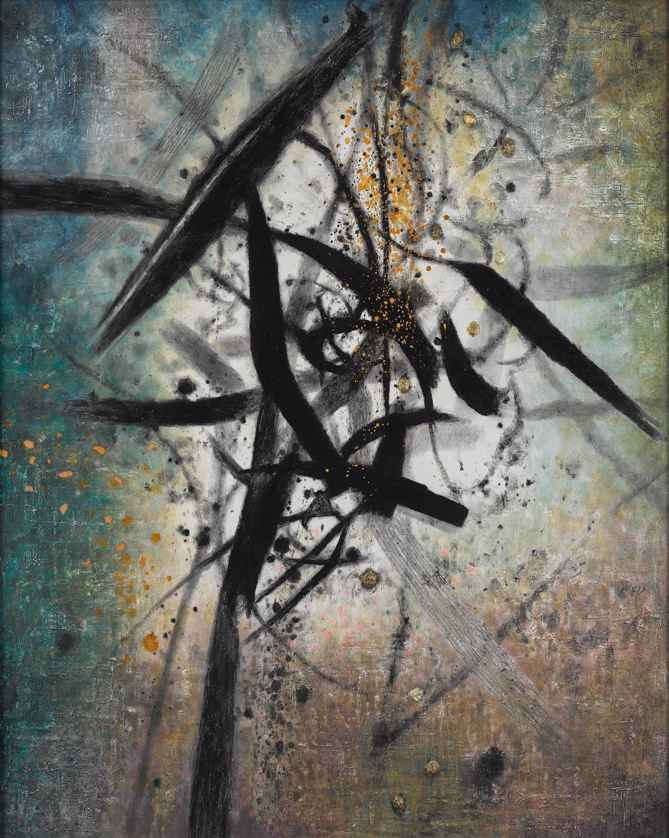
“Symphony” is widely considered a masterpiece of his abstract paintings. By this point, he had transcended the mere imitation of Western art, becoming a pioneer of abstract Japanese painting from the late 1950s onward.
When considering how to approach abstract art, it is often difficult to find a narrative within it. Even if we try to discern the artist’s intentions, the exercise can feel a bit like a Zen riddle. What remains, then, is the enjoyment of color and form alone. In other words, the act of seeing becomes the essence of the experience.
Yet, Insho infused his work with emotion and sensibility. Titles offer vital clues; “Symphony,” for instance, evokes auditory resonance. Ultimately, Insho’s paintings bridge his inner vocabulary with his visual expression of color and form.
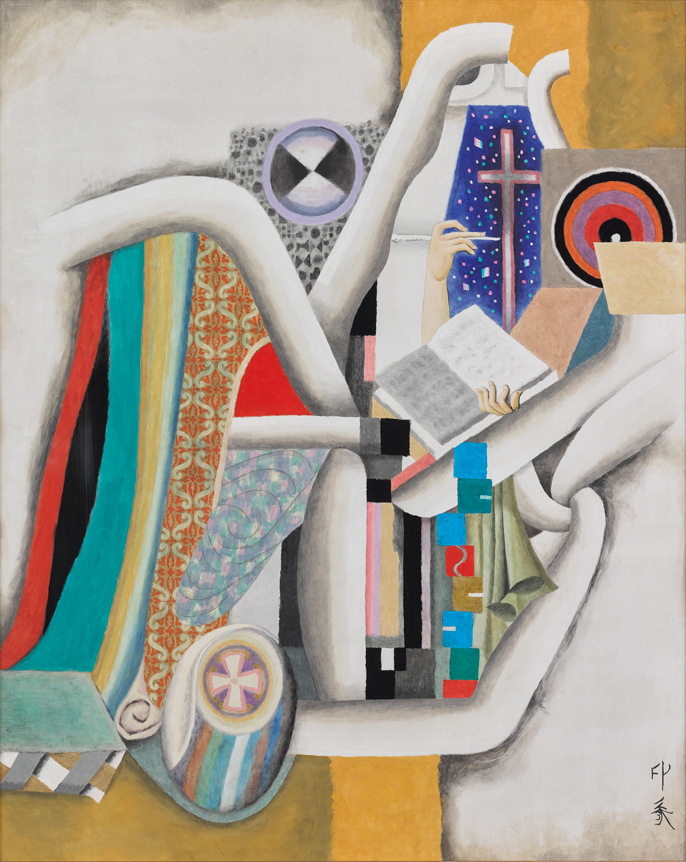
As Insho explored abstract painting, his work grew more philosophical. Yet, “Immortality of Logos” retains figurative motifs like a pen and notebook. This interplay of concrete elements within abstraction is a hallmark of Domoto Insho’s style.
By now, it should be easier to understand how the fusuma paintings at Saihoji came into being. In the second part, I’ll talk about the fusuma paintings themselves.
The second half will be published in early September.
Edited by: MIYAUCHI Toshiki
Written by: HOSOTANI Kana
Photographed by: MOCHIZUKI Sayaka
Image courtesy: the Kyoto Prefectural Insho-Domoto Museum of Fine Arts
*These photos were with permission.
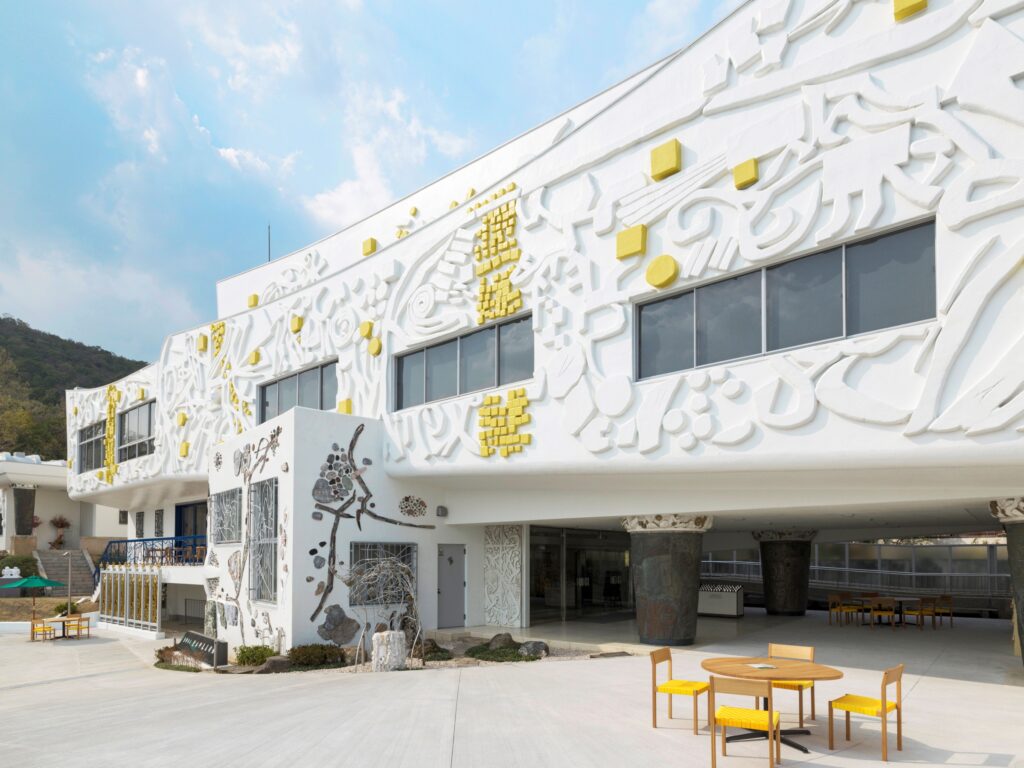
Kyoto Prefectural Insho-Domoto Museum of Fine Arts
Founded in 1966 by Domoto Insho, the museum features an interior and exterior entirely designed by the artist. Its architecture reflects a unique aesthetic inspired by Western palaces and contemporary art museums. In 2025, it was registered as a national Tangible Cultural Property.
https://insho-domoto.com/en/