

2026.11.20
Winds of Gold—A Hundred Views of Saihoji Vol. 30
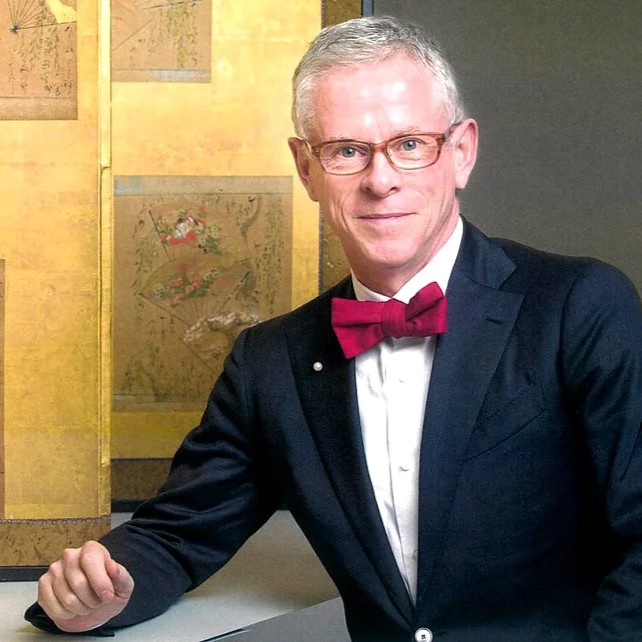
Peter MacMillan / a translator, scholar, poet
In this series of essays on Saihoji the renowned translator of Japanese poetry and poet Peter MacMillan records his impressions of and reflections on his visits to the garden throughout the four seasons. We hope that through these essays you the readers and fans of Saihoji can feel as if you are also present in the magical garden even when you cannot visit us.
A Harmony of Differences
An Autumn Afternoon at Saihoji
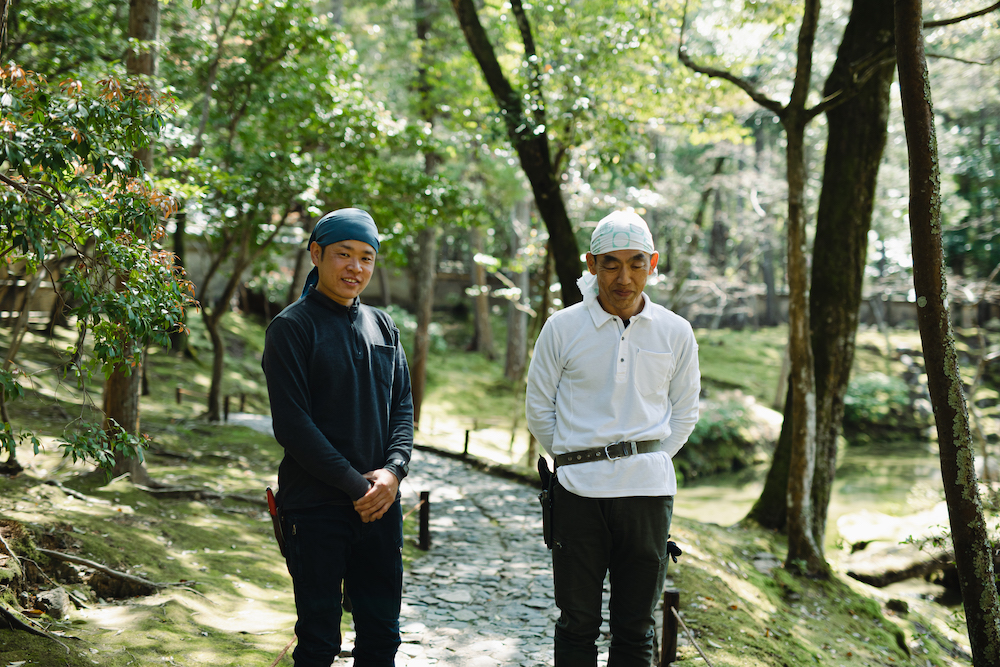
Recently I took four guests to Saihoji, and a more unlikely company I could hardly have assembled. Two were an Irish couple, friends of my sister in Ireland. The third was a young Japanese man at the very beginning of his working life, and the fourth a Japanese man in the middle of his. The four differed in age, nationality, history, and expectation. As we walked through the gate of the moss temple together, I wondered at first what they would find to share.
What they found was the garden itself. We began with a short meditation that brought us together. As we moved along the path, the distance between us softened. The Irish couple, both gardeners, were full of curiosity about how moss is cultivated; the young man noticed one lovely detail after another; and the older man sat for a long while in silence by the water. We were like the moss-covered stones around us, which blend into the landscape without ever ceasing to be stones. By the time we had completed our circuit of the garden, we had become a small community, joined in a shared appreciation of beauty.
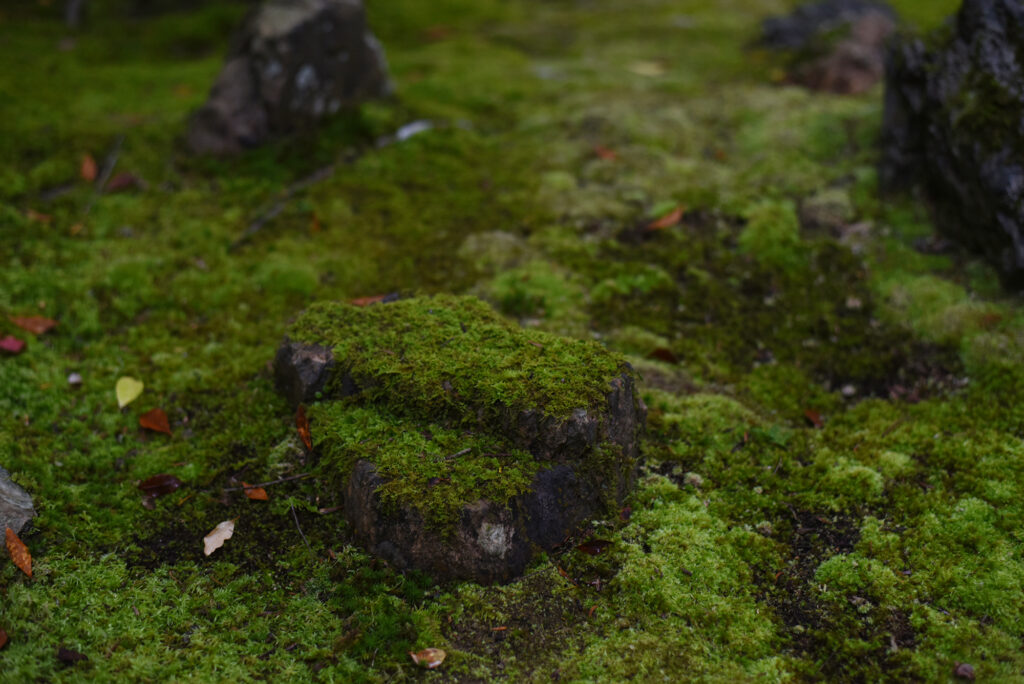
On the way home toward Saga, I found myself thinking about how we might be together in our differences. And I felt that I had witnessed, in miniature, the idea at the heart of a book whose manuscript I have just finished—a book about the Japanese ideal of wa, or harmony. We often mistake harmony for everyone becoming the same, but at its best wa harmonizes differences. It allows distinct things to stand beside one another so that each becomes more fully itself. As in music, harmony requires more than one note. And in the clear autumn light of the garden, each of my guests had become more fully who they were.
There is a phrase that is most closely associated with the ideal of harmony that most Japanese aspire to, wa o motte totoshi to nasu, “harmony is to be treasured above all.” And it is traditionally attributed to Shotoku Taishi, the prince remembered who introduced wa to Japan as a principle of government and of life. And Shotoku Taishi has a connection with Saihoji. According to legend, long before the monk Gyoki founded a temple here in the eighth century, this ground was the site of Prince Shotoku’s country villa. It is lovely to think that one of Japan’s greatest historical figures may have once walked on or near this ground.
In the essays to come, I would like to follow these threads further—to look more closely at Shotoku Taishi, both the figure of legend and the historical prince; to explore the philosophy of wa in greater depth; and to consider Saihoji not only as a garden but as a place of wa, where people of different backgrounds might gather to think deeply about their past, their future, and what might help to make peace in the world today. I have enclosed an exercise at the end for you to practice making wa a part of your life.
On my most recent visit, four diverse companions on an autumn afternoon showed me what such a place can do. And the more than one hundred kinds of moss living side by side in the garden seemed to be telling me that, together, they would be my teacher.

Peter MacMillan
Peter MacMillan is a prize-winning translator, scholar, poet, and President of The Moon is a Boat Co., Ltd.
His translation, One Hundred Poets, One Poem Each (Hyakunin Isshu), was published in 2008, winning prizes in both Japan and the United States. After that, he completed an English translation of The Tales of Ise (Ise Monogatari), which was published by Penguin in 2016. He has also published a collection of poetry entitled Admiring Fields.
Awards:
Recipient of the Donald Keene Center Special Prize for the Translation of Japanese Literature
Recipient of the 44th Special Cultural Translation Prize from the Japan Society of Translators
Nominated for the PEN Award for Poetry Translation for the English translation of The Tale of Ise (Ise no Monogatari)
- Back
- List of articles
- Next
Up next
Most read


Your Heart
"Gratitude"