
2026.5.20
体露金風 西芳寺第二十五景
ピーター・J・マクミラン
(翻訳家・詩人)
翻訳者であり詩人でもあるピーター・マクミラン氏が、西芳寺の魅力を綴る「体露金風 西芳寺」シリーズ。日本文化への造詣が深いピーター氏の感性と深い洞察が誘う、心の旅。ぜひ原文の美しい響きも、ご堪能ください。
仏の世界を抽象化する 堂本印象のアート 前編
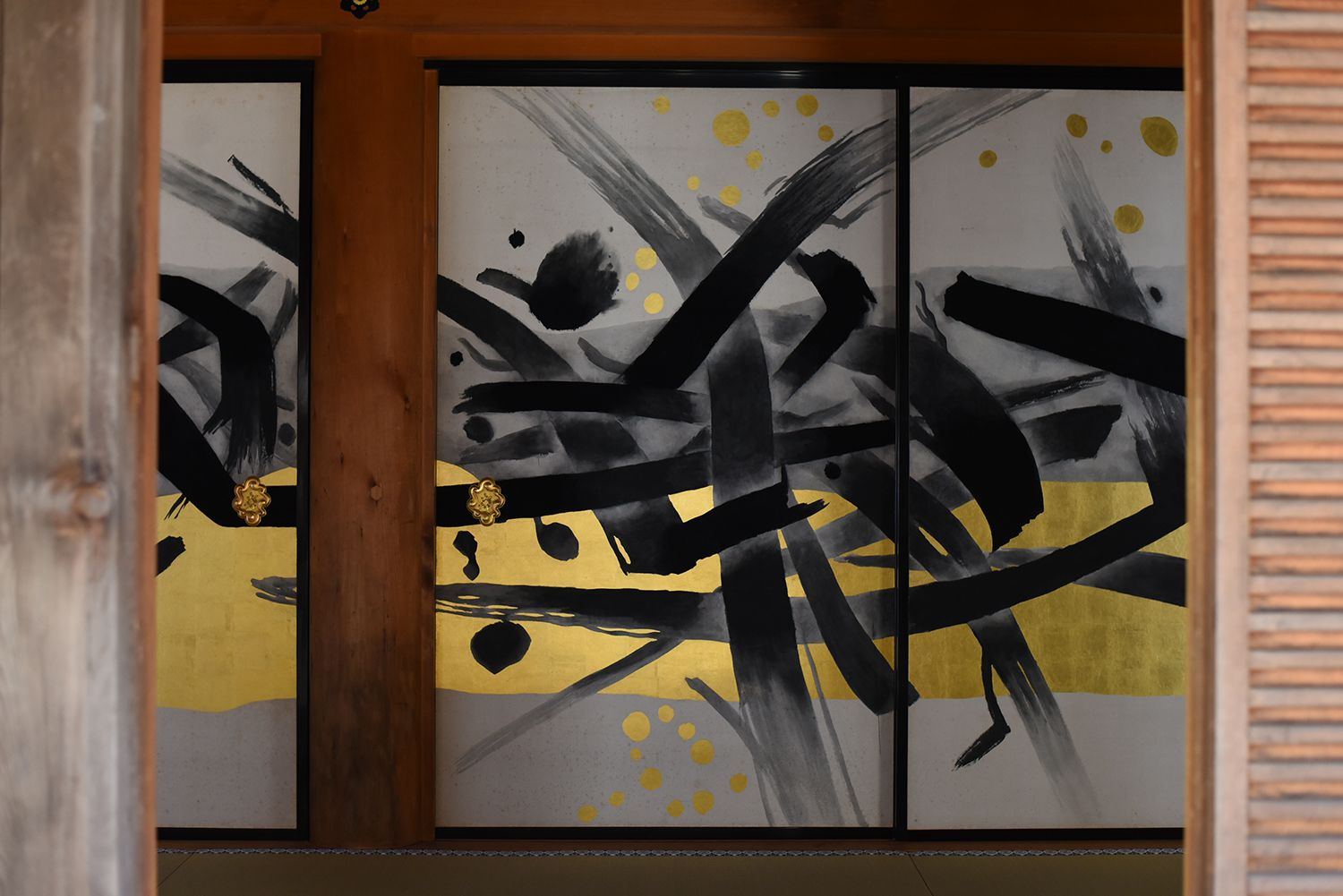
春が戻り、新たな生命が誕生するこの季節は、ものごとの変化と再生を振り返るのに、ぴったりな季節です。しかし、変わり続けているのは自然だけではありません。日本の歴史もお寺も、時代時代を経て少しずつ、絶えず変わり続けてきました。そんなことを実感したのは、今年2月に西芳寺を訪れて堂本印象のすばらしい襖絵を見たとき。その際、古田亮教授がこの画家に関するすばらしいお話をしてくださいました。
日本美術の題材に関する決まり事は、中国画が日本に伝わった頃から存在し、その後1000年以上かけて確立されました。歴史的には、花鳥画や水墨画、そして仏画が、芸術性と精神性を継承する題材として非常に重要視されてきました。なかでも、お寺における芸術表現は、「物事はどうあるべきか」という確固とした概念に導かれていたのです。
しかしながら、第二次世界大戦による甚大な被害で多くの文化財や絵画が失われたことをきっかけに、奇しくも再生の時代が切り開かれます。戦後、堂本印象などの芸術家が仏画界に台頭し、伝統を尊重することは、かならずしも従来の慣習を厳格に守ることを意味しないことを示しました。代わりに、彼らは様式やモチーフに対する確立された固定概念を放棄し、本質的なものを保持するスタイルへと移行し始めたのです。
こうした転換は特に1950年代以降、智積院などのお寺の襖絵に顕著に現れます。印象をはじめとした芸術家たちは、もはやお寺での美術制作を過去の様式を受け継ぐべきものだとは考えませんでした。むしろ、自分自身の確固たる世界観をお寺の内部に取り込み、神聖な場を芸術の実験場と化したのです。そうすることで、「お寺だから、こうあるべき」という前提に抗ったのでしょう。
とりわけ印象の作品は、これまでとは異なる解釈を提示しています。それは、本物は模倣のなかにあるのではなく、精神的な核に忠実に沿いながらも進化させていくなかにこそ宿る、ということ。彼は「お寺」という枠のなかに、個性と芸術的ビジョンが歓迎され祝福される世界を創造したのです。
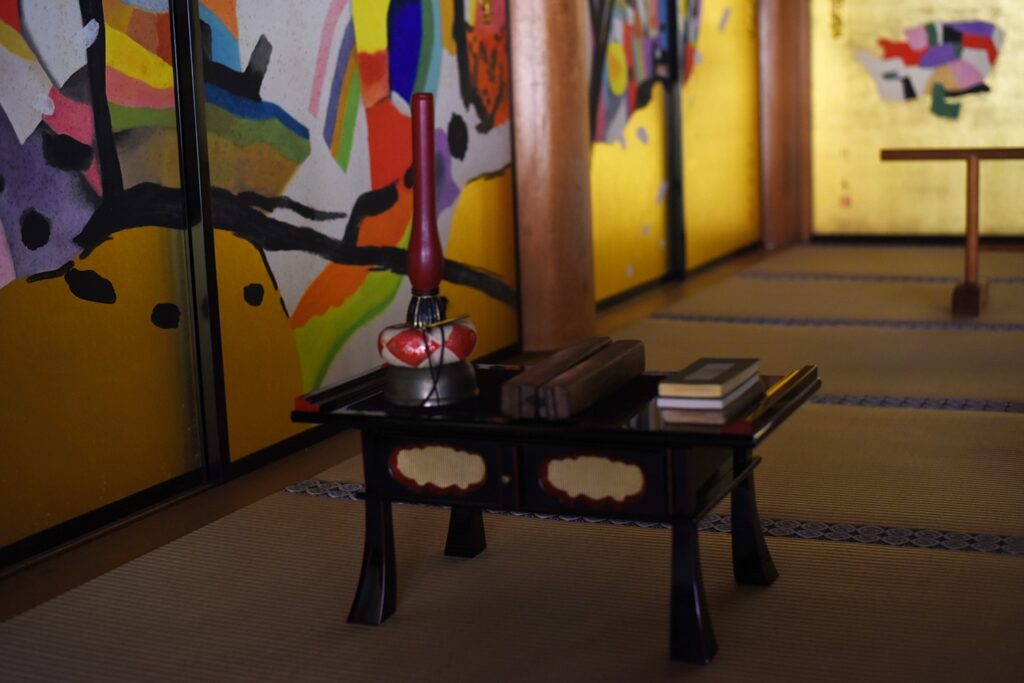
西芳寺の襖絵をより理解していただくためには、古くからの伝統を再構築しているものとして見ていただけるといいでしょう。つまり、元来の要素を守りながらも、様式とイメージには大胆な変化が付け加えられているのです。最終的に、この襖絵では仏の世界を十分に表しきれないという考えは消え、むしろ「抽象」という表現手段のほうが、仏教の複雑な宇宙観や捉えがたい側面を表すのに、ある意味ではより適していると思えてきます。
さらに、この襖は多くの連想や感覚を呼び起こします。当時のヨーロッパの抽象画からの影響に気づく一方で、抽象的な空間のなかに、具体的な描写もあるようにも感じるのです。この襖絵は、画家の最高潮を示す傑作であると同時に、並外れて美しい。しかし、最も深く心に残るのは、仏の世界に対する画家の深い帰依の念です。私たちは、彼の信仰心を通じて、より強く各々の信仰心を深めてゆくのでしょう。そして西芳寺を後にする際、自分自身が宇宙と一体になり、すべてのものと繋がっているという意識を持っていることでしょう。
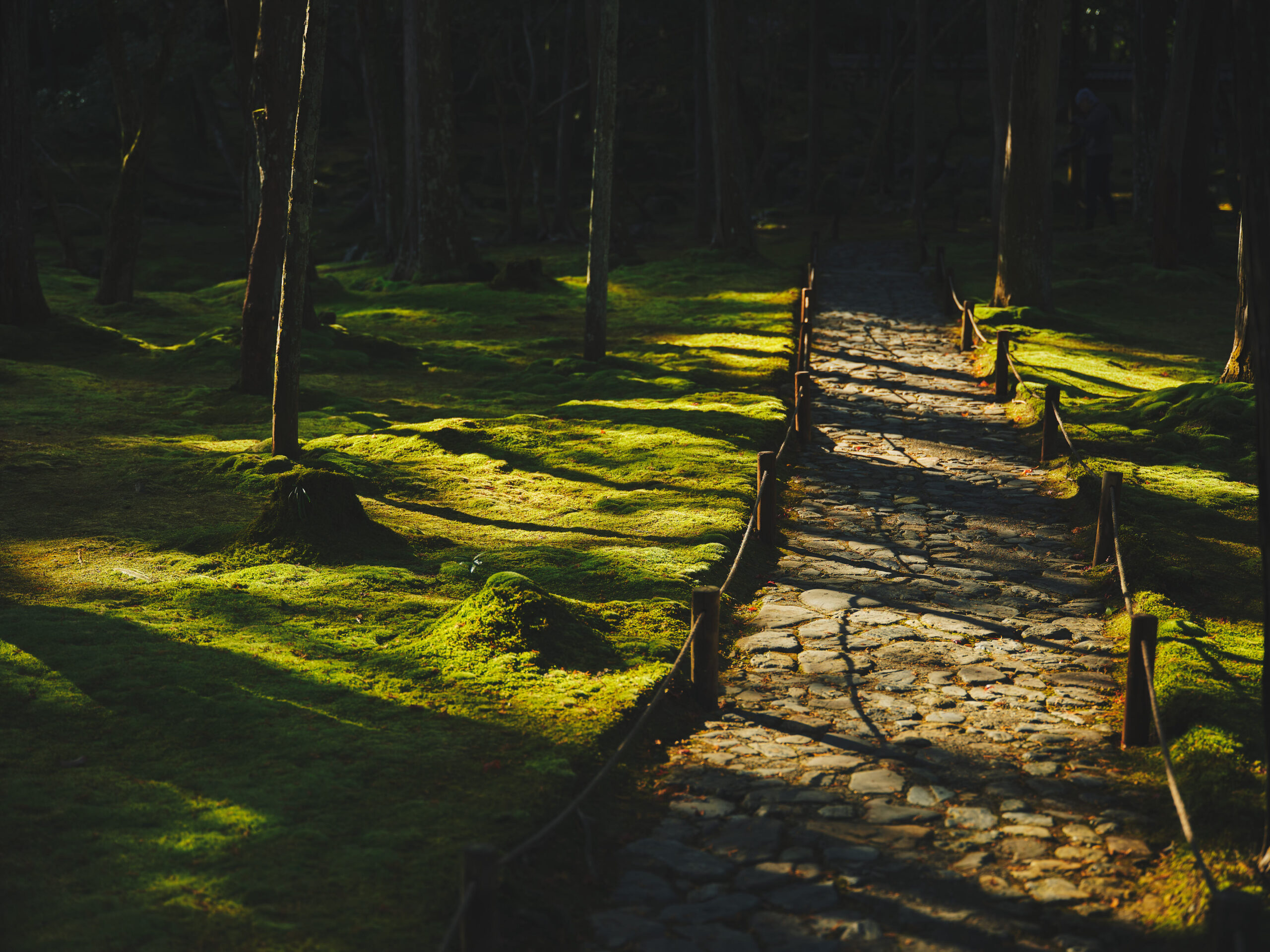
先生のお話のあと、お庭で苔の緑、鳥の歌、そして空を舞う梅の花びらに囲まれながら歩いていると、私もこの自然たちの一部なのだと、実感しました。
後半では、堂本印象の斬新な襖絵と自然豊かな西芳寺の空間が呼応することで生まれる世界観についてお話します。後編はこちら>>
Abstracting the World of the Buddha—The Art of Domoto Insho I
As spring returns and new life begins to emerge, it offers a fitting moment to reflect on transformation and renewal. Yet it is not only nature that is constantly changing.
The history of Japan and its temples has also been in a state of continual transformation, gradually evolving with each era. I was reminded of this in this February on a visit to Saihoji to see the magnificent screens of Domoto Insho.
Professor Furuta gave a brilliant lecture on the artist, and my essay today is based on his fascinating talk.
The rules regarding painting motifs in Japanese art date back to the introduction of Chinese paintings to Japan and have been fixed for over a thousand years. Historically, great importance was placed on flower-and-bird paintings, ink wash works, and Buddhist images that reflected inherited aesthetic and spiritual values.
Temples especially were places where artistic expression was often guided by an established sense of “how things should be.”
However the devastation caused by World War II, which led to the loss of many cultural assets and paintings created an unexpected opening for renewal. In the postwar period, artists such as Domoto Insho emerged at the forefront of Buddhist painting, demonstrating that reverence for tradition did not require strict adherence to convention. Instead, they began to preserve what was essential while discarding rigid expectations about form and motifs.
This shift became especially visible in the fusuma paintings created from the 1950s onward at temples such as Chishaku-in. Artists such as Domoto no longer treated temple painting as a fixed continuation of past styles. Rather, they infused temple interiors with fully realized personal worldviews, making sacred spaces sites of living artistic experimentation. In doing so, they challenged the assumption that “because it is a temple, it must look this way.”
Domoto’s work especially proposed an alternative understanding—authenticity lies not in imitation, but in remaining faithful to the spiritual core while allowing form to evolve. He created a world within the confines of the temple where individuality and artistic vision were welcomed and celebrated.
The screens at Saihoji are much easier to understand when we can see them as a remaking of an ancient tradition, preserving the original, but making radical alterations in style and image. And one does not feel in the end that the paintings have less successfully represented the world of the Buddha but rather that the abstract medium is in some ways more suited to expressing the complex cosmology and difficult to grasp aspects of Buddhism.
Moreover, the screens evoke many associations and feelings. One can sense the influence of abstract painting from Europe at the time, while also feeling that there are also depictions of almost real objects in the universe of the abstract. The screens are masterpieces of the artist showing him at the height of his powers and are extraordinarily beautiful. But the deepest feeling one gets is in the artist’s deep devotion to the world of the Buddha. His faith increases our own faith, and one leaves Saihoji feeling more at one in the universe and more conscious of our connectedness to all things.
Walking around the garden after the talk I had the same feeling, expressed in the greens of the moss, the song of birds and falling blossoms of plum dancing in the wind.
In the second part, we explore the worldview that emerges as Domoto Insho's innovative fusuma paintings resonate with the natural surroundings of Saihoji.
Peter MacMillan ピーター・J・マクミラン
翻訳家・詩人。株式会社 月の舟(制作・翻訳会社) 代表取締役。
2008年に英訳『百人一首』を出版し、日米で翻訳賞を受賞。2016年9月には英訳『The Tales of Ise』(伊勢物語)、2017年には英訳『One Hundred Poets One Poem Each(新訳)』の2冊がPenguin Booksより出版される。近著に『日本の古典を英語で読む』『英語で味わう万葉集』など著書多数。2019年より朝日新聞にて「星の林に」、2022年より京都新聞にて「不思議の国の和歌ワンダーランド 英語で読む百人一首」を連載。
翻訳:福田安奈
関連記事
おすすめの記事