
2026.6.20
体露金風 西芳寺第二十六景
ピーター・J・マクミラン
(翻訳家・詩人)
翻訳者であり詩人でもあるピーター・マクミラン氏が、西芳寺の魅力を綴る「体露金風 西芳寺」シリーズ。日本文化への造詣が深いピーター氏の感性と深い洞察が誘う、心の旅。ぜひ原文の美しい響きも、ご堪能ください。
仏の世界を抽象化する 堂本印象のアート 後編
襖絵の表現形式は、ほかの絵画とどのように違うのでしょうか。先日、古田亮教授が西芳寺の襖絵を解説する講演に参加しました。教授はこの疑問に対して、すばらしく明瞭な答えを提示してくださいましたので、今回はそのお話をもとに執筆します。(前編はこちら)
襖絵において特筆すべきなのは、壁に掛けられた絵画や美術館にある作品のような、「静的」な鑑賞にとどまらない性質を持っている点です。額縁に収められ、壁に固定されている作品と違い、襖絵は引き戸に描かれているのですから、本来は「動的」なもの。開け閉めをすれば、構図そのものが変化します。鑑賞者が部屋を歩けば、襖絵から受ける深さやバランス、リズムも変わってゆきます。さらに大きな影響を与えるのが自然光です。時間や天候によって、絵の色彩、質感、そして雰囲気も変化します。つまり襖絵とは、それ単体として鑑賞するものではなく、空間、時間、そして動きの相互作用によって繰り広げられる体験そのものなのです。
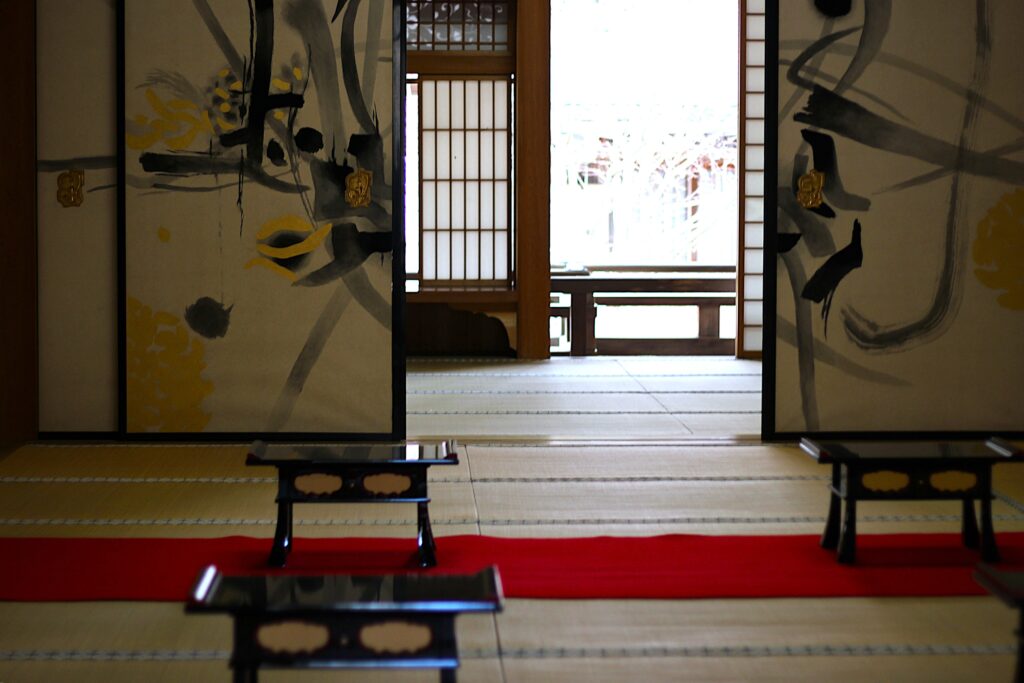
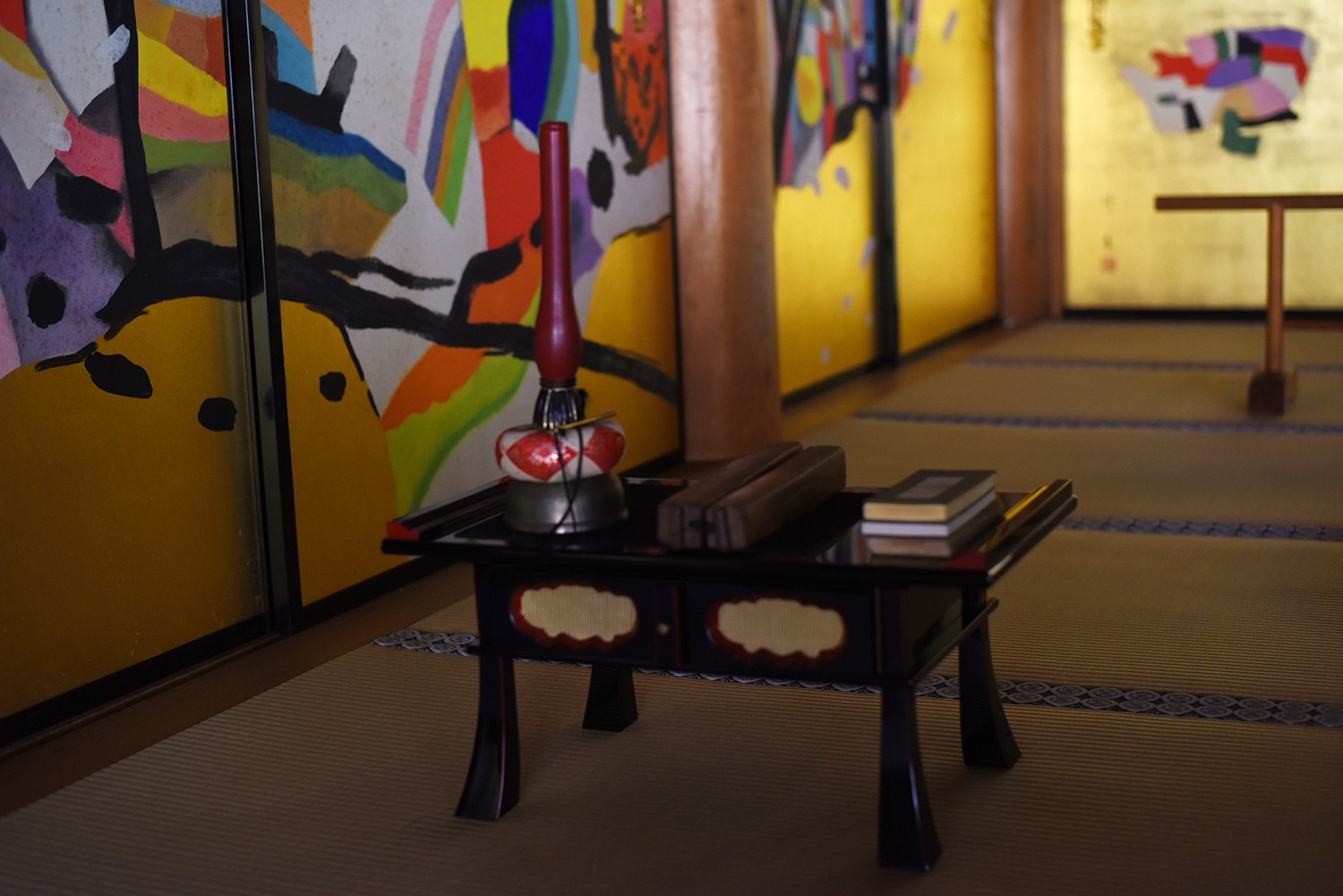
このお寺特有の鑑賞様式を、まさに表している例が西芳寺です。ここの襖絵は、部屋の配置から回廊の設計にいたるまで、本堂そのものの構造と深く連動しています。金色の背景が部屋に入ってきた光を捉えて反射し、陽の当たらぬ場所では墨のにじみがより鮮明に現れます。つまりこの襖絵は、建物の構造やアトモスフィアに基づいて慎重に計算されたと考えられるでしょう。時間によって、また光の差し込む角度によって、同じ描写であっても浮かぶ表情が変わり、さらに鑑賞者が本堂内を移動するにつれて、その作品の感情的な共鳴も絶えず変化してゆきます。西芳寺の襖絵は単一的なものではなく、まるで本堂が、鑑賞者と、自然と、そして宇宙そのものと響き合いながら呼吸しているように感じられるのです。
それと同じぐらい興味深いのが、西芳寺の襖絵は“抽象”と“認識”のはざまにあるということです。形式そのものは抽象的ですが、蓮の花、精神世界、そして仏教を象徴するものを描いたような筆跡など、何か実体のあるものも感じられます。見てとれるほどの筆の勢いや質感を伴った筆遣いには、画家が作品を描いた際のエネルギーがそのまま留められており、それゆえに、幾何学が単なる形式以上の意味合いを帯びています。
特に蓮を題材にしたと思われる部分は、仏教の教えや禅の思想を土台としていることを感じさせます。教義をそのまま表現するのではなく、従来のモチーフを壊して再構築することで、新たな視覚的言語を生み出しています。こうして、西芳寺の襖絵は「どうあるべきか」という概念から離脱しながらも、その核にある精神的な要素を大切に抱き続けることで、深く調和しているのでしょう。
西芳寺を足繁く訪問していると、その時その時で襖絵が違って見えることに気づきます。人生において多くの苦しみを体験するにつれ、その経験はあなたの実りとなり、人は稲穂のように頭を垂れるようになるからです。襖絵に描かれた仏教的世界の光と影は、この世界の光と影に呼応して変化と揺らぎを見せます。そして、そよ風が絵をなでるとき、雨音に包まれるとき、雪に覆われたお庭を背景にしたとき、また違った表情を浮かべるのです。
堂本印象の襖絵は、まさにあるべくして西芳寺に存在しています。この襖絵があるからこそ、西芳寺が持つ意義は一層豊かで深いものとなっています。印象の作品は、まったく新しい世界を生み出しながらも、約千年にわたり受け継がれてきた世界とも、深く結びついてきました。
印象の襖絵は、西芳寺が次の千年に向けて掲げる使命に、新たな力とインスピレーションを与えてゆくのでしょう。
Abstracting the World of the Buddha—The Art of Domoto Insho II
Have you ever thought about what makes the medium of fusuma paintings different from other paintings? Recently I attended a talk by Professor Furuta on the screens of Saihoji and my essay is based on the answers to that question in his brilliant and incisive talk.
What makes fusuma paintings especially significant is that they resist the static viewing conditions associated with paintings that are hung on walls or those in museums. Unlike framed works fixed to a wall, fusuma paintings are inherently dynamic because they are painted on sliding doors. As the doors open and close, the composition itself changes. As viewers move through the room, the sense of depth, balance, and rhythm shifts. Natural light further transforms the work, altering color, texture, and mood according to the time of day or weather. These paintings are therefore experienced not as isolated images, but as events unfolding through the interaction of space, time, and movement.
Saihoji offers a particularly compelling example of this temple-specific mode of viewing. Here, the artwork is inseparable from the architecture itself—from the layout of rooms to the pathways that guide the viewer’s body. Gold backgrounds catch and reflect incoming light, while ink wash elements emerge more fully within shadowed spaces, suggesting that the paintings were carefully calibrated in relation to the building’s structure and atmosphere. The same image reveals different expressions depending on the hour and the angle of light, while the viewer’s movement through the main hall continuously alters the emotional resonance of the work. Such paintings feel less like independent objects and more as if the Main Hall is breathing and interacting with the viewer and with nature and the universe itself.
Equally fascinating is the way these works hover between abstraction and recognition. Though abstract in form, they still evoke the presence of something tangible—lotus flowers, spiritual landscapes, traces of Buddhist symbolism. Visible brush momentum and textured strokes preserve the energy of the artist’s gesture, preventing geometry from becoming purely formal. The lotus motifs in particular suggest a grounding in Buddhist teachings and Zen thought. Rather than presenting doctrine directly, the artist deconstructs inherited symbols and reconstructs them into new visual languages. In this way, the paintings embody a profound balance—breaking away from the notion of “how things should be” while continuing to cherish the spiritual essence at their core.
And if you go to the temple on many occasions each time the screens will appear different as your experience of the pain of life deepens and you come to bow your head a little like rice stalk heavy with grains. The light and the shades of the Buddha’s world depicted in the screens change and undulate to the light and shadows of the world and appear different when breezes caress the paint, when enveloped in the sounds of falling rain, or against the backdrop of a garden covered in snow.
Domoto’s screens found their perfect home at Saihoji. Thanks to them, the message of Saihoji became richer and deeper. They added a totally new world, but also a world that was totally connected to the one that existed for almost a thousand years. They will provide energy and inspiration for Saihoji’s mission for the next one thousand years.
Peter MacMillan ピーター・J・マクミラン
翻訳家・詩人。株式会社 月の舟(制作・翻訳会社) 代表取締役。
2008年に英訳『百人一首』を出版し、日米で翻訳賞を受賞。2016年9月には英訳『The Tales of Ise』(伊勢物語)、2017年には英訳『One Hundred Poets One Poem Each(新訳)』の2冊がPenguin Booksより出版される。近著に『日本の古典を英語で読む』『英語で味わう万葉集』など著書多数。2019年より朝日新聞にて「星の林に」、2022年より京都新聞にて「不思議の国の和歌ワンダーランド 英語で読む百人一首」を連載。
翻訳:福田安奈
関連記事
おすすめの記事