
2026.1.3
The Genii Locorum of Saihoji
(Second Part)
Matsuda Noriko & Mitachi Takashi
Standing in the Space Between Nature and Culture
The ancient Romans believed that all locations were inhabited by genii locorum —the protective spirits of places. The multilayered nature of time is a key concept for understanding the history of Saihoji. And looking over the long history of Saihoji we can feel that it is exactly such kind of place.
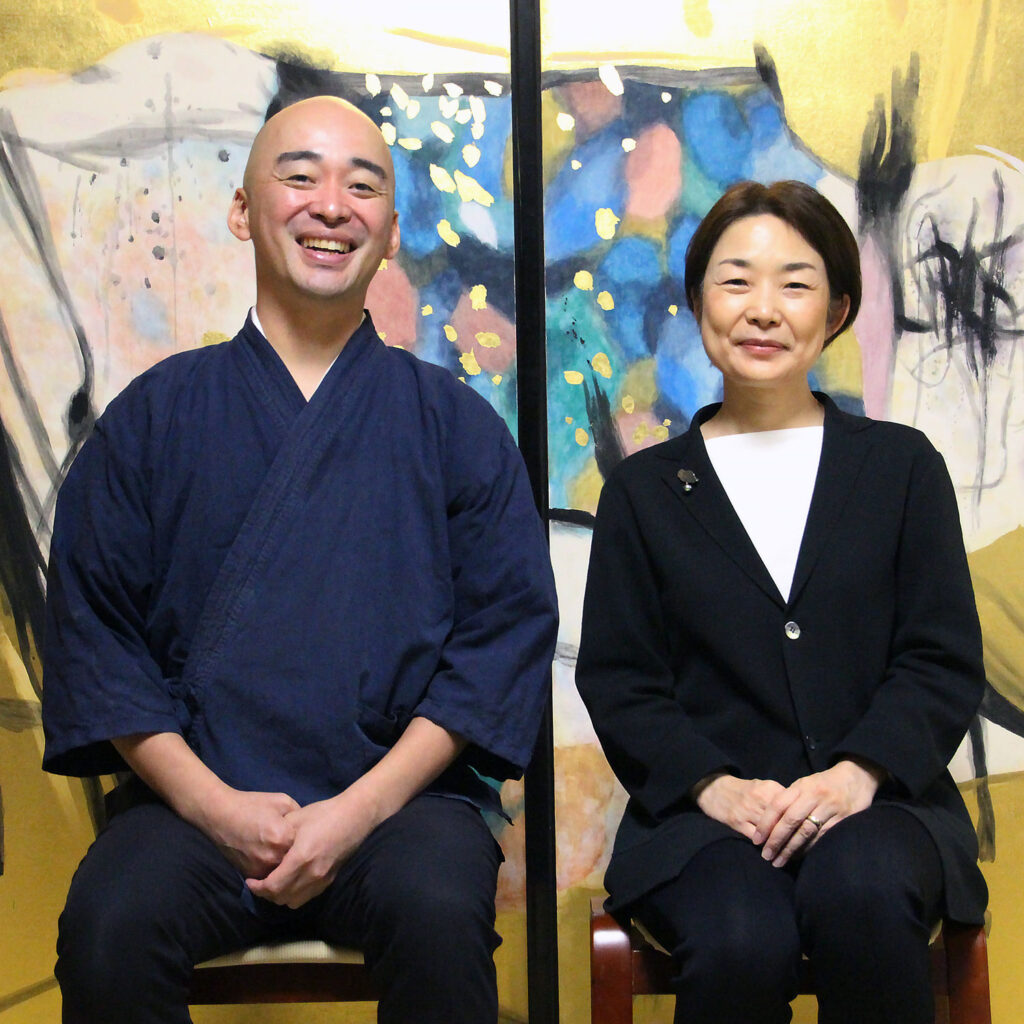
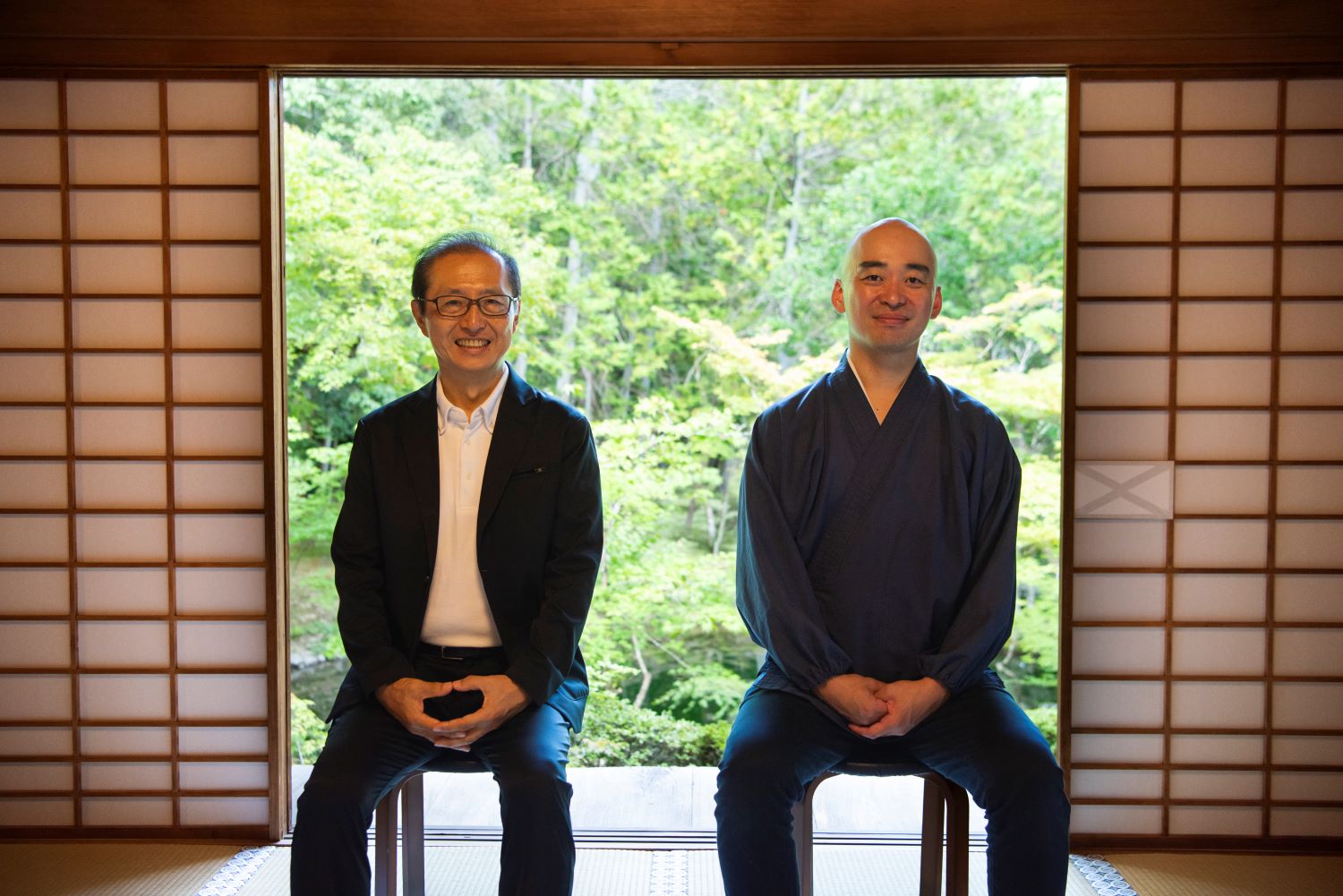
A conversation between Professor Matsuda Noriko and Mitachi Takashi, deciphering the stories etched into the “multilayered time” of Saihoji. The first part focused on the unique features of the Saihoji garden, situated between the wild and the man-made. We established that not only moss, but also water plays an important role. In the second part, we will explore how the wild and the man-made manage to maintain their perfect harmony, and as we close in on their secrets, we will ponder the ideal form to pass on to future generations. (Click here for the first part)
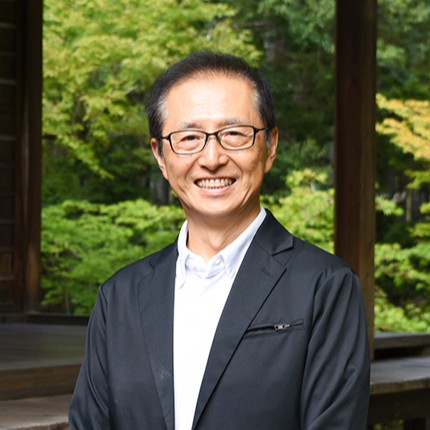
Matsuda Noriko
Associate Professor at Kyoto Prefectural University’s Graduate School of Life and Environmental Sciences. Specializes in architectural and urban history and studies the relationships between people and the land through villages, towns, cities, and architecture. Her research focuses on the themes of “cities and the land” and “the human history of shorelines.” As author, her publications include Ehagaki-no-Beppu (Beppu Hot Spring Town, the history and Image of the city: Restored from Picture Postcards in the First Half of the 20th Century), Sayusha, 2012, and as co-author, her publications include Geijutsu to Riberaru Ahtsu (The Arts and Liberal Arts), Suiseisha, 2025; Along the water: Urban natural crises between Italy and Japan), Sayusha, 2017; and Henyō Suru Toshi no Yukue (The Changing Fate of the City), Bunyu-sha, 2020.

Mitachi Takashi
Saihoji senior adviser. Distinguished Professor, Kyoto University Graduate School of Management. Holds a BA from Kyoto University and an MBA from Harvard Business School. After working for Japan Airlines, Mr. Mitachi joined The Boston Consulting Group (BCG) in 1993, where he served as co-chair of the Japan office and member of the BCG Worldwide Executive Committee. He currently teaches at Kyoto University’s Graduate School of Management and sits on corporate boards as an outside director. He is also a board member of the Ohara Museum of Art.
A blending together of intentional and unintentional nature
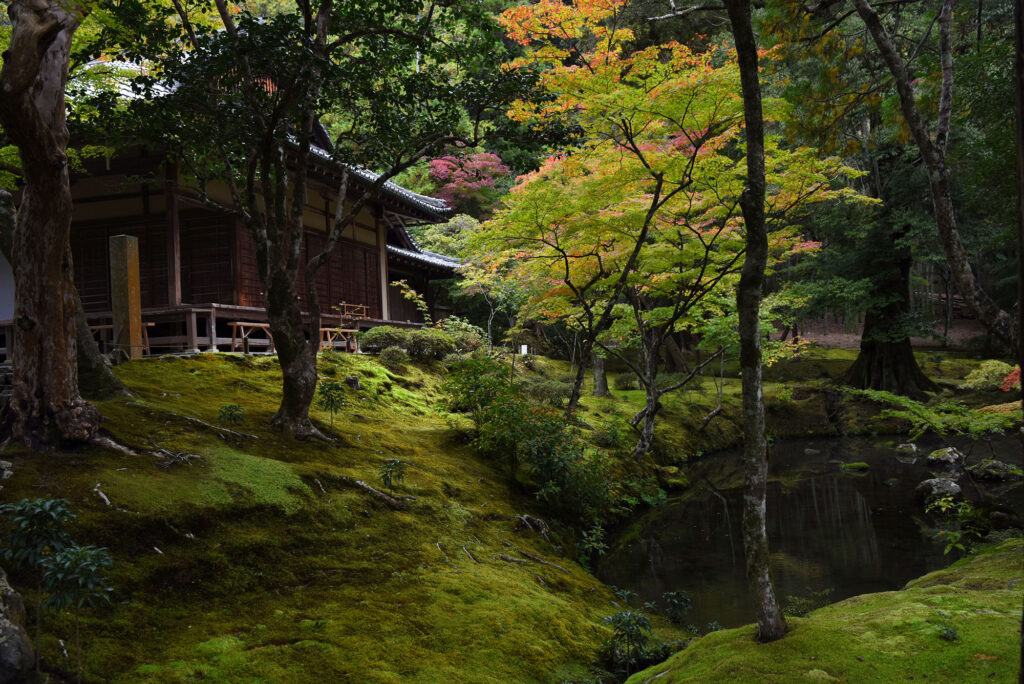
Mitachi: As I walk through the garden at Saihoji, the thing I find so fascinating is that although it has been designed as a so-called “strolling garden surrounding a pond” (chisen kaiyu-style garden), you don’t actually end up looking at the pond itself. Instead, you look beyond the pond at the island, the trees, and moss. The design of the garden guides one’s view in a slightly different way than other gardens.
Matsuda: I believe that the reason you feel that way is because the garden originally contained buildings. When it was first created, the garden featured bridges and various themed structures of different scales, including the Sairai-do Hall, which was the temple’s main hall, the Muhoto pagoda built as a rokaku structure, and the Shukuentei Pavilion for viewing the scenery.
In architecture, we talk about sequencing, where the space gradually unfolds, like you’re watching a theatrical performance. As you move through the garden, you will be able to experience the world of Zen and its many hidden stories, as well as find settings to practice meditation.
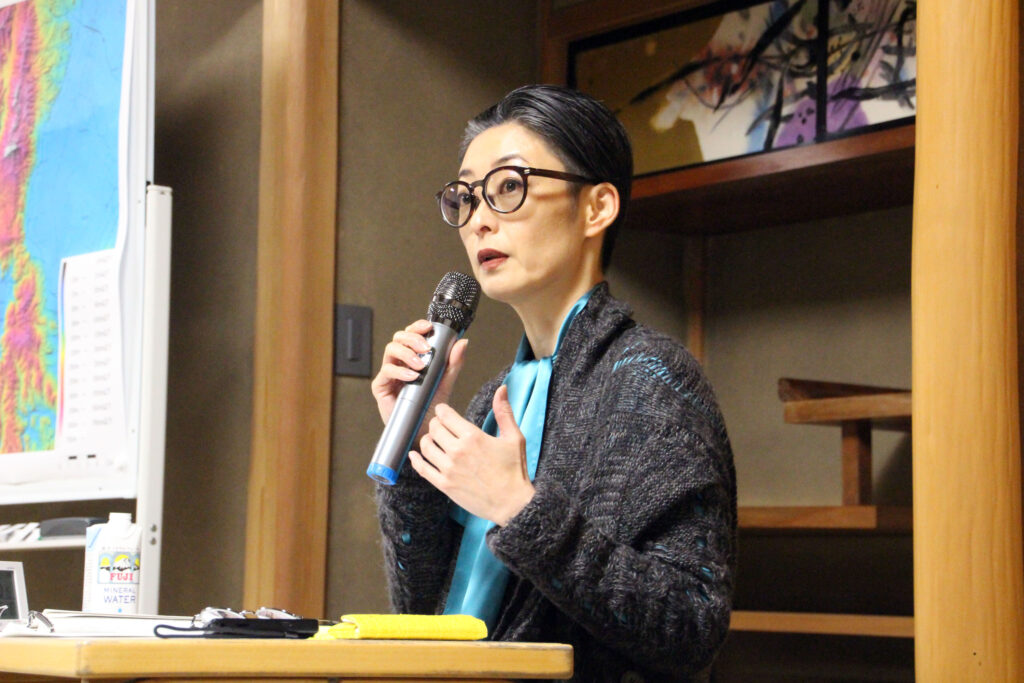
Mitachi: So, what you’re saying is that we don’t actually decide for ourselves how to walk the garden paths and what to look at, but rather that the garden itself guides us. As we move, our gaze is naturally drawn along a certain path, and the buildings we see change. If we walk through the garden in the right order, we’ll find ourselves experiencing something like watching a play.
Matsuda: That’s exactly right.
Mitachi: While the entire garden can be considered “man-made” in the sense that it has been designed meticulously, it also includes “wild” elements in that it creates scenery that appears natural.
Matsuda: It’s the so-called technique of representation, isn’t it? Although they now seem to have disappeared, there were apparently many rocks in very unusual shapes. People would imagine them as mountains, and by doing so, they artificially rearranged nature.
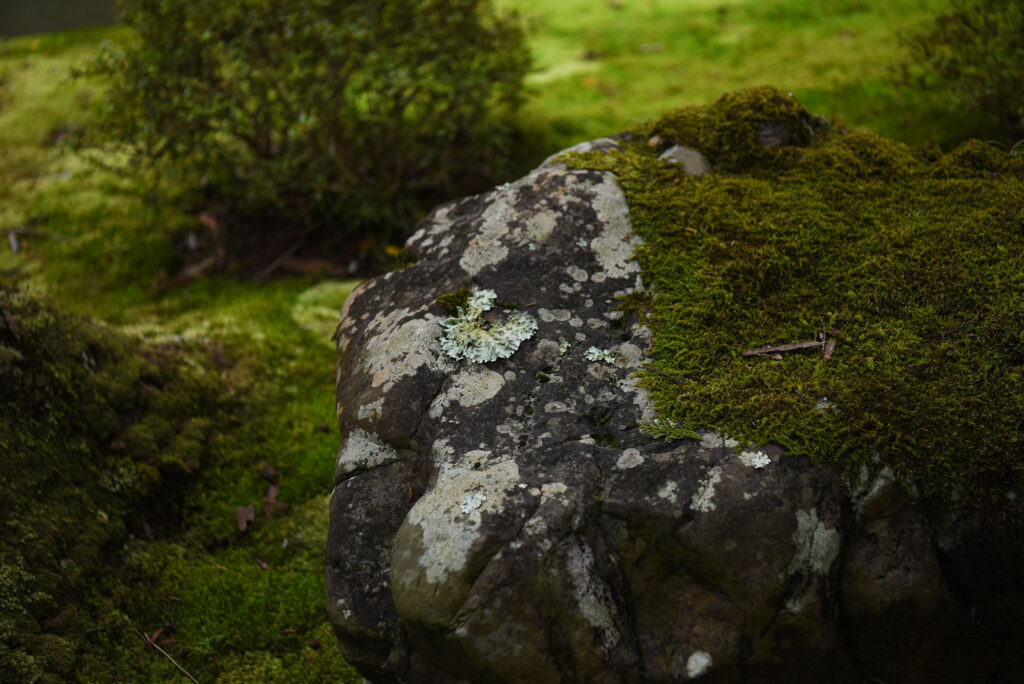
Mitachi: When you look at Japanese gardens, not only in Kyoto, but in general, you will find that every garden creates a kind of apparatus for representation. They can lean toward either a wild or a man-made approach.
Saihoji, for its part, feels incredibly hybrid. While it was intentionally created, the moss growing over it has introduced an unintentional design element.
Matsuda: I think you’re exactly right.
After Muso Kokushi meticulously crafted a garden resembling a microcosm of the ideal Zen world, floods swept in and moss began to grow. As a result, the area’s original characteristic as land rich in moisture began to reassert itself, and the rigidly constructed utopia crumbled to pieces. The garden today exists in this soft and squishy state, and we accept its ambiguous form as it is, without even knowing what it was originally like. Curious, isn’t it?
A garden embodying the essence of Zen
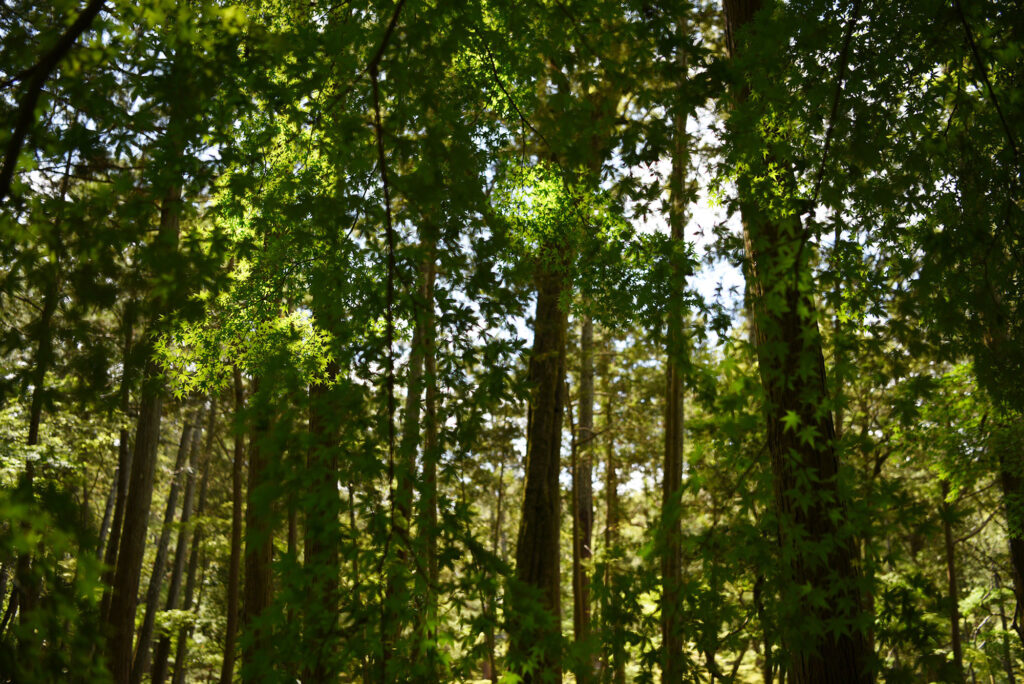
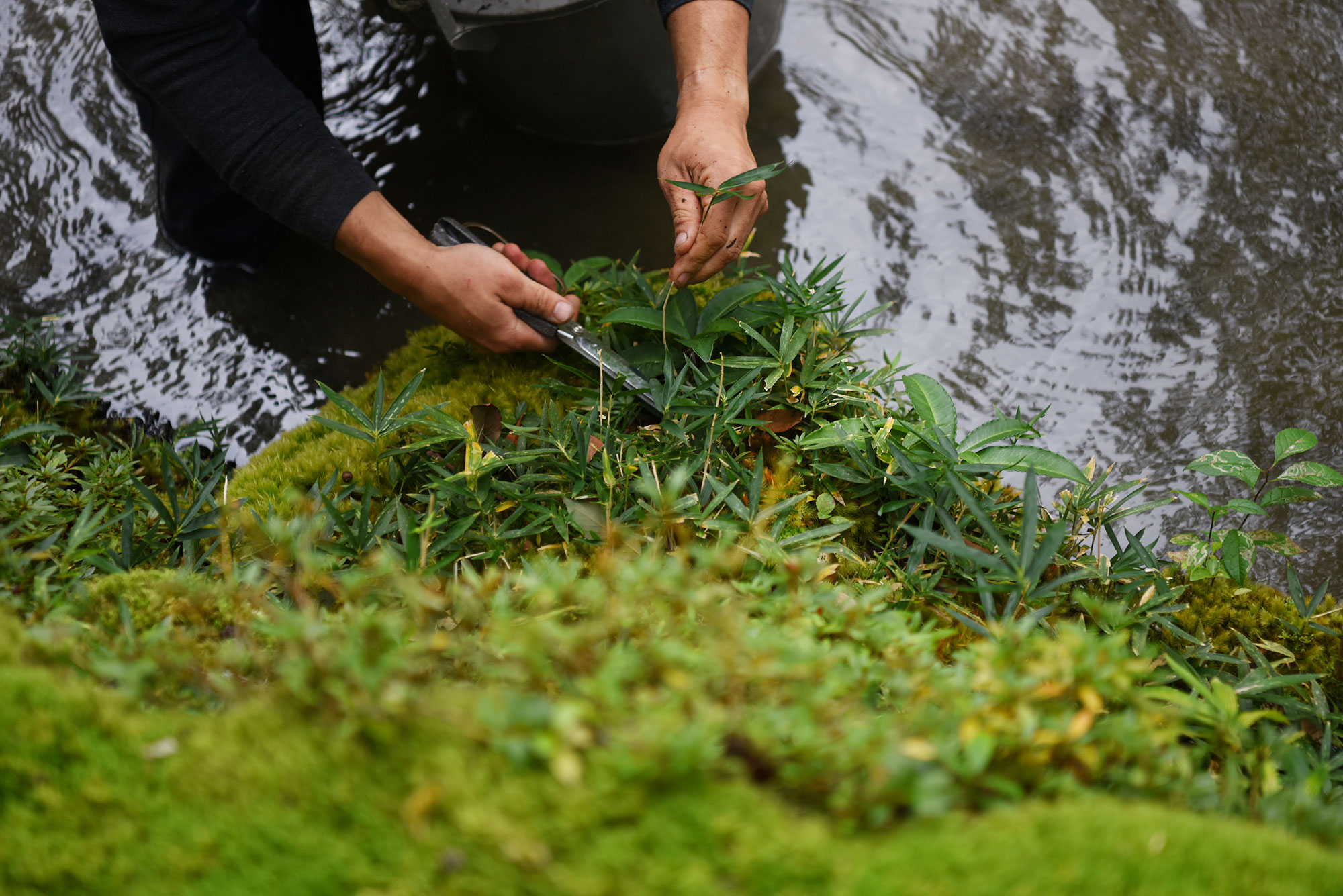
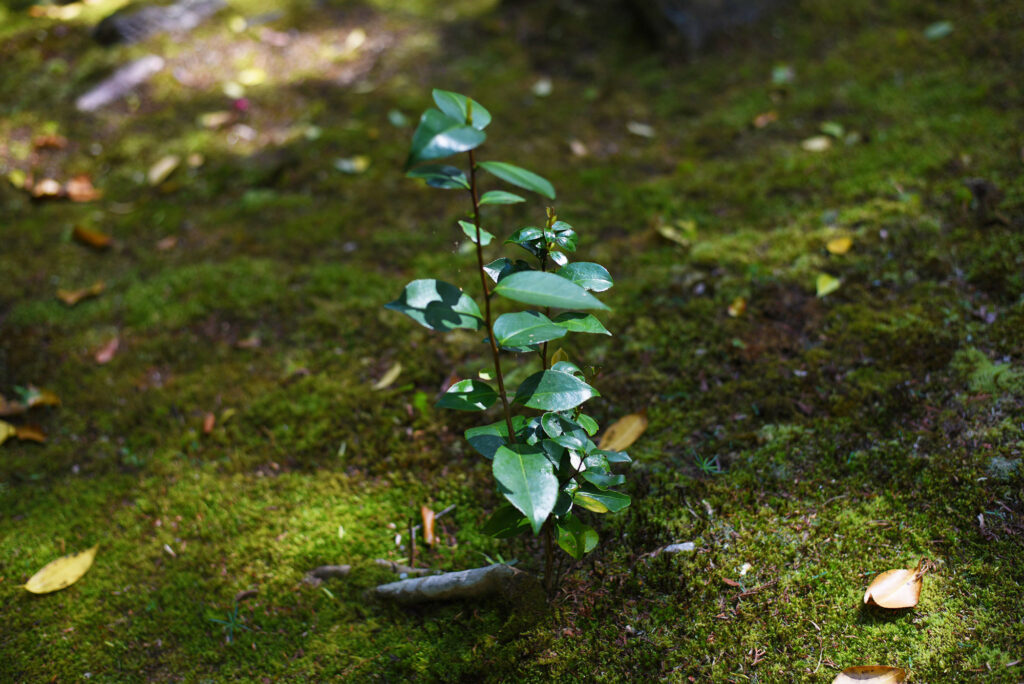
Matsuda: Something else I find interesting is that the current garden is almost entirely in a natural state. In addition to the plants that were intentionally planted in the garden, there are also seedlings, or plants that sprout spontaneously from seeds.
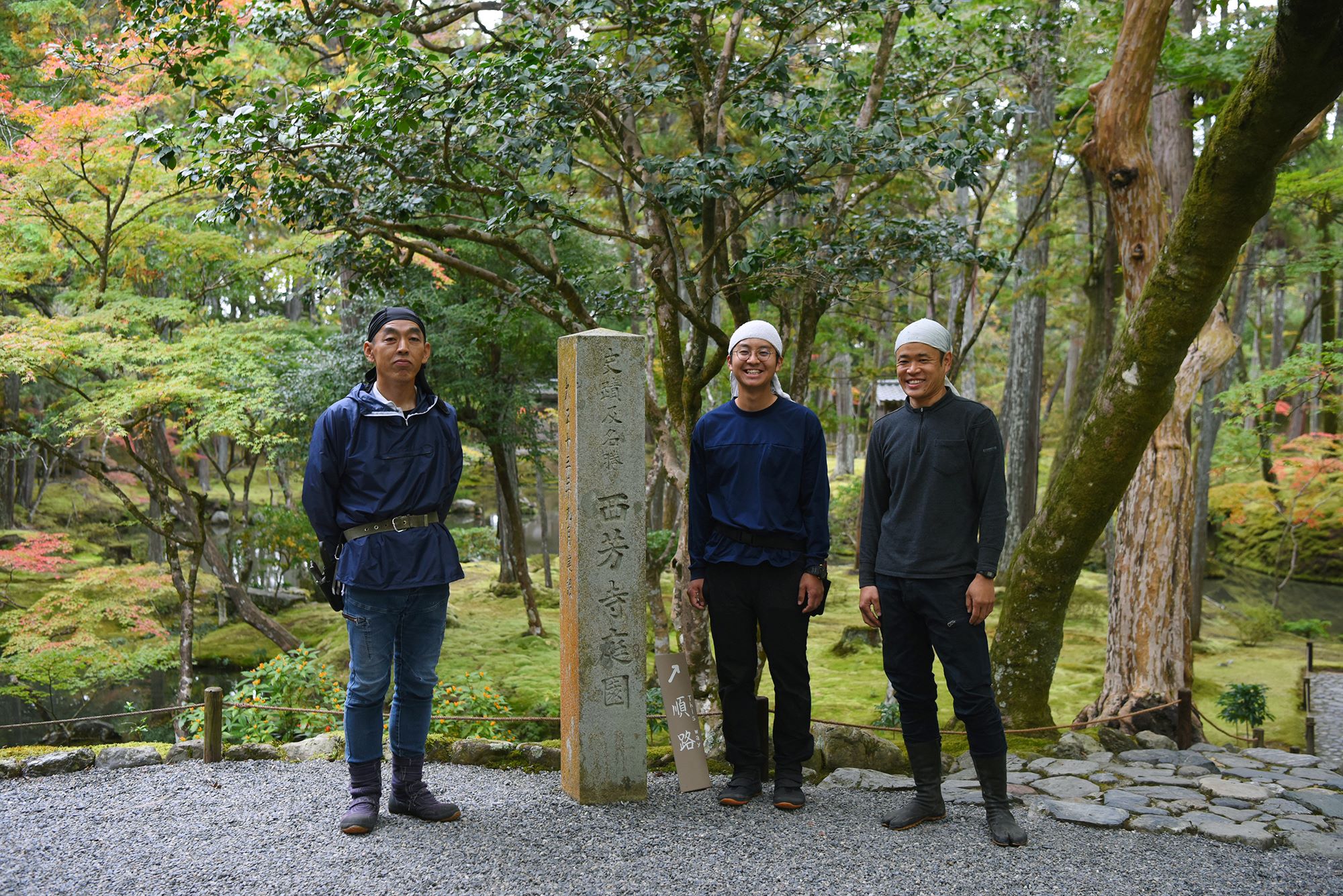
This is an open garden, with sparse trees, so I thought the gardeners must be pulling out the naturally growing sprouts, but when I spoke to them, I learned that they leave around 90% of them as they are. I find it interesting that the gardeners are largely avoiding human intervention.
Until now, they have made no attempt to restore the garden to its former utopian state, as created by Muso Kokushi. It might also simply be that there were circumstances that made it impossible to restore it, even if somebody wanted to. In the end, it becomes strikingly clear that we are only witnessing the very present moment of the Saihoji Garden as a complex layering formed over multiple time periods by human intervention, occasionally intermingled with the wild.
Mitachi: In recent years, I feel like there’s been a growing rejection of Western rationalism, which separates humans from nature, as people increasingly accept the idea that humans are part of nature too. I once heard from a botanist that since most regions of the world now bear the mark of human intervention, we call the untouched parts “nature.” However, even the areas that remain untouched by humans will still be shaped by animals, so in the end, almost no plants remain completely untouched. He said that the biosphere as a whole maintains equilibrium.
When I think about it that way, the gardeners at Saihoji seem to adopt a philosophy that embraces the parts eroded by untamed nature, working with the understanding that although they are caretakers, they themselves are also part of nature. Even the brooms they use are handmade. They are made of bamboo that grows on the temple grounds. When they rot, they can simply return to the nature they came from.
Buildings may disappear, but the garden remains. Even if it falls into decay, the temple will remain, if we intervene with reparations and maintenance. I feel like the approach here is not to preserve everything exactly as it is, but rather to take care of the things that remain.
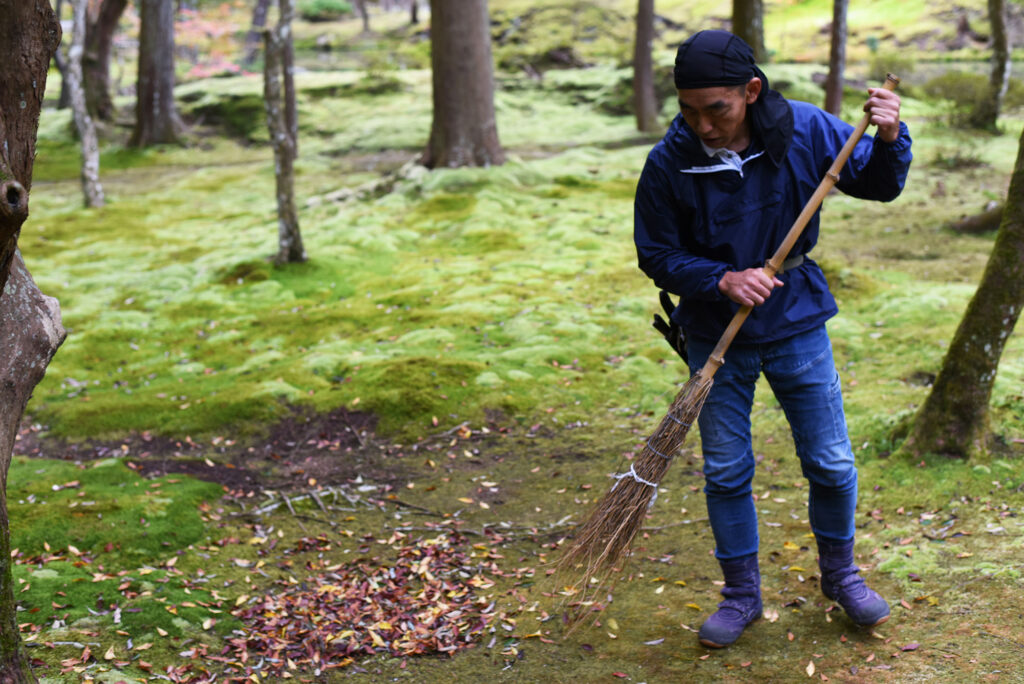
Matsuda: What I find so unique about the approach here at Saihoji is that this isn’t done as a strongly purpose-driven act of creating a garden, but rather as part of the daily work of samu. In that sense, I feel this place is different from most other gardens. It is a true Zen garden.
Mitachi: Zen is not only a religion but also a philosophy, and it places great importance on physicality. In that sense, when we talk about the Zen garden at Saihoji, we are not talking about it as merely a religious garden of Zen Buddhism, but as a place that manifests the essence of Zen itself. I think that’s one of the things that makes this place so special.
Matsuda: Zen is regarded as a means to pass on teachings without leaving out a single drop, like when transferring water from one vessel to another. I think it would be interesting to consider how this attitude of accepting things wholesale and passing them on in their entirety aligns with the essence of the Saihoji garden.
Adding new layers to the multi-layered past
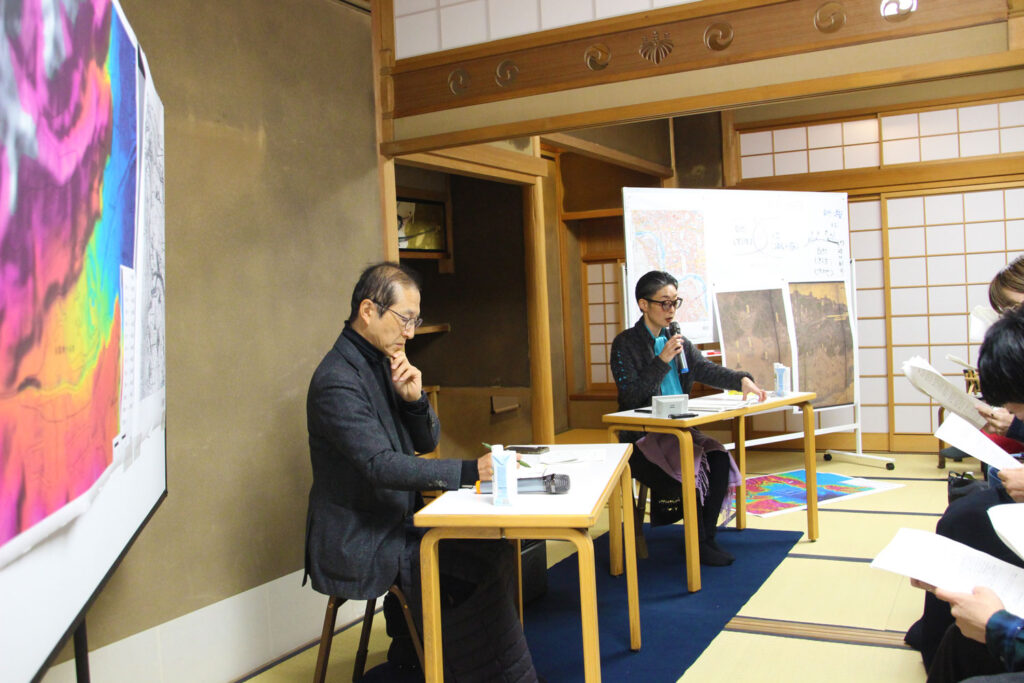
Mitachi: We have been discussing the “multi-layered of time” accumulated over the last 1,300 years of history. In closing, I would like to consider what new layers we might add to Saihoji or what layers will be added to it in the future.
As an advisor to the temple, I have had many discussions with Mr. Fujita, the temple’s chief administrator, about how to approach the next 50 years. In that context, we’re currently working on a canal restoration project, and we’ve spoken about needing to properly consider what role it serves and why we’re restoring it. It can’t just be about nostalgia, simply reverting things to how they were in the past.
Matsuda: I believe that thinking deeply about the present is also linked to contemplating the past and the future. However, when considering the future of Saihoji, I believe it would not be good to suppress the original qualities inherent to the land.
If we return to the example of water, did the water of the Golden Pond have a well-defined outlet or drainage channel in the past? Or did the water get soaked up in the earth below and run into the rivers that way? I became curious about how the current water environment at Saihoji relates to the original qualities of this land.
Mitachi: I don’t know what it was like in the past, but at present, the water flows out into the Saihoji River.
Matsuda: I see. Since there was talk of restoring the canal, I thought it was also important to consider how to move and discharge the inflowed water from the perspective of the river basin.
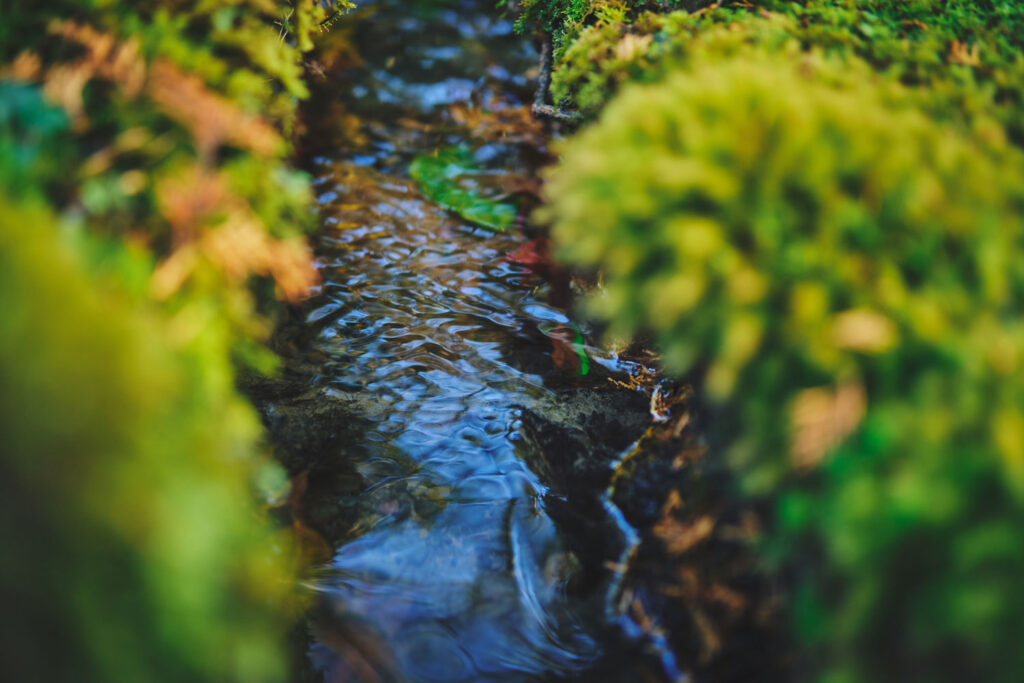
Mitachi: You’re absolutely right. We are also currently working to restore the surrounding mountains and forests, but we cannot achieve this restoration if we don’t simultaneously fix the flow of wind and water, including within the soil. And so, we are also thinking about removing whatever is clogging up the flows.
For example, there are spots where spring water once flowed during the time of Muso Kokushi, but the waters stopped due to the Osaka-Kobe Earthquake in 1995. As we work to restore the surrounding area, we’re moving forward with our plans while considering whether such sections can also be restored.
Furthermore, we also hope to create areas throughout the temple grounds that will serve as educational spaces for the next generation, unlike anything that existed before, where future generations can engage in training and samu. When doing so, we must take into account the “multi-layered of time” that have existed in the past, or we will make liars of ourselves. As we discussed today, geological features and history have significance, so when I take on new challenges, my current approach is to consider what can be done as an extension of that history.
In this issue, we explored the “multi-layered nature of time” at Saihoji from the perspective of the water’s edge, which is Professor Matsuda’s research theme. I myself have described this state where boundaries become fuzzy and take on different meanings as “the in-between.” This experience has made me realize anew how crucial this in-betweenness is to architecture and gardens, and how it is precisely this that makes Saihoji so captivating.
Edited by: MIYAUCHI Toshiki
Written by: HOSOTANI Kana
Photographed by: Editorial Department
*These photos were with permission.