
2026.9.20
Winds of Gold—A Hundred Views of Saihoji Vol. 28
Peter MacMillan / a translator, scholar, poet
In this series of essays on Saihoji the renowned translator of Japanese poetry and poet Peter MacMillan records his impressions of and reflections on his visits to the garden throughout the four seasons. We hope that through these essays you the readers and fans of Saihoji can feel as if you are also present in the magical garden even when you cannot visit us.
A Garden for One—Lessons from Shonantei Tea house
Almost nothing at Saihoji is as old as it looks. The halls have disappeared several times and the temple has changed sect and changed purpose, and what is now a garden of deep moss was once laid out in white sand. (Click here for the details about its history.)
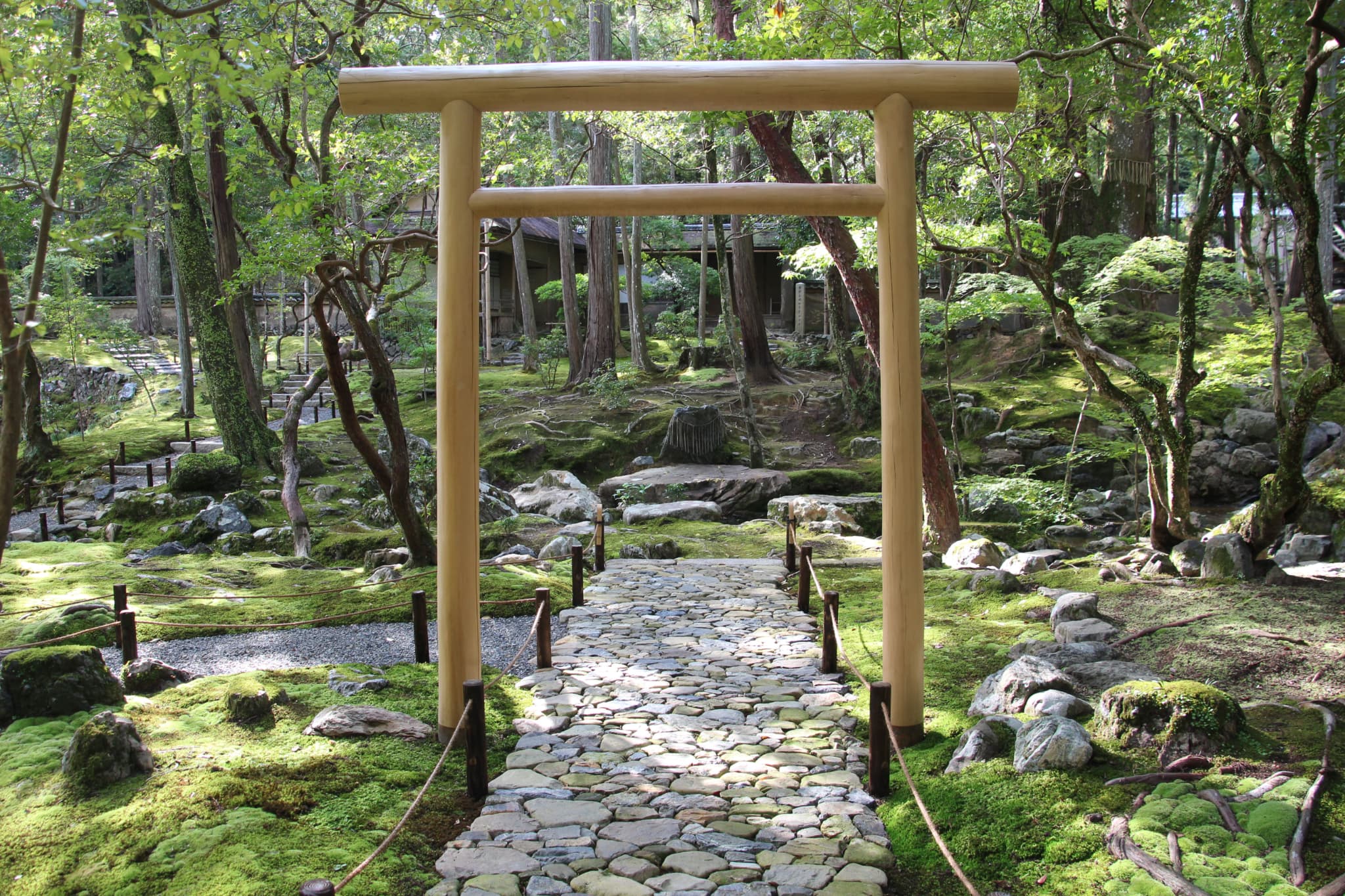
The one thing that has simply stayed is a small building at the edge of the Golden Pond. Shonantei teahouse is the only structure here that Sen no Shoan, by tradition its maker, would still recognize. The oldest survivor on these grounds is therefore not a hall of worship, but a tea house made for one.
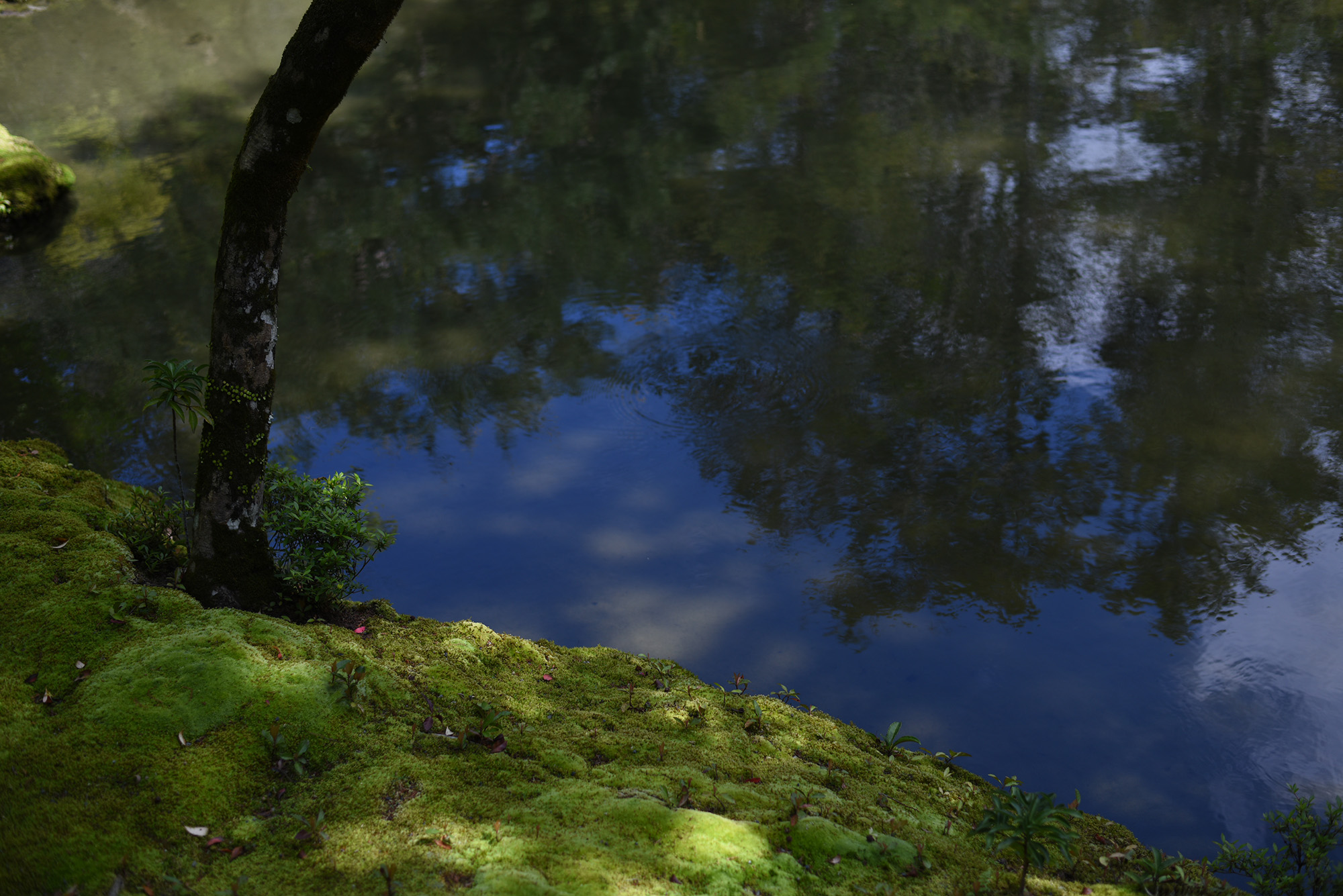
There are many unconventional aspects to this tea house. The platform thrust out over the water is for viewing the moon, and platforms of that kind look east or south, towards the quarter where the moon rises and the arc along which it travels through the sky. However, this one faces north, deliberately away from the moon itself, because the moon here was meant to be welcomed not in the sky but in its reflection in the Golden Pond.
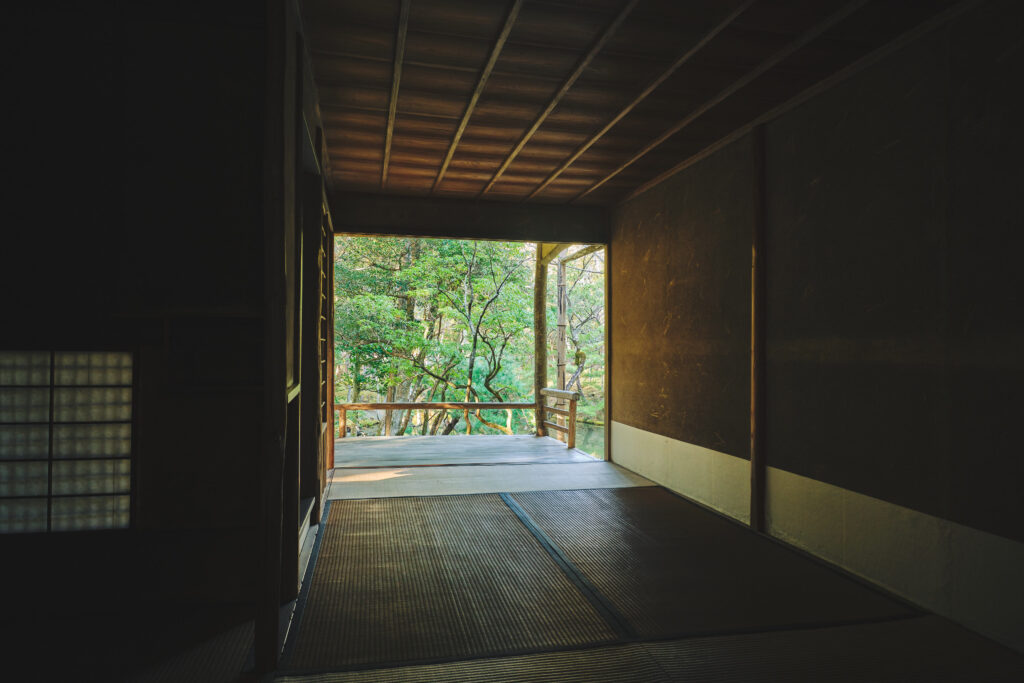
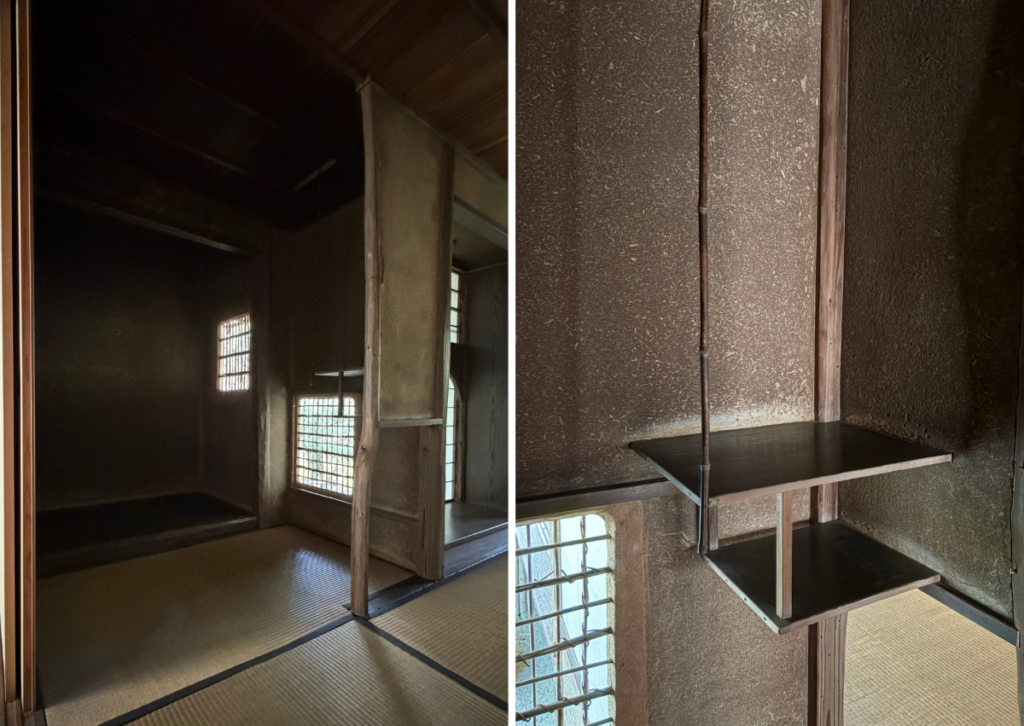
During a winter lecture at Saihoji, Sen Sooku, a descendant of Shoan, drew attention to another distinctive feature of Shonantei. According to him, the room’s most unusual aspect is the placement of its alcove. There is a quite strict convention for tea house tokonoma alcoves that it should face the guests, so that on entering they meet the scroll and the flower before anything else. At Shonantei the alcove sits behind the place where the host kneels, so that his back is turned to it, and the scroll he chose and the flower he cut that morning face away from the people who have come. This is a teishu-doko, a host’s alcove, and it changes what the room is for. A tea house is normally a stage to perform the tea ceremony for guests, but this one is a study. The host decorates it for himself, makes tea for himself, and anyone who happens by may share the tea, but nobody is being received. The word for it is jigo, “one’s own enjoyment.” In other words, this tea house is probably intended for one’s own personal reflection and enjoyment rather than a place for receiving guests.
The same withholding governs the shelf. Beside the preparation place a shelf hangs in the old hibari-dana manner, and in rooms of the Sen tradition its lower tier is set so that a sliver of it, and of the bowls on it, shows past the partition wall as a courtesy to the guest. Here it is mounted clear above the wall, and the utensils are simply invisible, because nothing is displayed that does not need to be.
Let’s think of the tea house as a metaphor for your relationship to Saihoji. It is a place where you can politely turn your back on the world, exactly as the alcove does. What it offers instead is a few hours in which nobody is receiving you and nothing is displayed for your benefit, and in which the copying of the sutra, walking of the paths, and sitting still are arranged so that your attention has nowhere to go but inward. The architecture and the garden are the instrument of that rather than decoration around it. The north-turned platform, the alcove behind the host, the shelf lifted out of sight—each removes one more thing to perform in interaction with others. What is left is a person, and the moss garden. Harmony in the garden is not achieved by communion and agreement with others but the quieter alignment with your own inner self. Understanding, when it comes, arrives as the moon does at Shinantei, at an angle, in a form that will scatter if you try to scoop it up.
On the day of the talk, Mr. Sen carried a tea scoop that Shoan had carved, a slender, delicate object, exactly as the carver is remembered, Shoan the Gentle. Mr. Sen placed it in the alcove so that its maker might come home for an afternoon. The tearoom and the temple would not have turned round to greet him, and he would not have wanted it to. Instead, he takes his place as he always did, back to the scroll, face to the north, and whisks the tea to a froth. Then, he looks out and down to where the moon lays on the surface of the Golden Pond, trembling, breaking, and quietly making itself whole again. Let Saihoji be your jigo place— a place just for you. And here may you tremble, become aware of your splintered being and come whole again.
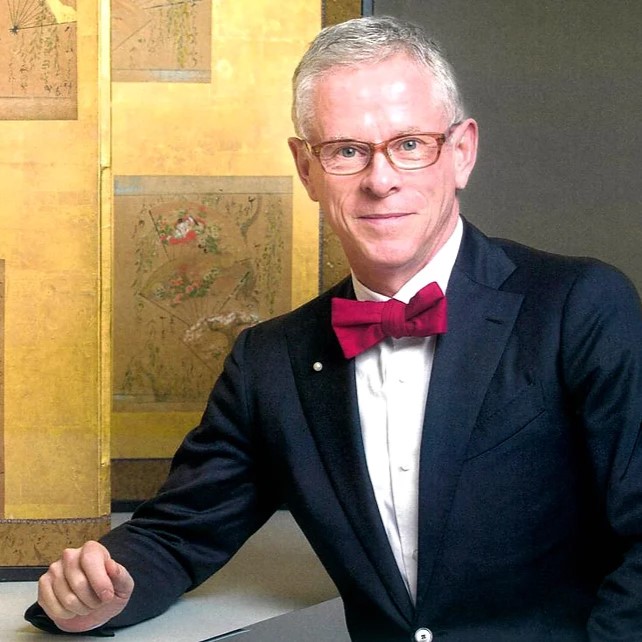
Peter MacMillan
Peter MacMillan is a prize-winning translator, scholar, poet, and President of The Moon is a Boat Co., Ltd.
His translation, One Hundred Poets, One Poem Each (Hyakunin Isshu), was published in 2008, winning prizes in both Japan and the United States. After that, he completed an English translation of The Tales of Ise (Ise Monogatari), which was published by Penguin in 2016. He has also published a collection of poetry entitled Admiring Fields.
Awards:
Recipient of the Donald Keene Center Special Prize for the Translation of Japanese Literature
Recipient of the 44th Special Cultural Translation Prize from the Japan Society of Translators
Nominated for the PEN Award for Poetry Translation for the English translation of The Tale of Ise (Ise no Monogatari)
- Back
- List of articles
- Next
Up next
Most read
Your Heart
"Busyness"