
2025.12.25
Zen Words for Everyday Life Vol. 11
“Fushiki”
In this issue, we will continue the story of the exchange between Emperor Wu (the first emperor of the Liang Dynasty) and Bodhidharma, as we discussed in the earlier episode on the Zen expression mukudoku. Like mukudoku, the phrase fushiki also comes from Case 1 in the Zen text Hekiganroku (The Blue Cliff Record).
Let us quickly review the conversation about mukudoku.
When Emperor Wu said “I have built temples and prayed for many people to take the cloth. What merit (kudoku) will I have earned by these actions?” Bodhidharma replied “Mukudoku,” meaning “No merit at all.” He pointed out that no matter how good an action may be, it cannot truly be good if one carried it out with the expectation of some kind of reward.
The conversation continued.
The emperor asked Bodhidharma “What is the most important teaching in Buddhism?” Bodhidharma replied “Kakunen mushō.”
Kakunen describes a state of complete and utter emptiness, a vast and boundless expanse of nothing, while mushō means that nothing is precious In other words, Emperor Wu had taken the noble teachings of Buddhism to heart and done his best to perform good deeds, only to be told that the most important thing in Buddhism was “nothing.”
A bit shaken, the emperor asked, “Who are you, that stands before me?”
Bodhidharma replied “Fushiki”—I do not know.
The emperor had nothing left to say.
Some would applaud and say that this is an example of a true Zen dialogue, but let us delve a little deeper.
To begin with, there is a fundamental concept that must be grasped to properly understand this exchange. That is taiki seppō, namely that the teaching of Buddhism is tailored to the abilities and temperament of the target audience.
Good questions can lead to good answers, with the result that both parties learn something. On the other hand, bad questions can be quite difficult to answer.
Those who have been following the “Zen Words for Everyday Life” series may already have figured this out, but Emperor Wu’s line of questioning was trapped within his own ego and was inadequate for someone seeking the way of the Buddha. The great master Bodhidharma understood that Emperor Wu still had many attachments. Intending to deliver a shout or rebuke used by Zen masters to prod a student toward enlightenment (katsu) to the emperor, he answered “Fushiki”—I do not know.
Although “fushiki” was originally intended as a katsu, let us slightly shift the perspective and consider the meaning of the phrase in a present-day context.
Nowadays, you can answer any question with a simple search on the Internet. The knowledge of the world is quite literally at your fingertips. In the years to come, generative AI will become even more widespread, making it even easier to obtain plausible answers simply by entering a prompt or question. Furthermore, it seems that people today are often taught from childhood that knowledge is a virtue, while ignorance is a vice.
But I would like to challenge this paradigm. Is there nothing more to the world than simply knowing things?
If you truly think about it, our lives are full of questions we cannot answer, such as:
Why was I born? How long will I live? Why did I meet a certain person at this time? What is death? What happens after death?
The compassion of Buddhism accepts us when we say, “I do not know.” Just keeping that in a corner of your mind can help you to shift your perspective and become more tolerant.
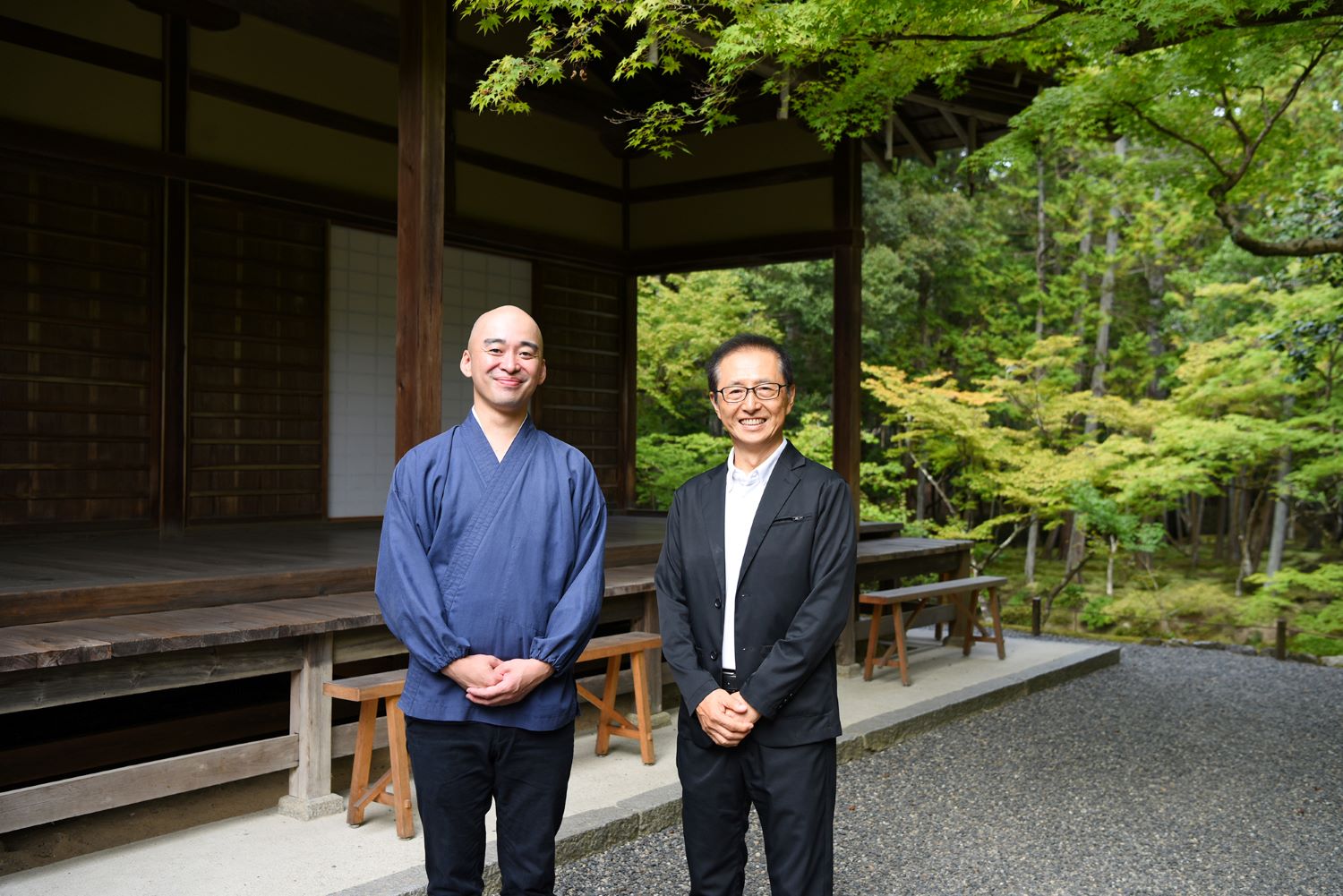
Saihoji FUJITA Ryuko

Up next
Most read

Your Heart
"Life and Death"