
2026.7.4
Why Saihoji Launched a Media Platform
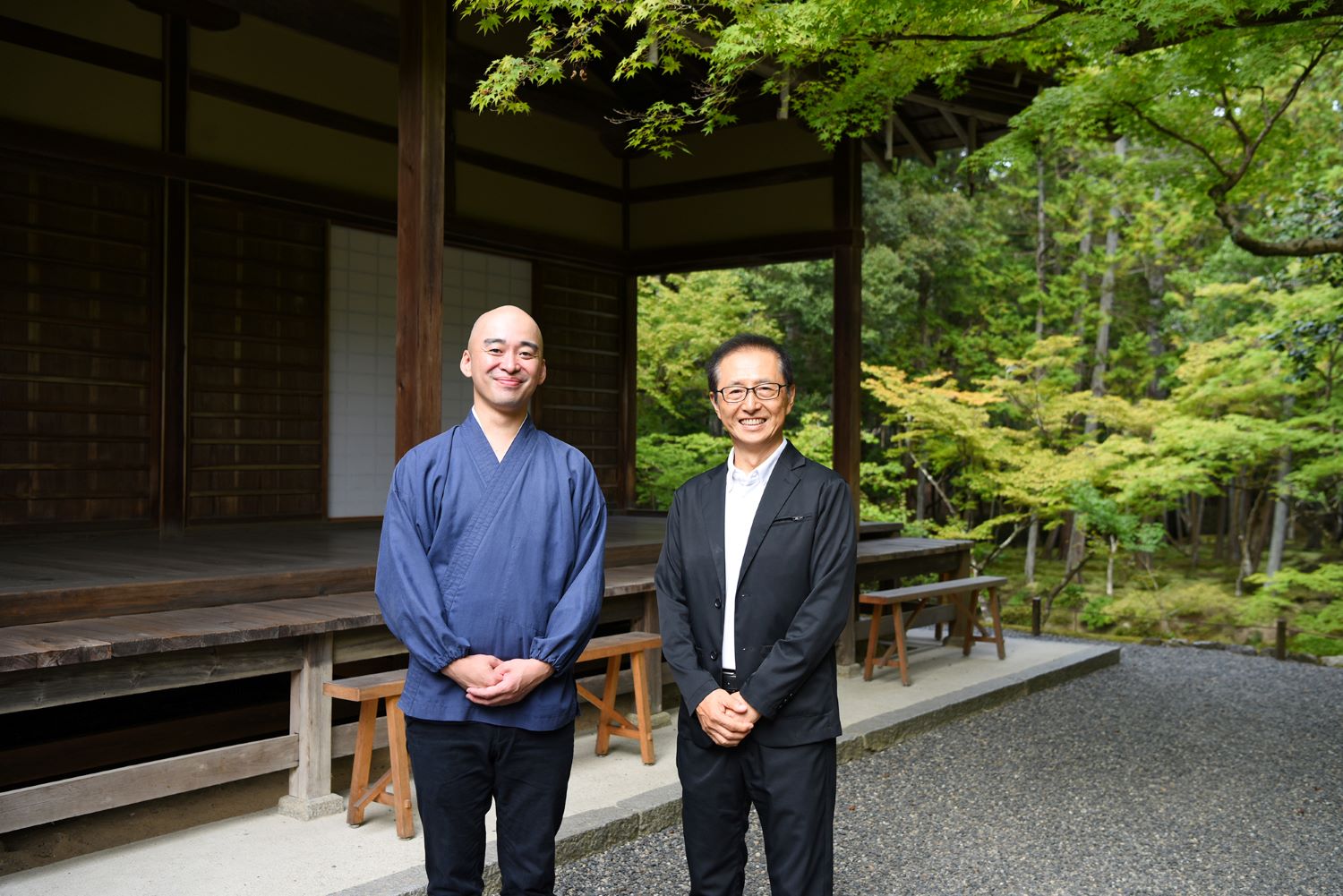
Miyauchi Toshiki and Hosotani Kana, Editorial Department
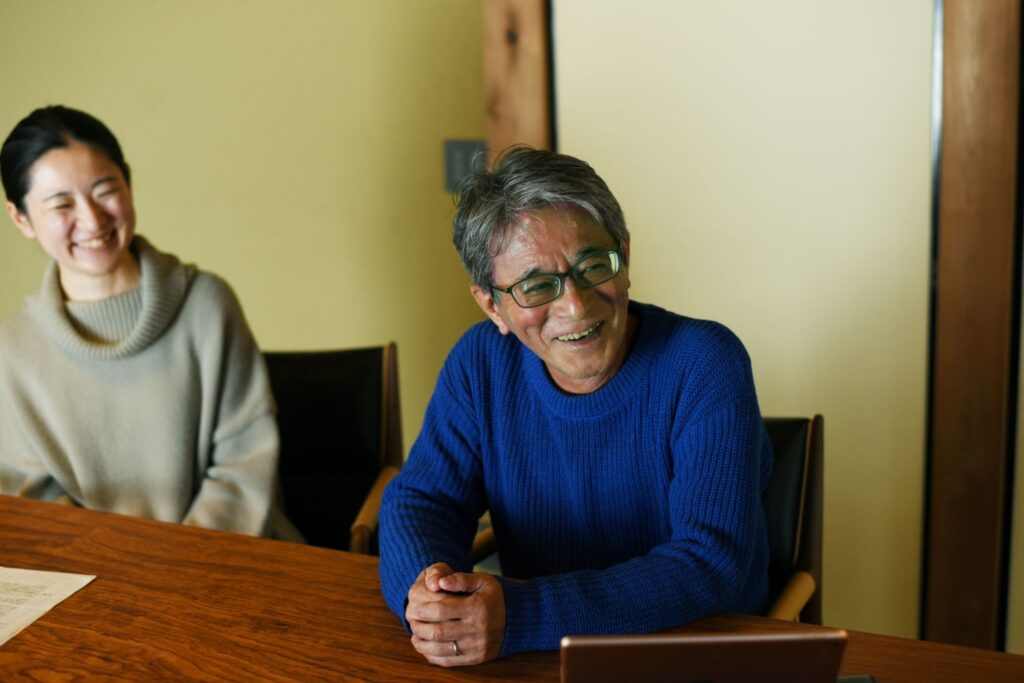
Launched in June 2023, the web portal “into Saihoji” is not merely a platform for sharing information and accepting visit reservations; it is also a place that encourages visitors to reflect on themselves. The goal is to carefully weave the philosophy of Saihoji into words and foster a new kind of relationship with readers.
In this feature, we spoke with Miyauchi Toshiki, an editorial director who has supported the web portal since its inception, and Hosotani Kana, an editorial department employee engaged in planning, interviewing, and writing.
As the 1,300th anniversary of Saihoji’s founding approaches, what is the temple striving for, and what kind of future does it envision? Through their dialogue, we explore these efforts.
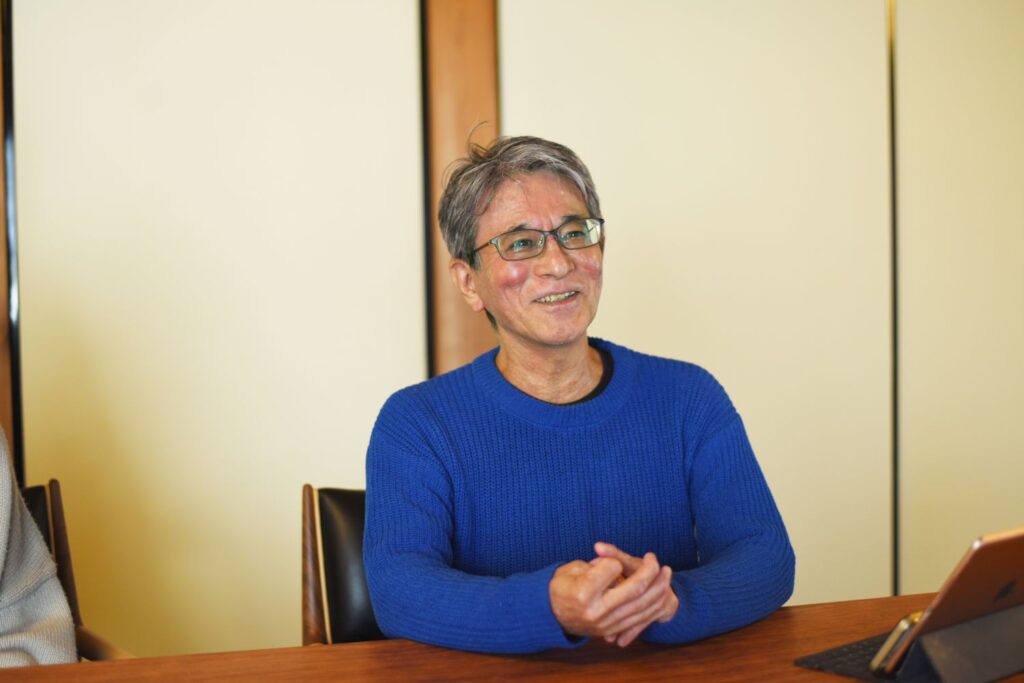
Miyauchi Toshiki, editional director
An editorial director of “into Saihoji”. Representative of Cross Border LLC and Senior Consultant at Filament, Inc. He currently pursues a multifaceted career, collaborating with TRUSTBANK, Inc. while engaging in diverse ventures with Filament, Inc., Spice Factory Inc., and as a music writer.
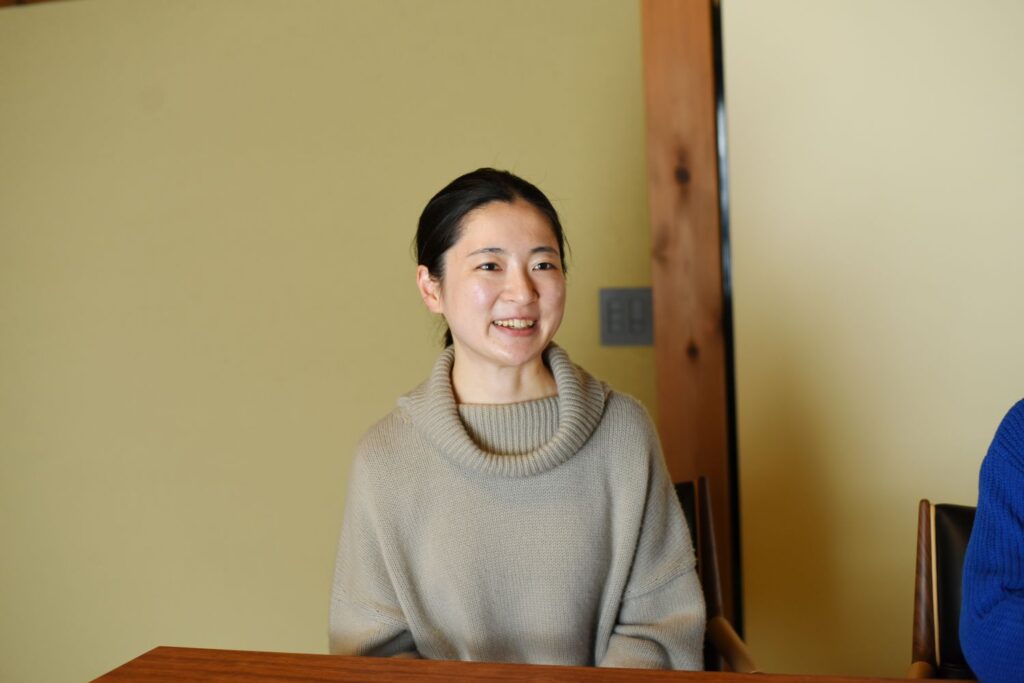
Hosotani Kana, into Saihoji Editorial Department
Editor and writer for the articles on “into Saihoji.” Driven by a desire to make writing a profession, she joined Saihokai Association, an organization to support Saihoji, in 2023. Despite having no prior experience, she devoted herself to the web content’s management, steadily refining her craft. She became a freelancer in 2025, and now works in editing and writing with a focus on culture and craftsmanship in Kyoto.
The answer lies within the reader’s heart
Miyauchi: I believe many people associate Saihoji with the name “Kokedera (Moss Temple).” Yet, I think few truly understand the essence of the temple or the underlying philosophy it holds dear. Saihoji launched its first website in 2017, but before then, it seems they were not actively sharing information with the public.
Hosotani: It had made few advertisements in magazines, making it somewhat of an enigma. Saihoji has maintained an advanced reservation system since 1977, and until a few years ago, reservations could only be made via return postcard, which naturally creates a sense of exclusivity. Because of that, we wanted to explore new ways of introducing more people to Saihoji. We asked Mr. Miyauchi, who has been active as an editor for a long time, to join our project.
Miyauchi: That is right. I believe it was the spring of 2022. An acquaintance within Saihokai Association, the organization to support Saihoji, kindly forged the connection. Hearing that they wanted to launch a media platform at the temple initially surprised me, like “A media at a temple?” It was completely new to me. Yet, as I listened more deeply, their vision gradually began to resonate and make perfect sense.
Hosotani: Could you elaborate on that?
Miyauchi: As Saihoji does not have the patronage of any particular family, it is a considerable challenge to sustain the grounds solely through visitation offerings. Thus, Saihokai established the Saihokai Supporters’ Program to connect the temple with individuals who wish to offer support. Saihokai serves as a support circle to carry Saihoji into future generations while simultaneously aspiring to cultivate a new, profound relationship between people and the temple. I realized that facilitating this connection is the true purpose of “into Saihoji.” Upon reflection, I felt that my experiences could contribute meaningfully to this endeavor.
Hosotani: I see. Even from afar, one can always feel connected to Saihoji. To nurture this enduring connection with readers, it was essential to manage the platform by ourselves.
Hosotani: I joined the editorial department after “into Saihoji” was launched in June 2023, so I am not entirely familiar with how its concept was formed. What kinds of discussions took place back then?
Miyauchi: We exchanged ideas back and forth, exploring every possible word. I believe people in Kyoto possess a profound capacity to experience the world through their five senses and physical presence. Yet, this may not be true for everyone who visits Saihoji. We continually pondered how to articulate the experience of seeing the invisibles, eventually distilling it into concepts like “stripping away the unnecessary” and “living beautifully.”
Hosotani: In that way, the concept was finalized: “A temple media platform for stripping away the unnecessary and living beautifully—a Buddhist magazine to sharpen the senses, see the invisible, and notice the unrealized.” I believe these guiding words have allowed us to operate with unwavering purpose.
Hosotani: Even when conceptualizing content, a core principle naturally emerged: we would not publish articles that simply present information and nothing more. While we previously shared seasonal updates, we reaffirmed our desire for the portal site to be timeless—offering new insights each time it is read. Consequently, we moved timely news to our newsletter. Furthermore, because Saihoji welcomes many international visitors who also become Saihokai supporters, we are dedicating significant effort to our English translations to ensure our thoughts resonate with them deeply.
Miyauchi: In today’s world, efficiency and convenience are highly prized, and the value of content is often judged within the first few seconds. A quick glance at a smartphone reveals an overwhelming flood of information. Yet, our goal is neither to publish articles that rush to a conclusion, nor to create a media platform merely to promote Saihoji. Buddhism offers a philosophy in which perception transforms through connection, teaching us that the true essence of all things is emptiness. Medium, too, shares this nature—the answers arise within the mind of the reader. We hope to create something that gently guides readers toward their own inner realizations.
Hosotani: We are deeply grateful that the number of views has grown steadily since the web portal launched. We frequently receive thoughtful feedback from readers sharing that the articles have reminded them of things easily forgotten in daily life. It brings me immense joy to think that people are reading our articles as a gentle invitation to pause and reflect amidst their busy routines.
Awareness and expansion through connection
Hosotani: Since the web portal was launched in 2023, we have crafted around 80 articles. Do you have a favorite among our projects, Mr. Miyauchi?
Miyauchi: I am quite fond of “The Sounds of Saihoji.” While the concept centers on sharpening the five senses, I believe we crafted something truly captivating by inviting people to experience Saihoji entirely through sound. I have worked in editing for many years, yet “into Saihoji” continually sparks ideas that feel remarkably fresh to me, which is deeply inspiring. How about you, Ms. Hosotani?
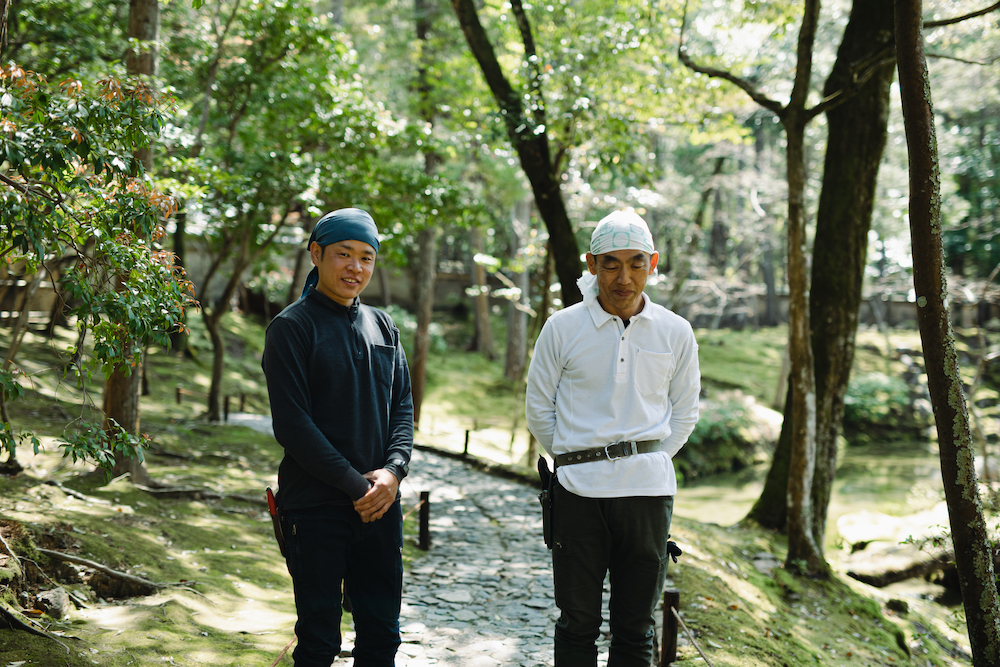
Hosotani: While many projects hold a special place in my heart, the “People Preserving Saihoji for Future Generations” series left a particularly profound impression on me. The words of those who dedicate themselves to the temple each day have a way of gently resonating within me. I had the privilege of conducting the second interviews with Mr. Miyazaki from the gardener team and Mr. Taniguchi, a temple staff. It was a true joy to seamlessly translate the quiet grace I observe in my daily interactions with him directly into the article.
Miyauchi: I find Ms. Hosotani’s personal evolution truly fascinating. Starting with no editorial experience, she has absorbed so much in just a year or two. In my experience, I’ve rarely seen anyone become self-employed in a single year. Especially, when it comes to articles about Buddhism, with their deep abstractions, it is difficult to capture in words.
While there are many gifted writers, Ms. Hosotani has spent more time than anyone immersed at Saihoji—sweeping the grounds and walking the garden. I believe this accumulation of moments shapes her current writing, enabling her to thoughtfully gather words and convey them with clarity.Hosotani: Thank you. Despite my lack of experience, I am deeply grateful for the opportunity to embrace this challenge and for flexible support when I decided to go freelance. Saihoji has also inspired me to reflect daily on my own path and ponder questions such as, “What does it mean to live beautifully?” and “What does it mean to truly face oneself?” While no one simply hands you the answers, listening to the stories of others has guided my reflections, allowing me to learn and grow step by step.
Miyauchi: I have also experienced a shift since becoming involved with the portal site. Above all, I have come to realize profoundly that deep connection with people, or goen, lead to new opportunities. People measure value in many ways—through social status, wealth, and so on. Yet, when I contemplate what true richness means to me, it invariably comes down to these meaningful ties. It may have been a mere chance that this work came my way. However, cherishing that connection, crafting something of genuine quality, and sharing it with our readers has been an immensely valuable experience.
Hosotani: I also believe that if I hadn’t met with you, Mr. Miyauchi, I wouldn’t be the person I am today. Saihoji is a place deeply sustained by connections with people. Simply immersing yourself in that flow naturally broadens your perspective before you even realize it. The individuals featured in our articles have vastly diverse professions and philosophies, yet strangely, there is always a shared resonance. Every time I revisit these pieces, I discover new insights—it is a truly fascinating journey.
A timeless place to return to
Hosotani: Saihoji will celebrate its 1,300th anniversary in 2031. As we approach this momentous milestone, we plan to launch various initiatives here at “into Saihoji.” One such initiative is fostering a deeper connection with the physical experience. My hope is to cultivate a meaningful cycle where reading these articles enriches the actual experience of visiting the temple, while also allowing visitors to fondly reflect upon their day of pilgrimage.
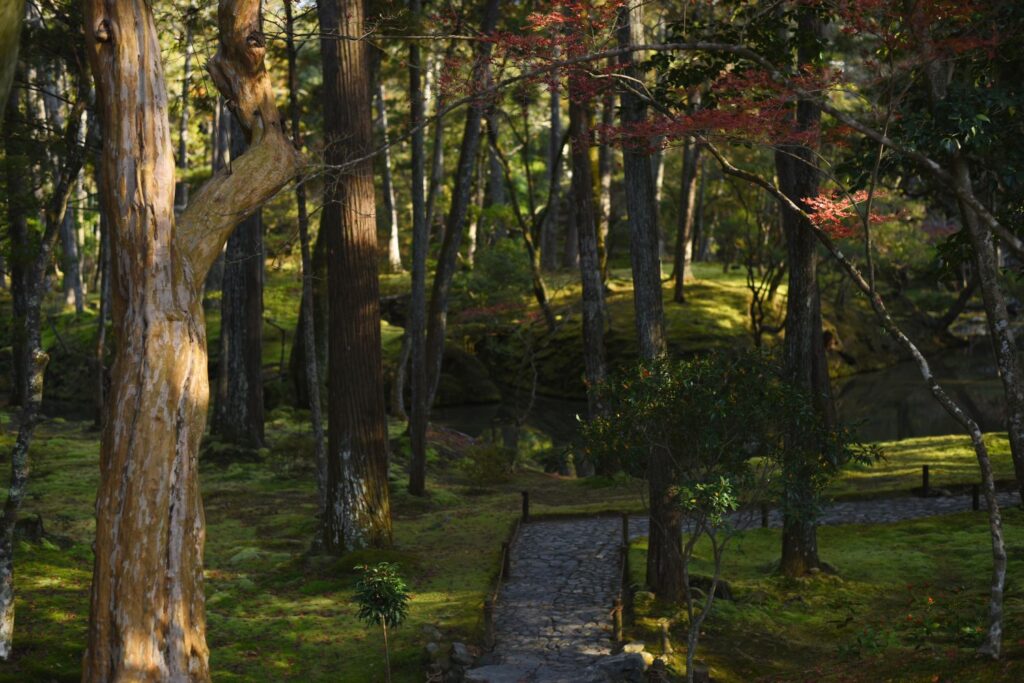
Miyauchi: Indeed. I, too, am reflecting on the future role of Buddhism and temples, seeking ways to convey their essence more profoundly for generations to come. The mountain valleys of Saihoji are home to many kofun, ancient burial mounds, so this land can naturally be understood as a border between life and death—a place historically dedicated to honoring the departed. That is precisely why the presence of a temple here holds such profound meaning. There are still quiet, unused spaces within the temple grounds, and we are currently considering reimagining the pilgrimage route and developing initiatives that allow visitors to feel a deeper harmony with the surrounding nature. I look forward to sharing these endeavors with everyone, step by step.
Hosotani: Lately, we find ourselves frequently using the phrase “full of life” within Saihoji. Beyond merely preserving Saihoji as a cultural asset, we are taking proactive steps, bringing exciting new initiatives to life. To remain an authentic temple that resonates with the modern era, we hold steadfast to our core values while collaborating on diverse ideas. I would be delighted if this vibrant atmosphere could be felt by all.
Miyauchi: A historical records suggest when Muso Kokushi restored the garden he said “Have you seen Saihoji?”. Nestled in nature, a short distance from the heart of Kyoto, the temple drew many visitors seeking inspiration for Zen gardens and architecture. Perhaps the quiet endeavors we are pursuing today are a modern-day revival of that very question: “Have you seen Saihoji?”
Hosotani: When beginning new initiatives, I always ask, “What is the purpose of Saihoji doing this?” I once struggled to define the true essence of Saihoji. Yet, in Buddhism, there is no fixed “self.” Recently, a monk told me, “Those around you will reveal it.” Those words resonated deeply.
“into Saihoji” is precisely where others reveal our essence. Diverse voices share unique perspectives on Saihojie By gathering these reflections, a profound understanding of the temple emerges—something impossible to capture in a single word. I hope readers sense this through our articles.
Saihoji aspires to be a familiar sanctuary where you can quiet your mind through occasional visits. Through “into Saihoji”, we will continue delivering timeless articles that offer a place to return and center yourself whenever reread.
Miyauchi: I believe we live in an era where many harbor anxieties or feel a sense of unfulfillment in life. In such times, Buddhism can be profoundly helpful. I hope you will visit Saihoji to sharpen your senses and discover what you can glean from the experience. I also hope you will read our publication as a guiding companion for that journey. While Buddhism cannot erase anxiety entirely, it is a philosophy that has deeply contemplated how to navigate it. I am confident that both the Saihokai Supporters’ Program and “into Saihoji” will serve as supportive presences in the times ahead.
Editing: Editorial Department
Interview & Text: Oguro Keitaro
Photography: Mochizuki Sayaka
*Photographed with permission
We invite you to join the Saihokai Supporters Program.
Saihokai Supporters’ Program is a new form of membership inviting you to support Saihoji while nurturing a profound connection with it. Supporters receive access to exclusive visiting programs and online content, such as feature articles, designed to deepen your understanding of Saihoji and the teachings of Zen.
Learn more and apply from here.
About Saihokai Association
Saihokai Association, organization behind “into Saihoji” and the Saihokai Supporters’ Program, was established in 2019 to support the endeavors of Saihoji . It has dedicated to sharing the profound value of the temple by managing visitor access, overseeing the supporters’ program, and sharing insightful information. Through these efforts, we strive to invigorate the surrounding area of Saihoji and foster the enduring legacy of traditional Japanese culture.
Up next
Most read
Your Heart
"Busyness"