
2026.2.5
When Art Meets Zen: The “Void” of Saihoji Giving Birth to Something New
Hashimoto Mari & Fujita Ryuko
In 2025, Saihoji began hosting “the Meeting of Art and Zen.” More than just an opportunity to enjoy works of art, it is a new attempt to explore the identity of Saihoji through art. The second installment, to be held in 2026, will focus on the theme of “Saihoji and Modernity.” We spoke with art director Hashimoto Mari and Saihoji Vice Abbot Fujita Ryuko to get their thoughts on this initiative.
| Please find details of “The Meeting of Art and Zen” and registration information at the link below. The Meeting of Art and Zen [2026 February] |
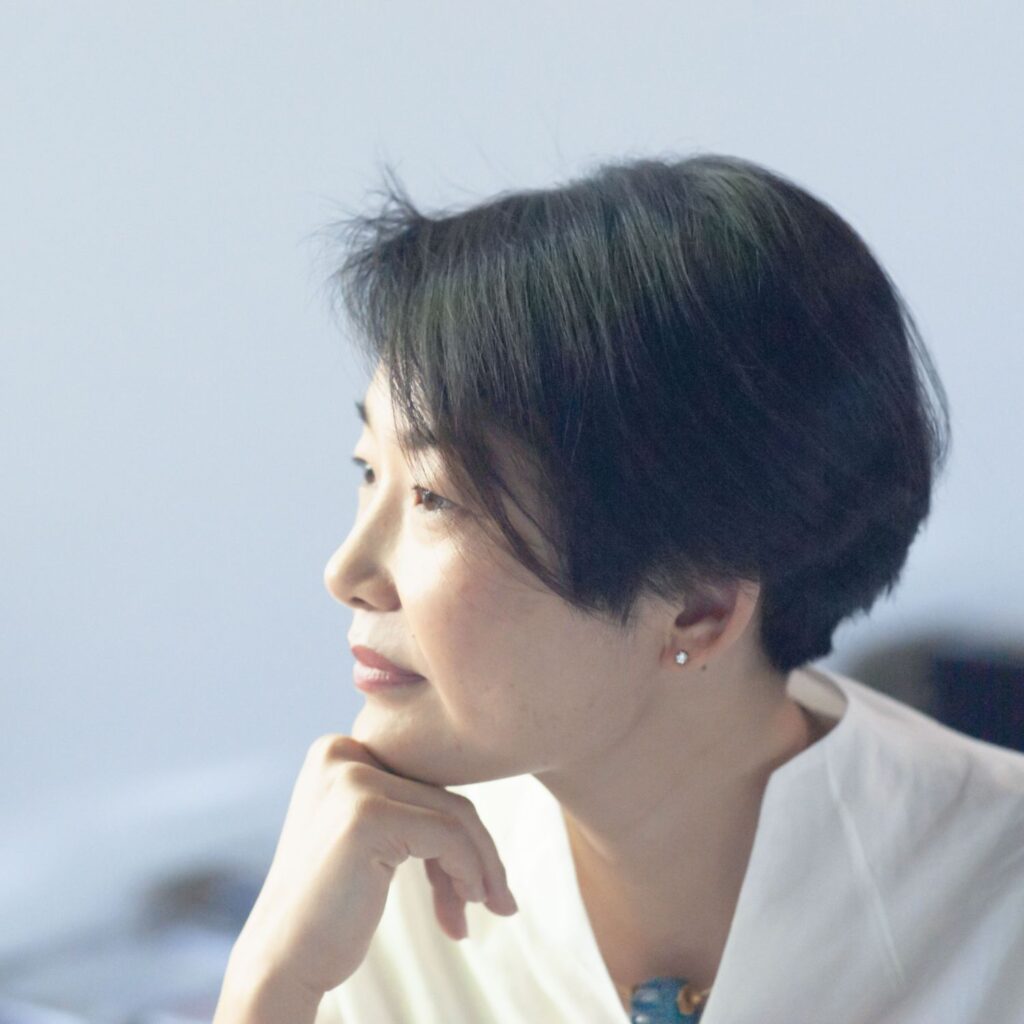
Hashimoto Mari
Curator, director of the Kankitsuzan Art Museum establishment preparation office and visiting professor at Kanazawa Institute of Technology. Ms. Hashimoto’s work covers a broad range of activities, including editing and writing for magazines and other publications, consulting on culture and the arts, and supervising stage productions. She serves on a number of committees, including the External Evaluation Board for National Museums at the Agency for Cultural Affairs. Her exhibition projects include Mappō/Apocalypse: In Search of the Lost Mushakuan Collection (The Hosomi Museum, 2017) and KUMIHIMO: The Art of Japanese Silk Braiding by DOMYO (Japan House, 2021–2023).
Getting to know Saihoji through art
ー This year will mark the second installment of “the Meeting of Art and Zen.” What inspired this initiative?
Fujita: In 2031, Saihoji will celebrate 1,300 years since its founding, and I thought we had a good opportunity to delve a little deeper into what kind of place Saihoji is and reflect on what kind of temple the modern world needs.
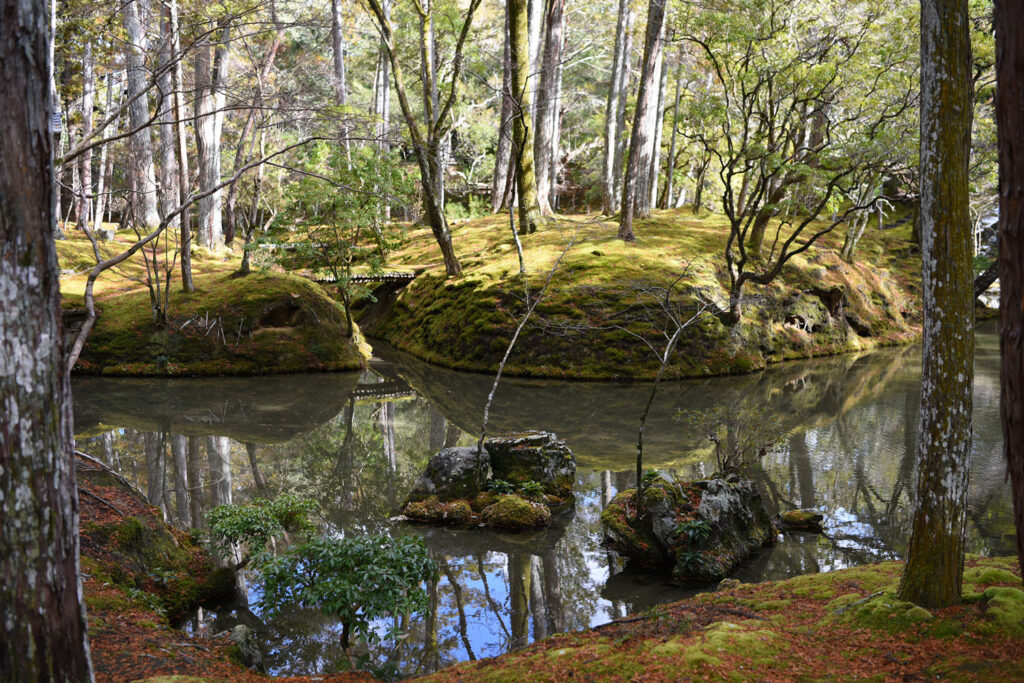
Saihoji is known as both the Moss Temple and a World Heritage site, and many of our visitors come for these reasons, but what I personally experience at Saihoji is the building up of multiple layers of time. This is something I want to share with everybody, but I get the feeling that putting it into words only makes it harder to understand.
However, when I talk to artists, they often seem to pick up on the depth of this place’s history, sensing the traces of people’s lives here. That gave me the idea of using some form of artistic expression to convey what kind of place Saihoji is. With that in mind, we decided to put together the Meeting of Art and Zen with Ms. Hashimoto joining us as art director.
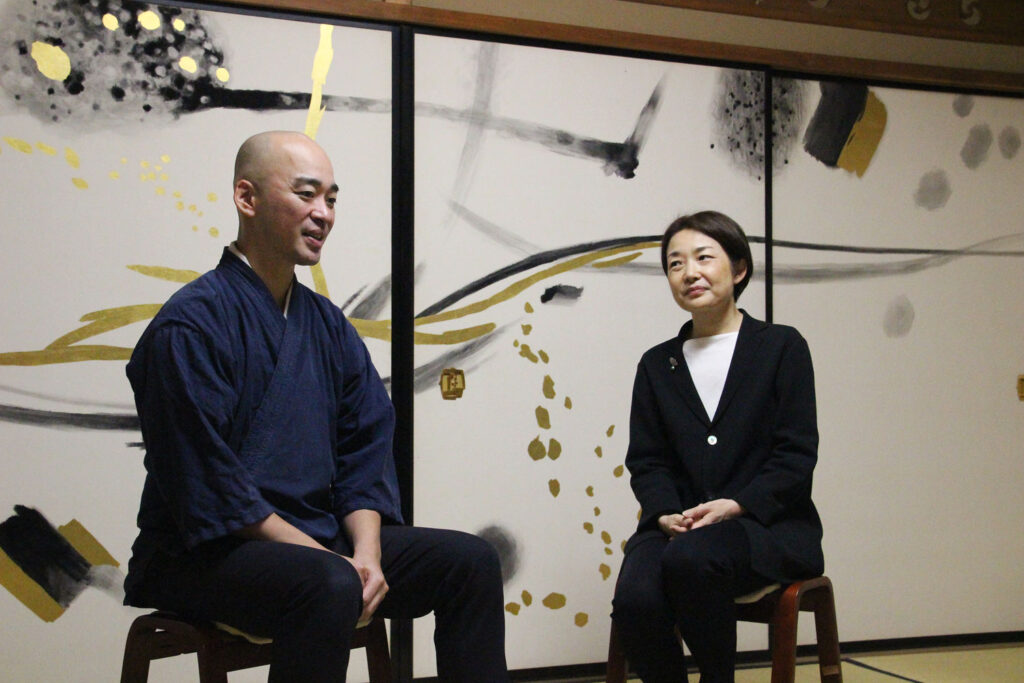
ー What is the significance of holding an art exhibition at a temple?
Hashimoto: Many people today see art as something to encounter in museums. I think it will be an interesting experience for people to discover art in an entirely different setting, and to realize that there are alternative ways for art to exist.
Fujita: Combining art and Buddhism may sound like a novelty, but the two have actually been deeply intertwined for a very long time.
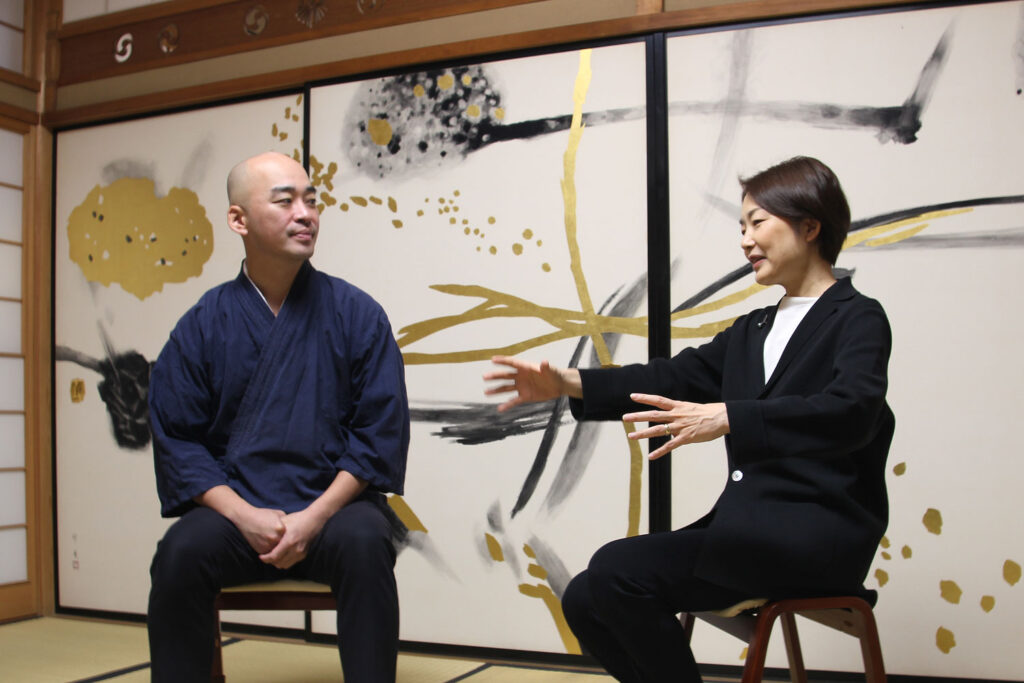
Hashimoto: I agree. During the Muromachi Period (1336–1573), for example, sliding door paintings (fusumae) in temples were painted by the most forward-thinking artists of the time. Temples at the time truly served as the birthplace of new art. Seen in this light, there is nothing new about Saihoji becoming a source of art. It is, rather, a revival of something that had previously been lost.
I am sure that initiatives like this will also have an impact on artists, museums, and the broader art world, so I am looking forward to seeing how their interactions unfold.
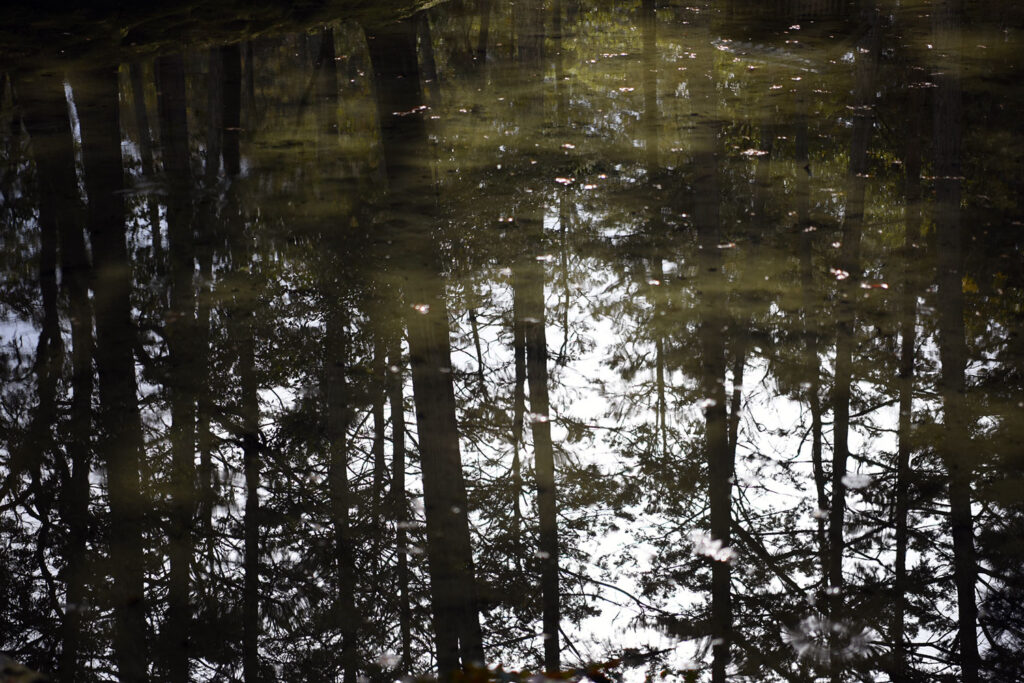
Fujita: I also feel that this initiative will create opportunities for artists to expand their range of expression. In fact, in the previous installment of this event, we asked the artist Kenryou Gu to develop a piece on the theme of the multiple layers of time at Saihoji, and he remarked that if he wanted to properly capture this place, it would be wrong to use the same techniques as before.
He intuitively understood that Saihoji is a place where new things are born. It was here that the great Kukai held Japan’s first life release ceremony (hojo-e), and Muso Kokushi created the first dry landscape garden (karesansui). It is perhaps this very essence of Saihoji that serves as the driving force behind the creation of new things.
Hashimoto: Not only that, but the “void” of Saihoji may also have an impact. Much of Saihoji’s history before the Muromachi Period is almost entirely unknown. It is as if there were a great void in the temple’s history.
Perhaps artists perceive this void and sense that they will not be able to fill it unless they reach into themselves and pull out an entirely new form of expression that did not exist until that very moment. It may be that the appeal of Saihoji lies in the power of that void to extract the possibility of something new from a person’s heart.
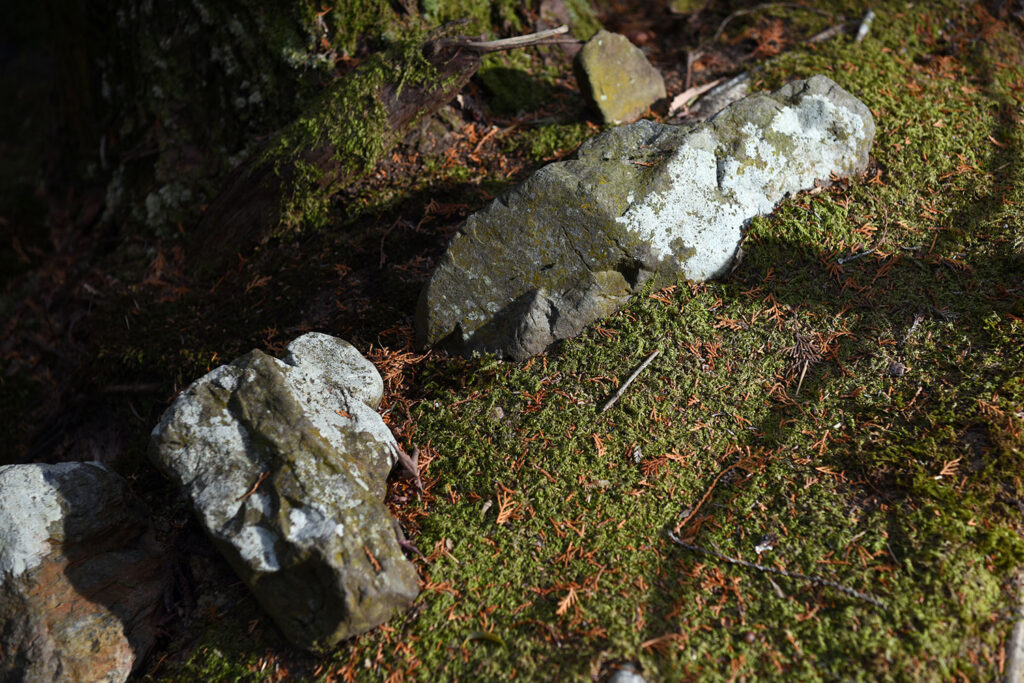
Related to that, the garden was not initially created as a moss garden. It only became that way by happenstance, as the temple fell into decay and became overgrown with moss. I believe that this history contributed to the sense of there being this void in the temple’s past.
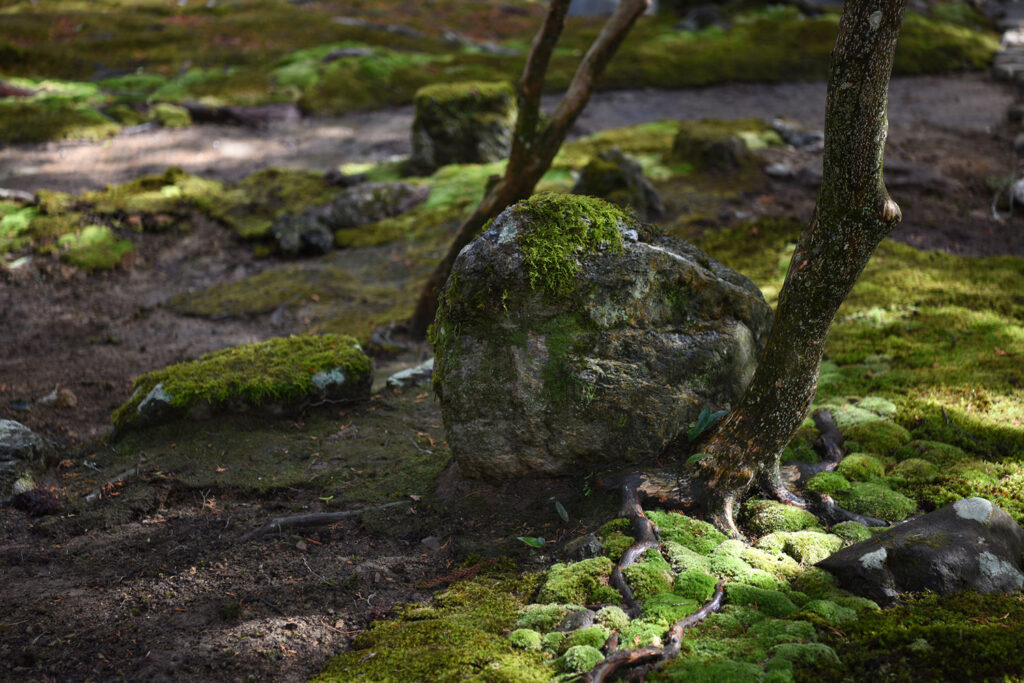
Fujita: Normally, when things fall into disrepair, it is human nature to want to restore them. Accepting reality as-is is entirely in line with the way we think about things at Saihoji. We believe that as long as you maintain a firm grip on the essence of something, it is perfectly fine to allow people the freedom to make changes.
Hashimoto: It’s this kind of flexible openness that will lead to embracing new forms of artistic expression, isn’t it?
If Saihoji were just another Zen temple, or if the only special thing about it were its moss garden, then other temples might produce similar works of art. However, I believe that works created through this attitude of accepting decay can only emerge at Saihoji.
Stunning artwork and a garden returning to nature
ー Please tell us about the theme of this exhibition.
Hashimoto: The theme is “Saihoji in the Modern Times.” Besides places of worship, Buddhist temples are often thought of as places where people go to see old artifacts and valuable treasures, but the modern times have presented temples with a variety of challenges.
Fujita: It began with the movements to abolish Buddhism in the 19th century, followed by war.
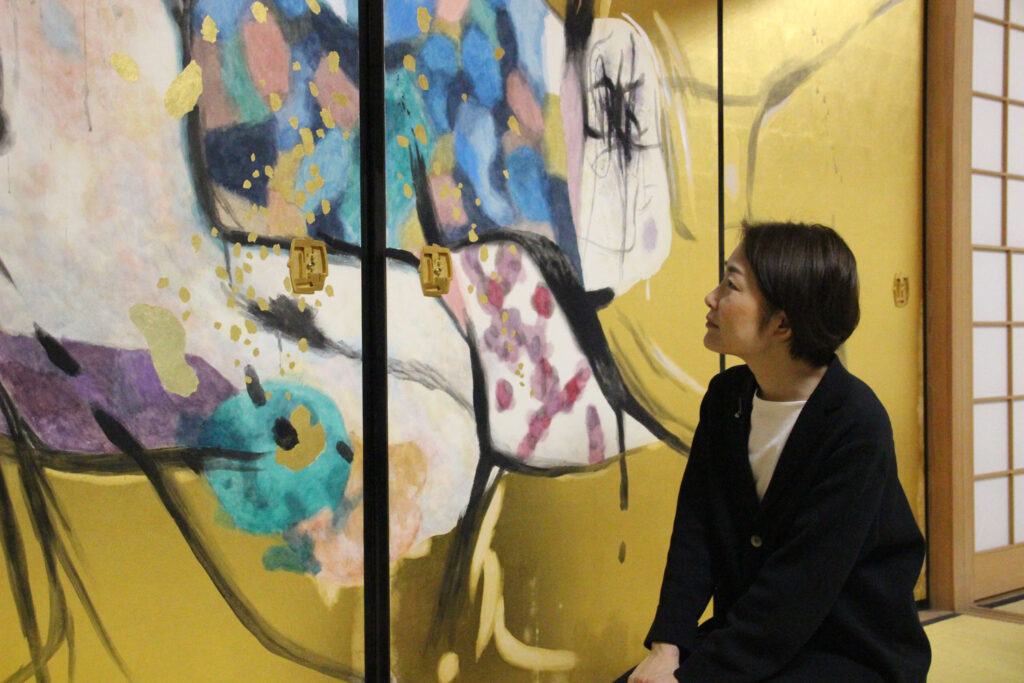
Hashimoto: That is why we ended up choosing modernity as our theme. The exhibition will feature all 104 of Domoto Insho’s sliding door paintings from the temple’s main hall. This is quite significant, because it is usually not possible for museums to put an entire collection on display. Visitors will be able to experience what it feels like to stand in a space that is entirely created by the sliding door paintings. It’s quite different from looking at them inside a glass case.
Domoto Insho presented these paintings as an offering to the main hall, which was built during the Showa Era (1926–1989). The space they create should give an experience that is entirely distinct from the Saihoji of Muso Kokushi’s time in the 14th century. I hope that people will keep these things in mind and experience the multiple layers of time when they visit the exhibition.
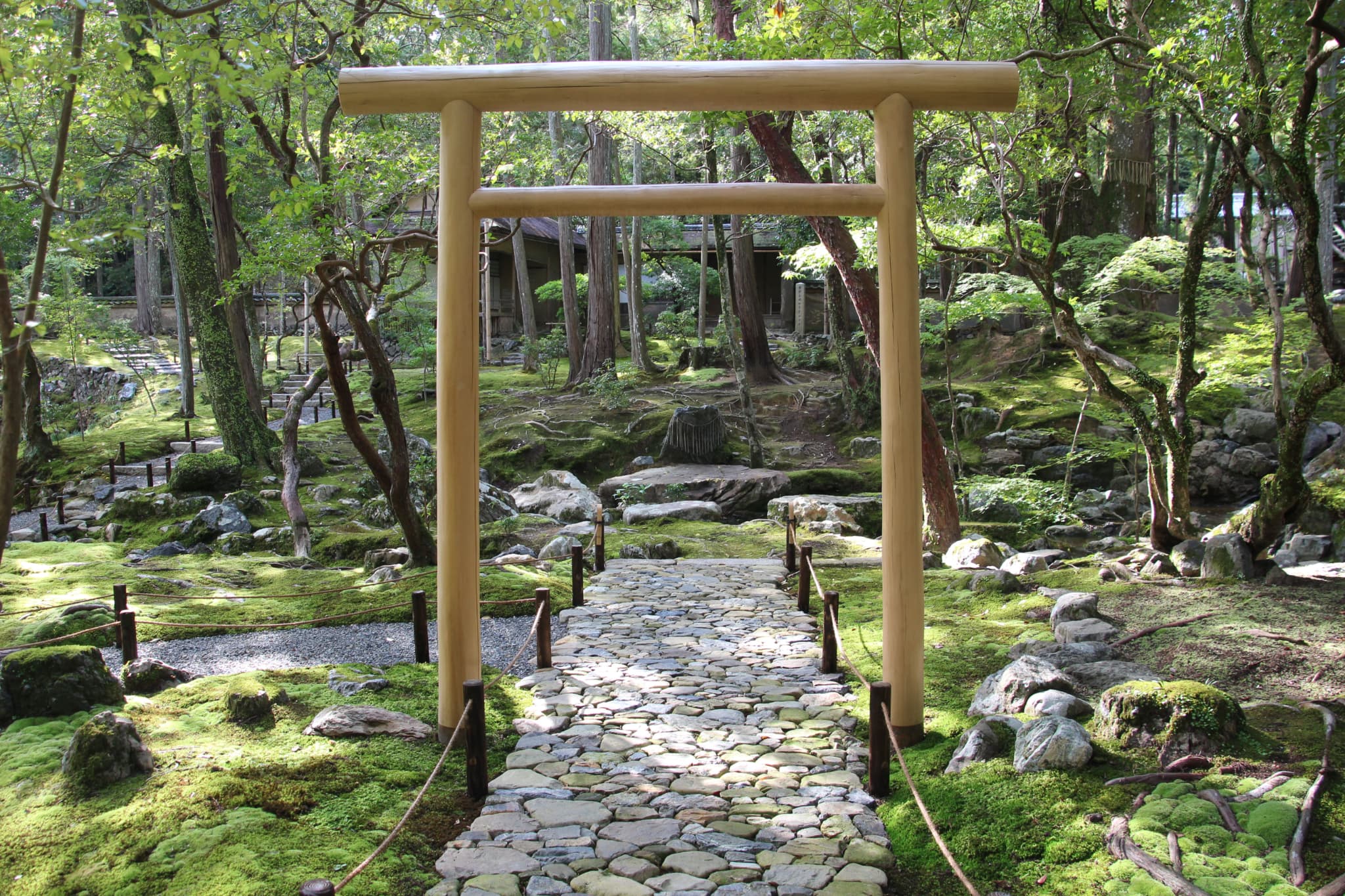
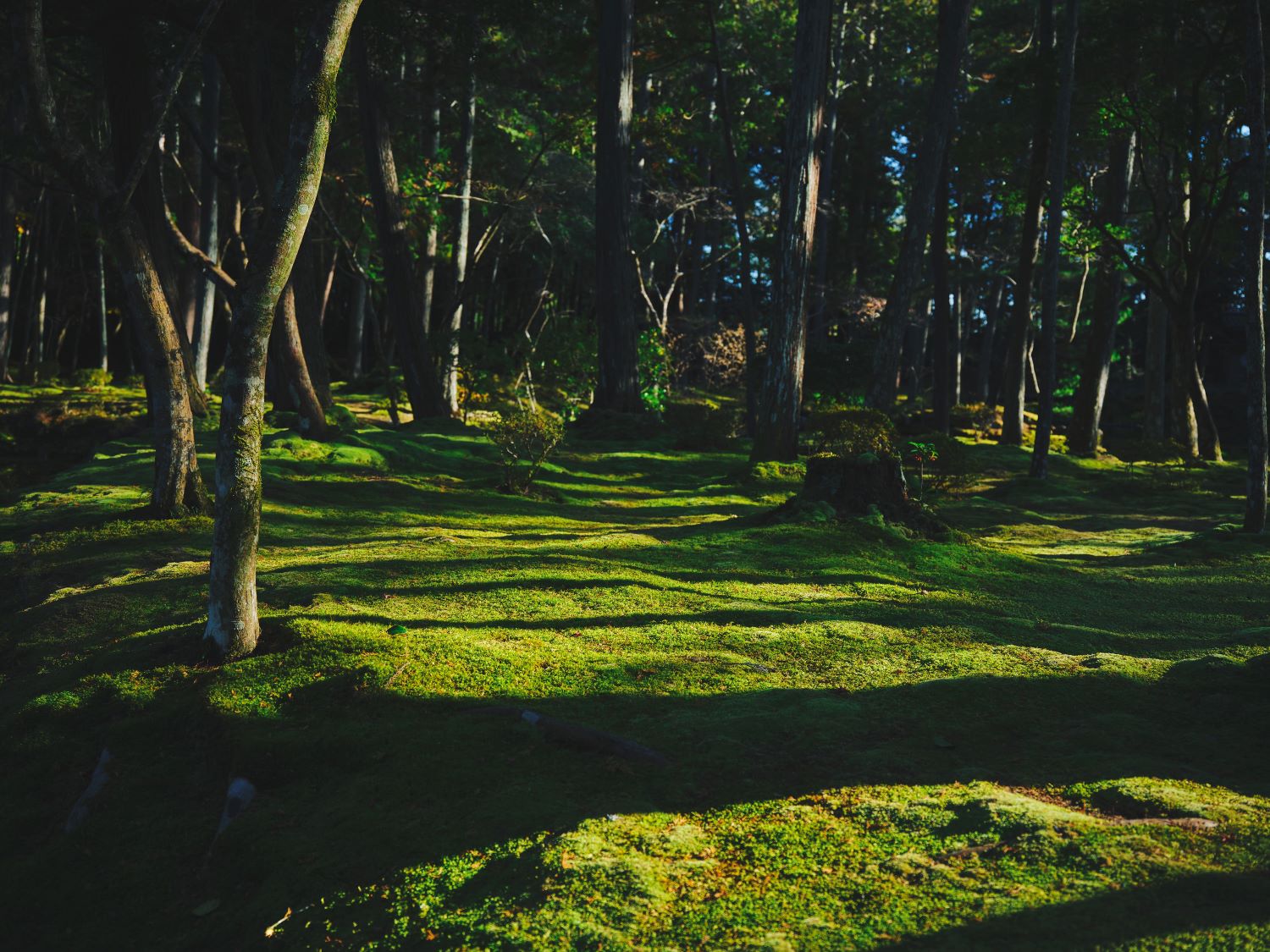
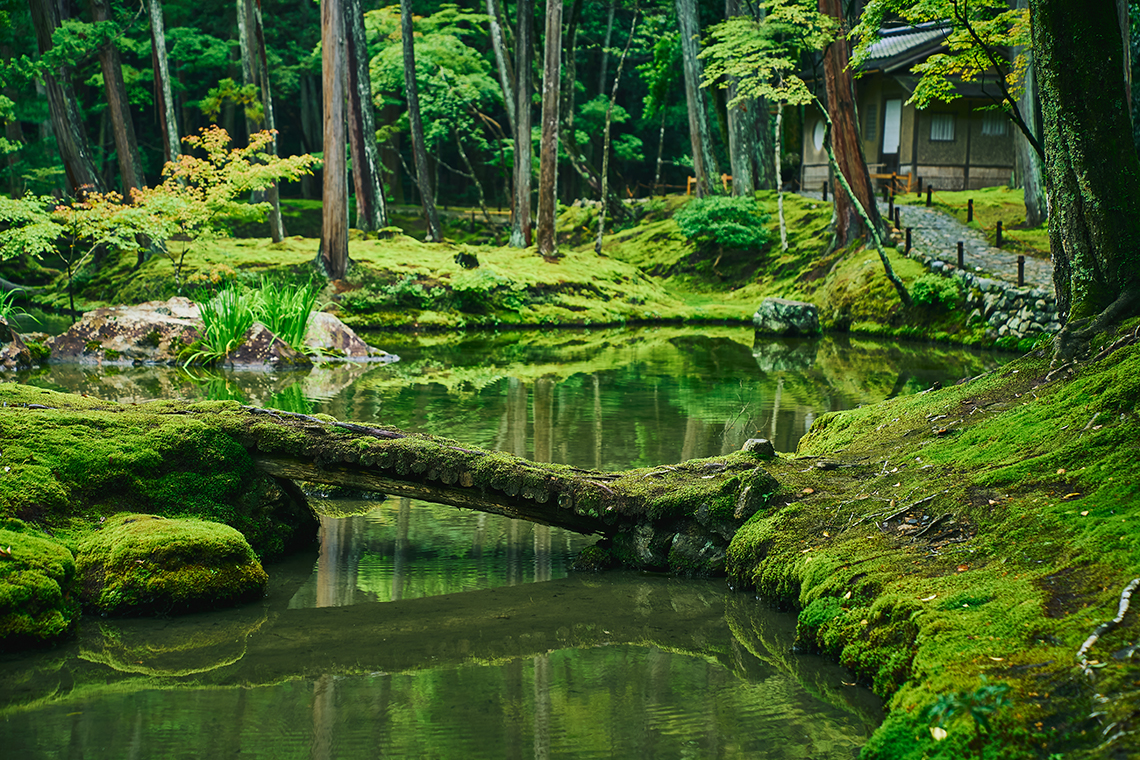
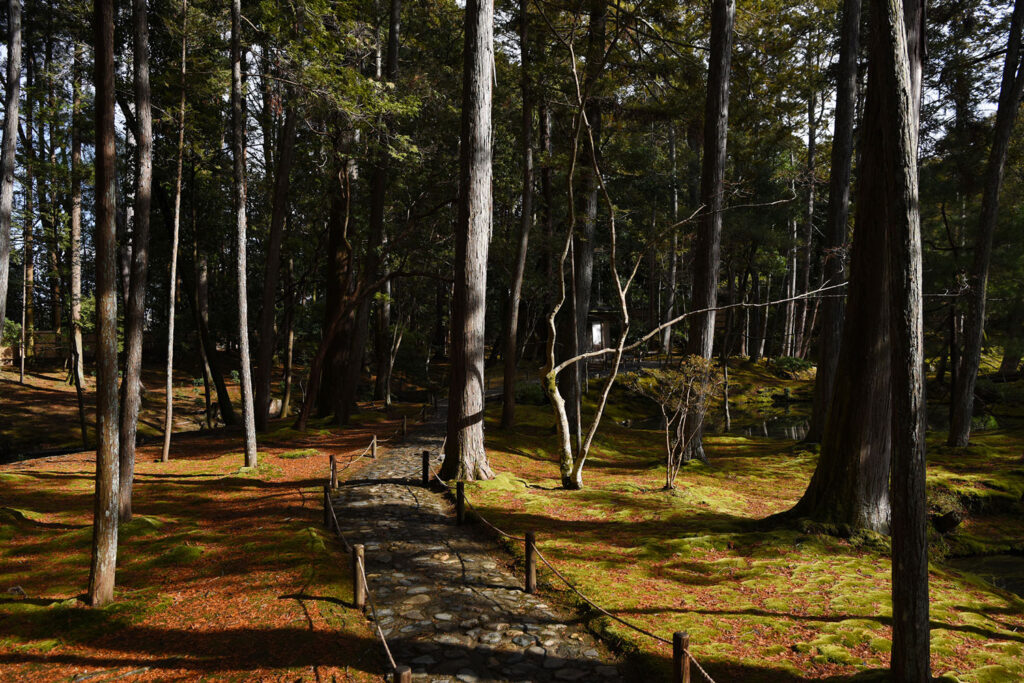
Fujita: Domoto Insho’s paintings are of course impressive, but when we talk about Saihoji in the modern times, the first thing that people think of is the moss-covered garden. Although moss covered the garden during the Edo Period (1603–1867), it was not until the contemporary period that people began to appreciate it. As the world around them industrialized, people came to find value in the sight of this garden returning to nature.
So, the highlight of this event will be the fusion of the garden’s natural beauty with stunningly beautiful art. This event is taking place in February, when we avoid sweeping to allow the garden to rest. I think that will make it appear even more like it is returning to nature.
ー What are your plans for the future of the Meeting of Art and Zen?
Hashimoto: Starting from next fiscal year, we plan to focus on the themes of embodiment and the garden. We hope that our events will open an opportunity for people to reflect on their own physical bodies and think of them in a new light.
Fujita: These days, I find myself thinking more and more with my head, so I believe it’s important for us to realize how much we actually understand through our bodies. Having said that, I actually don’t know yet how we will connect art to these ideas of embodiment and the garden. Do you have any ideas on that front, Ms. Hashimoto?
Hashimoto: Nothing concrete yet, but I’m at least thinking that one thing we will not do is to simply place works of art around the garden.
I want to find a way to express what Saihoji is by shining a light on something that already existed in Saihoji but has so far remained hidden from view.
Fujita: Yes. I would love to get suggestions from everyone on things that they would consider to be quintessentially Saihoji-esque, or if they have any ideas on what they think would be interesting.
Many people seem to have this misconception that Saihoji is a conservative place with high barriers to entry, perhaps because it is a World Heritage site and you have to make reservations to visit. In reality, however, we are challenging ourselves to try new things every day in our quest to become the type of temple that the modern world needs. I hope that our energy and zest for life comes across in the activities of “the Meeting of Art and Zen”, and that men, women, boys, and girls of all ages will feel comfortable coming here. They might even start to say that temples are actually kinda fun.
Face yourself, accepting that there are things you do not know
ー What do you think that Zen and art have in common?
Fujita: I think that both Zen and art accept the fact that there are things we do not know. There are questions to which we have no answers. We live in a day and age where it is becoming difficult to admit that you don’t know something, because you can ask AI any question, and it will immediately give you an answer. I believe Zen and art open up a space within this modern society to gracefully accept the fact that there are things we simply do not know.
Hashimoto: Interesting, isn’t it? The term “narrative” has been trending lately, and it seems that people find things much easier to understand when there’s a story with a clear chain of cause and effect—a narrative thread. People tend to prioritize what makes sense emotionally, even if there is no evidence to support it.
Zen and art, on the other hand, assign value to things that lie outside the bounds of simple cause-and-effect relationships, easy answers, and emotionally satisfying explanations. That is why they can endure in the face of the unknown.
Fujita: That’s exactly right. Placing yourself in a situation that seems like it could be comprehensible and yet remains elusive can liberate you from endlessly circling around your own worries. I believe that this is precisely the purpose of temples in the modern world, and I hope that visitors will savor such moments at Saihoji.
ー Finally, how would you like visitors to spend their time when they come to the Meeting of Art and Zen?
Fujita: This event will take place in February, and in my mind, February is the end of the year. Although the fiscal year ends in March, it is important to take time to stop in February to think about the upcoming year.
Hashimoto: February does indeed have a distinct sense of finality, quite different from New Year’s Eve. Kyoto also enters a quiet period during this time of year. Spending time with works of art and the garden can open up the senses more than usual, allowing people to perceive things they wouldn’t normally notice.
It snowed when we held this event last year. I remember feeling that when you stand before a garden or a work of art, what you see reflected back to you is actually your own image.
The first time I visited Saihoji, the beauty of the garden captivated me, but I didn’t get to a place of dialogue with myself. As I spent time at Saihoji on a quiet snowy day, however, I felt like perhaps I had reached that point.
Fujita: If it were only a question of looking at Domoto Insho’s sliding door paintings or taking in the views of the garden, then there are better times of the year than the dead of winter. And therein lies the reason for holding this event in February.
We already keep a limit on the number of visitors who can come to the temple on any given day, but this event will be even more exclusive, so please come dressed warmly and take this opportunity to spend some time reflecting on yourself.
Please find details of “The Meeting of Art and Zen” and registration information at the link below.
The Meeting of Art and Zen [2026 February]
Interviewed and edited by: MIYAUCHI Toshiki
Written by: HOSOTANI Kana
Photographed by: Editorial Department
*These photos were with permission.
Up next

Most read