
2026.7.20
体露金風 西芳寺第二十七景
ピーター・J・マクミラン
(翻訳家・詩人)
翻訳者であり詩人でもあるピーター・マクミラン氏が、西芳寺の魅力を綴る「体露金風 西芳寺」シリーズ。日本文化への造詣が深いピーター氏の感性と深い洞察が誘う、心の旅。ぜひ原文の美しい響きも、ご堪能ください。
雪と雲のすき間にのぞく歴史 茶と西芳寺の世界
夏の盛り、太陽が苔地に照りつける様子を見ていると、真っ白な雪に覆われていた冬の西芳寺の情景が、遠い昔のように思えてきます。暑さでぐったりとするこの季節に、どうして雪の話をするのか。それは、西芳寺には時が幾重にも折り重なっているからです。一見変わっていないように見える景色は、絶えず新しく生まれ変わってゆく。数百年もの時が過ぎ去っていくのと同様に、季節もまた移ろってゆく。その痕跡が、お庭に残されているのです。あの日に見た雪は、とうに消えてしまいました。しかしその記憶は、今も冷たく、鮮明に、残っています。今回のエッセイでは、その雪の日のことを、ひとさじのアイスクリームとしてお届けします。火照った心を冷まして、この燃えるような暑さのなかにあっても、静けさや冷たさ、そして西芳寺の冬の早朝を包む真っ白な静寂に思いを馳せていただけますように。
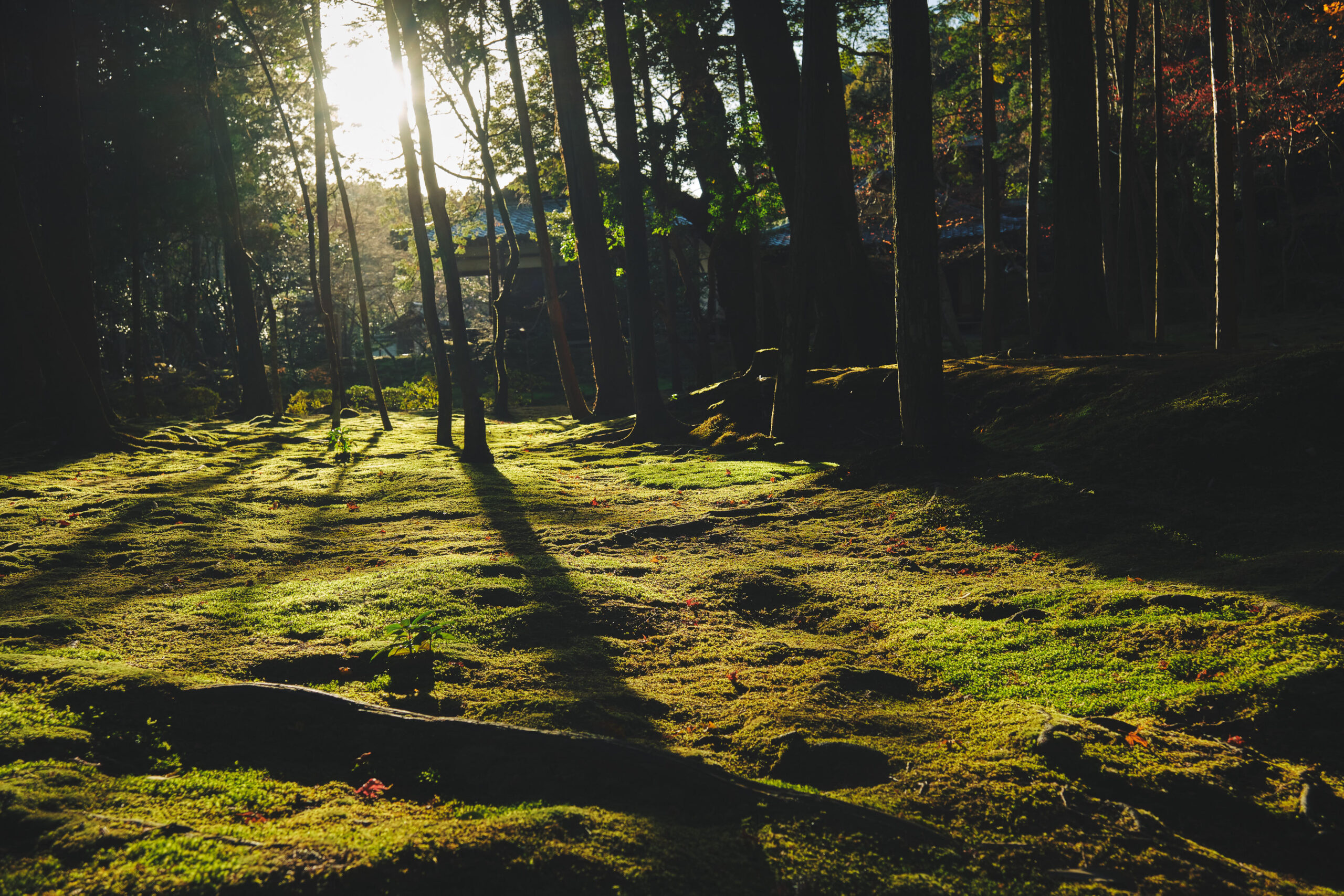
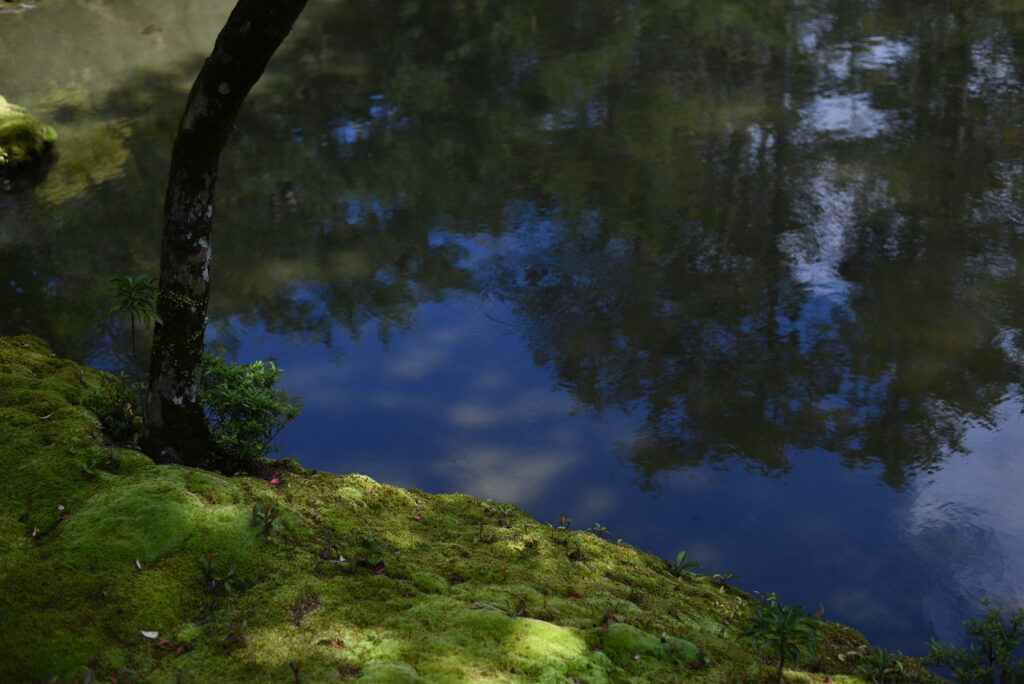
西芳寺に雪が降るのは稀なことで、庭師たちも一度も雪景色を見ることのないまま冬を終えることがあるのだそう。京都の西山に建つこのお寺は、深く青々とした景色で世界に知られており、それはまるで、ただの色というよりは一種の現象のよう。100種を超える苔は、木々の根を、岩を、そして池のふちをフェルト生地のように覆い、谷あいに漂う湿気や霧に育まれてきました。その緑の苔地が雪化粧をし、白く染まったビロードのような姿は、ごく限られた人しか目にできないもの。その美しさに息を飲み、今の私にはあまりにも勿体ない景色のように思い、恐れ多く感じました。
この日は、千利休の末裔であり日本の茶道の第一人者である千宗屋さんが、茶の湯に関する講演会を開いていました。参加者のなかには、茶碗師で知られる樂家の十六代樂吉左衞門さんの姿も。実は、このふたつのお家には深い繋がりがあります。樂焼の創始者である長次郎が利休の命により茶碗をつくったことをきっかけに、名高き樂茶碗の伝統が始まったのです。宗屋さんは、まず長きにわたる西芳寺の歴史に始まり、数世紀にわたる歳月のなかで寺が遂げてきた変遷について、そして西芳寺と茶の繋がりについて話してくださいました。あの美しいお庭のなかで、宗屋さんが話してくださったことを、2回にわたってていねいに振り返ってみたいと思います。今回は西芳寺の歴史について、次回は茶室「湘南亭」についてつづります。
西山エリアは、京都市の中心地よりも先に発展した場所。平安京が当時の中国の都市構造に倣って置かれる以前に、西山は秦氏の国でした。秦氏は秦の始皇帝の末裔とされる貴族で、中国大陸を渡って日本に渡来し、この地に拠点を置きました。そして、松尾大社や日本の国宝第1号として知られる「弥勒菩薩半跏思惟像」のある広隆寺を建てました。また、西山には秦氏と関連の深い聖徳太子の別荘があったとも言われています。
お寺の名前には、かつての西芳寺の立ち位置が示されています。現在の西芳寺には「芳」という字が使われていますが、かつては「西方寺」と書かれており、阿弥陀仏の西方浄土を表すかのような名前です。京都盆地の西の端、都心のざわめきから離れたこの土地に、まさにふさわしいお寺と言えるでしょう。また、1339年に夢想国師がお庭を改修した際には、現在のような陰った苔庭とは、また違った光景を見せていました。松の並ぶお庭には白砂が丁寧に均され、明るく開放的。華やかな殿閣や美しい池があり、まさに浄土を再現したかのような場所であったことでしょう。
そして、その景色もまた朽ちていったのです。
それが、私が2月の肌寒い午後に聞いた、西芳寺の軌跡です。まるで流れゆく雲越しに西芳寺の百景を垣間見るように、雲の切れ目から新たな景色が開けては、また別の情景が浮かび上がってくるようでした。
さて、話は「茶」へと移ります。1591年に千利休が豊臣秀吉に切腹を命じられたのち、千家は一時取り潰し状態となり、茶道具は没収されました。そして、一家は離散。そんな千家の再興を担ったのが、利休の義理の息子である千少庵です。少庵は利休の後妻の連れ子であり、のちに利休の娘と結婚して婿養子となったため、千家と血縁関係はありません。また、偉大な義父の利休と、その後に続く名高い孫の宗旦の陰に隠れて見過ごされがちな存在でもあります。少庵は3年間、遠く北の会津若松で利休の高弟のひとりのところに身を寄せていましたが、秀吉の許しを得たあとは京都に戻り、千家を立て直します。
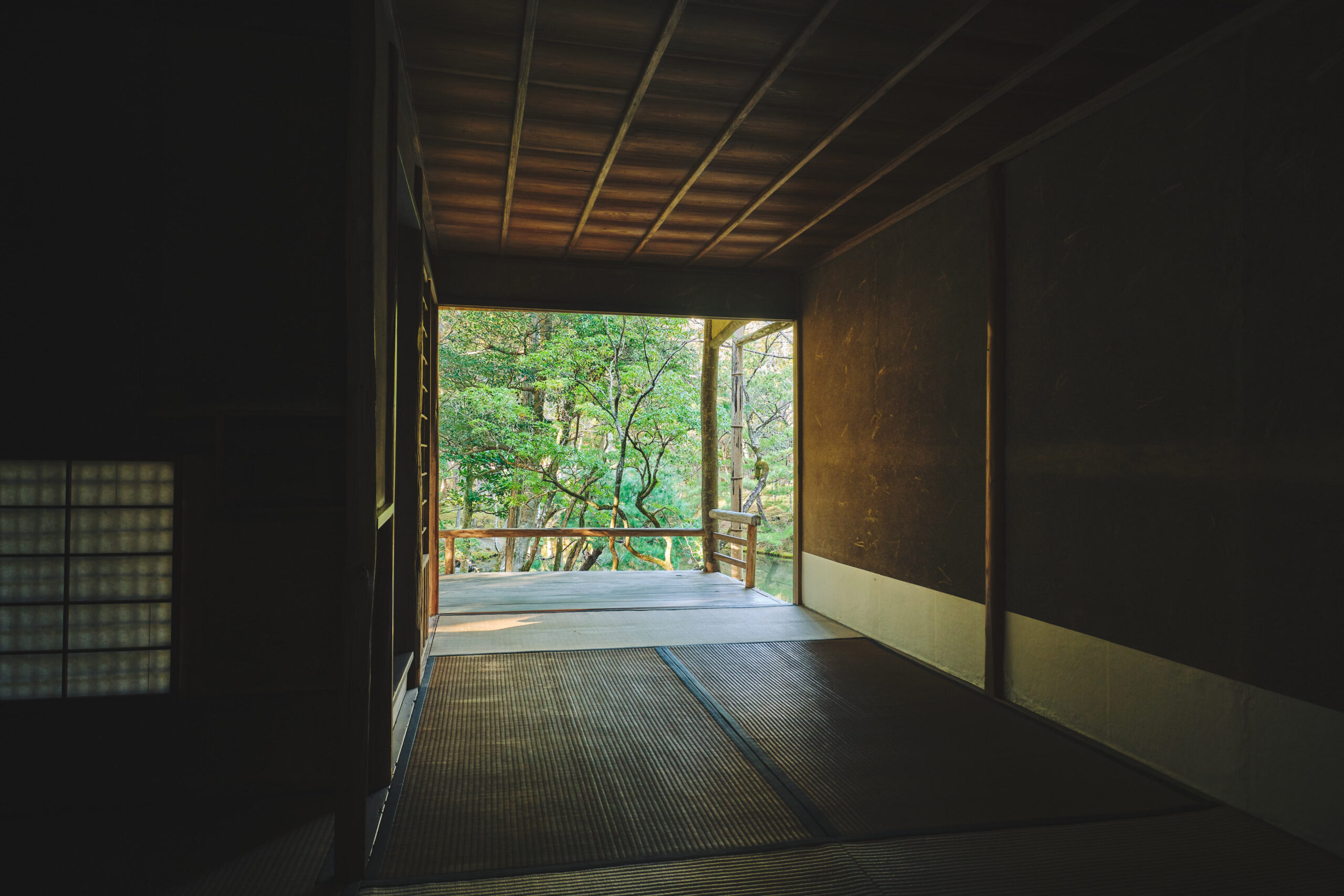
少庵が晩年に隠居していた場所が、西芳寺の茶室「湘南亭」であると言い伝えられています。お庭に静かに佇むこの茶室は重要文化財に指定されています。また、お寺には少庵の木像が守り伝えられているそうですが、同様の像はほかのどこにも、現在の三千家のもとにも残されていないそうです。他にも、西芳寺と千家の強い繋がりを感じさせる伝承があります。表千家の四代家元・江岑宗左の記録によると、利休は西芳寺を参考に自身の庭にも石畳をつくったのですが、それが茶室に石畳が敷かれる最初の例だったそう。この話は茶に関する文献上の記録とこの寺とが交わる、おそらく唯一の接点。ですがここから、利休と少庵も、この苔寺のことを知っていたことが伺えるでしょう。
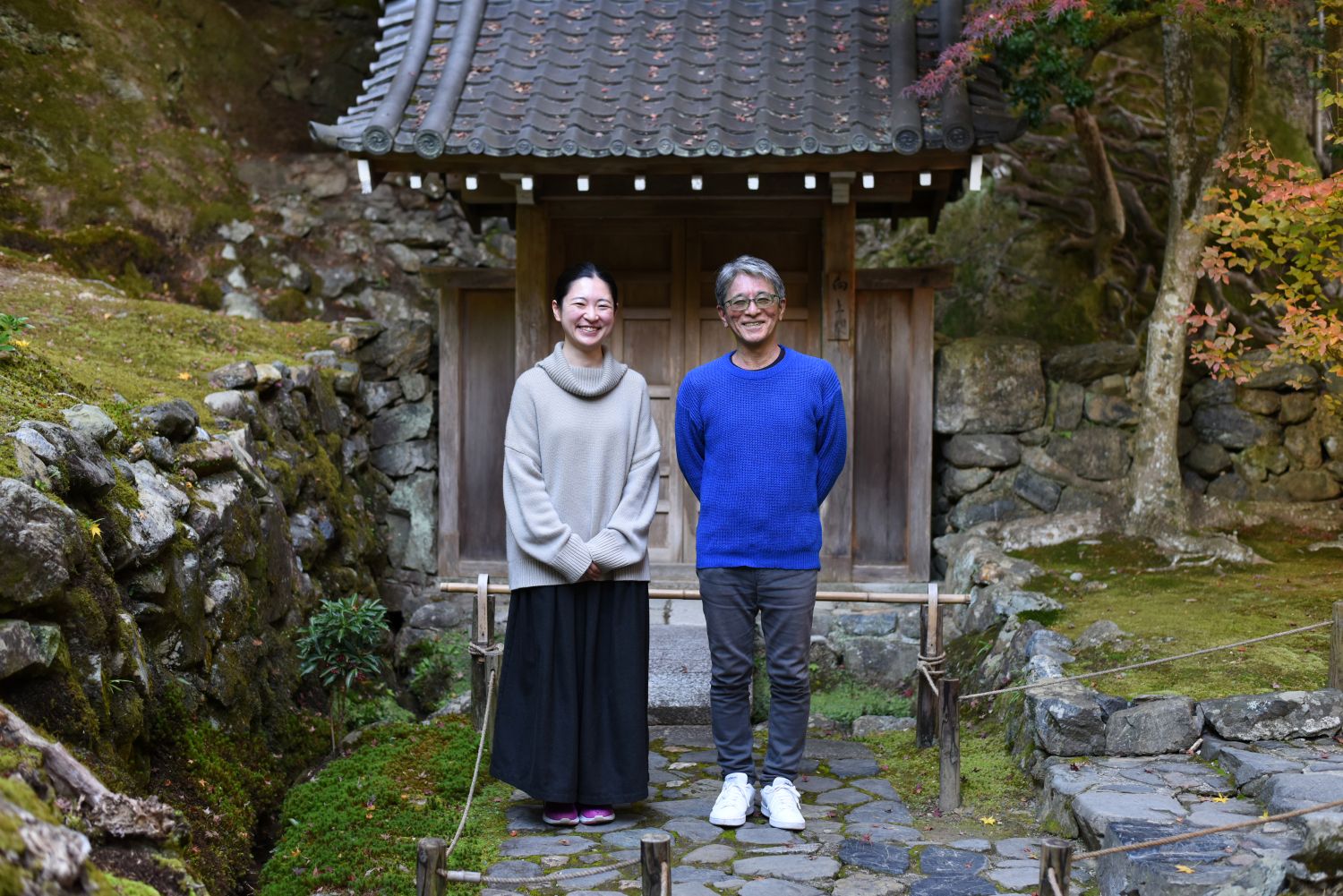
講演のあとは、お庭拝観の時間でした。ありがたいことに、私は宗屋さんと吉左衞門さんと一緒にお庭を歩くことに。雪はすでにほとんど溶けてしまっていたものの、お庭のあちこちにまだらに残っており、まるで『洛中洛外図』に描かれた雲のようでした。京都の街中の様子が、流れる金雲のあいだからのぞいてはまた隠れてゆく、あの情景です。お庭と歴史、そして時間と季節が、流れゆく雲のすき間から垣間見るように、現れては消えてゆくように感じたのです。
その日の西芳寺での時間は、本当に魔法のようでした。西芳寺の歴史を身近に感じられたのはもちろんのこと、利休と長次郎、それぞれの家の血を引くふたりとお庭をまわれたことは、本当に貴重で感動的な体験で、歴史は今も脈々と続き、世代ごとに新しくなっているということ実感しました。
この生きた歴史は、先人たちとの絶えぬ対話によって、そして織物のようにつむがれ続ける時の感覚によって形作られています。その糸を成すのは夏の暑さや冬の寒さ、雅やかな四季の巡り、そして流れる雲のすき間から望む、苔の数だけ存在する何百もの青々とした景色です。
History Through Snow and Clouds —Tea at Saihoji
In the full heat of summer, the sun is scorching the moss and the white snow Saihoji seen in winter feels like something from the distant past; so why write of snow in the swelter of these months? Because the garden has always been a place where time folds in upon itself—it appears unchanged, yet is forever becoming something new, the seasons passing across it as the centuries have passed across it, each leaving its trace behind. Though the snow I saw that day has long since melted, the memory of it remains cool and clear, and I offer it to you as a kind of ice cream for your soul — something to cool your heart, and to let you feel and long for through the burning heat, the peace, the cold, the white stillness of a Saihoji winter morning.
It snows so rarely on the moss that the gardeners of Saihoji can pass whole winters without once seeing it fall. The temple in the western hills of Kyoto is known the world over for a green so deep and so various that it reads less as a color than as a kind of weather — well over a hundred kinds of moss spread like felt across root and rock and the lip of the pond, fed by the damp and the mists that gather and linger in this fold of the valley. To find that green powdered with snow, the velvet gone white, is to catch the garden in a face it shows to the very few. Gasping at its beauty, I wondered what I could possibly have done to deserve to see it.
Today Mr. Sen Sooku — a descendant of Sen no Rikyu, the greatest of all Japanese masters of tea — was to give a talk on the way of tea, and Mr. Raku Kichizaemon, sixteenth-generation head of the Raku line of potters, had come to hear it. The two houses are bound at the root—the first Raku master, Chojiro, made his bowls to Rikyu’s order, and from that encounter the celebrated Raku tea bowls were born. Mr. Sen spoke to us of the long history of Saihoji, of the many changes it has passed through over the centuries, and its connection to tea; in two essays I will try to recover the heart of what he told us, in a setting of great beauty. In this history I trace the long history of Saihoji and in my next essay I will turn to the tea house, Shonantei, itself.
These hills are older than the city that later grew up to the east of them. Long before Heian-kyo was laid out on its Chinese grid, the western valley was the country of the Hata clan — immigrant aristocrats said to have crossed the sea from the continent, their lineage traced, half in legend, all the way to the first emperor of Qin. It was they who founded the great shrine at Matsunoo and the temple at Uzumasa, famous for its Miroku Bosatsu — the meditating Maitreya that became the first of all Japan’s National Treasures. There is even a tradition that says that Saihoji is the site of a villa belonging to the venerable Prince Shotoku.
Its very name remembers an older purpose. Today Saihoji is written with a character meaning “fragrant,” but it began as 西方寺, the Temple of the Western Quarter, built in imitation of the Western Pure Land of Amida — the paradise into which the dying hope to wake. It sat, fittingly, at the far western edge of the Kyoto basin, where the city runs out against the hills; and when Muso Kokushi restored the garden in 1339, it looked very different from the shadowed, moss garden we visit now. It was a garden of white sand and green pines, raked bright and open. With its elegant temple structures and lovely pond, it may have appeared much like a vision of the Pure Land itself.
Then it fell into ruin. ….And so it was that we listened to the magical history of Saihoji on a chilly afternoon in February, as though catching a hundred views of the temple through drifting clouds, each parting to open one prospect upon another.
Then tea came. In 1591 Hideyoshi ordered Rikyu to take his own life; the house of Sen was broken, its utensils confiscated, its people scattered. The man who in the end rebuilt it was Rikyu’s stepson, Shoan. He was not a blood relation, being the child of Rikyu’s second wife, married into the family and easy to overlook between the towering father before him and the famous grandson, Sotan, who came after. For three years Shoan sheltered in the far north, at Aizu, under one of Rikyu’s own disciples, before he was pardoned and allowed back to Kyoto to raise the family anew.
And it is at Saihoji, by tradition, that Shoan kept his retreat. The tea house called the Shonantei, stands in the garden still, a designated Important Cultural Property, and the temple guards a wooden image of Shoan that survives nowhere else — not even among his own descendants. There is a thread of harder evidence, too: Koshin, fourth-generation master of the Omotesenke branch of the Sen family, recorded that Rikyu, taken with the stone pavement here at Saihoji, created his own garden path based on it — the first time, it is said, that such a pavement was laid in a tea garden. It is nearly the only point at which the written memory of tea and this temple touch, and it suggests that father and son alike knew the moss.
After the talk we were given time to walk about the temple, and then I had the privilege of walking the garden in the company of Mr. Sen and Mr. Raku. Much of the snow had already melted, but here and there it still lay scattered across the garden like the clouds in a rakuchū rakugai zu, one of those old screen paintings of “scenes in and around the capital,” where Kyoto comes and goes between drifting bands of gold. Garden and history, time and seasons, seemed to appear and disappear together, like the world glimpsed through gaps in passing clouds.
It was a truly magical day at Saihoji. I felt a deep connection to the history of the temple; but what made the day so rare, and so moving, was to walk in the garden in the company of not one but two living descendants of Rikyu and of Chojiro — for it meant that this history is not finished but living, still being remade anew in every generation.
This living history is informed by an active dialogue with their ancestors, and by a sense of the tapestry of time, of summer heat and winter cold and all the elegant seasons, and hundreds of green views through the drifting clouds, one for each shade of moss.
Peter MacMillan ピーター・J・マクミラン
翻訳家・詩人。株式会社 月の舟(制作・翻訳会社) 代表取締役。
2008年に英訳『百人一首』を出版し、日米で翻訳賞を受賞。2016年9月には英訳『The Tales of Ise』(伊勢物語)、2017年には英訳『One Hundred Poets One Poem Each(新訳)』の2冊がPenguin Booksより出版される。近著に『日本の古典を英語で読む』『英語で味わう万葉集』など著書多数。2019年より朝日新聞にて「星の林に」、2022年より京都新聞にて「不思議の国の和歌ワンダーランド 英語で読む百人一首」を連載。
翻訳:福田安奈
関連記事
おすすめの記事