
2026.2.20
体露金風 西芳寺第二十二景
ピーター・J・マクミラン
(翻訳家・詩人)
翻訳者であり詩人でもあるピーター・マクミラン氏が、西芳寺の魅力を綴る「体露金風 西芳寺」シリーズ。日本文化への造詣が深いピーター氏の感性と深い洞察が誘う、心の旅。ぜひ原文の美しい響きも、ご堪能ください。
うぐいすの歌
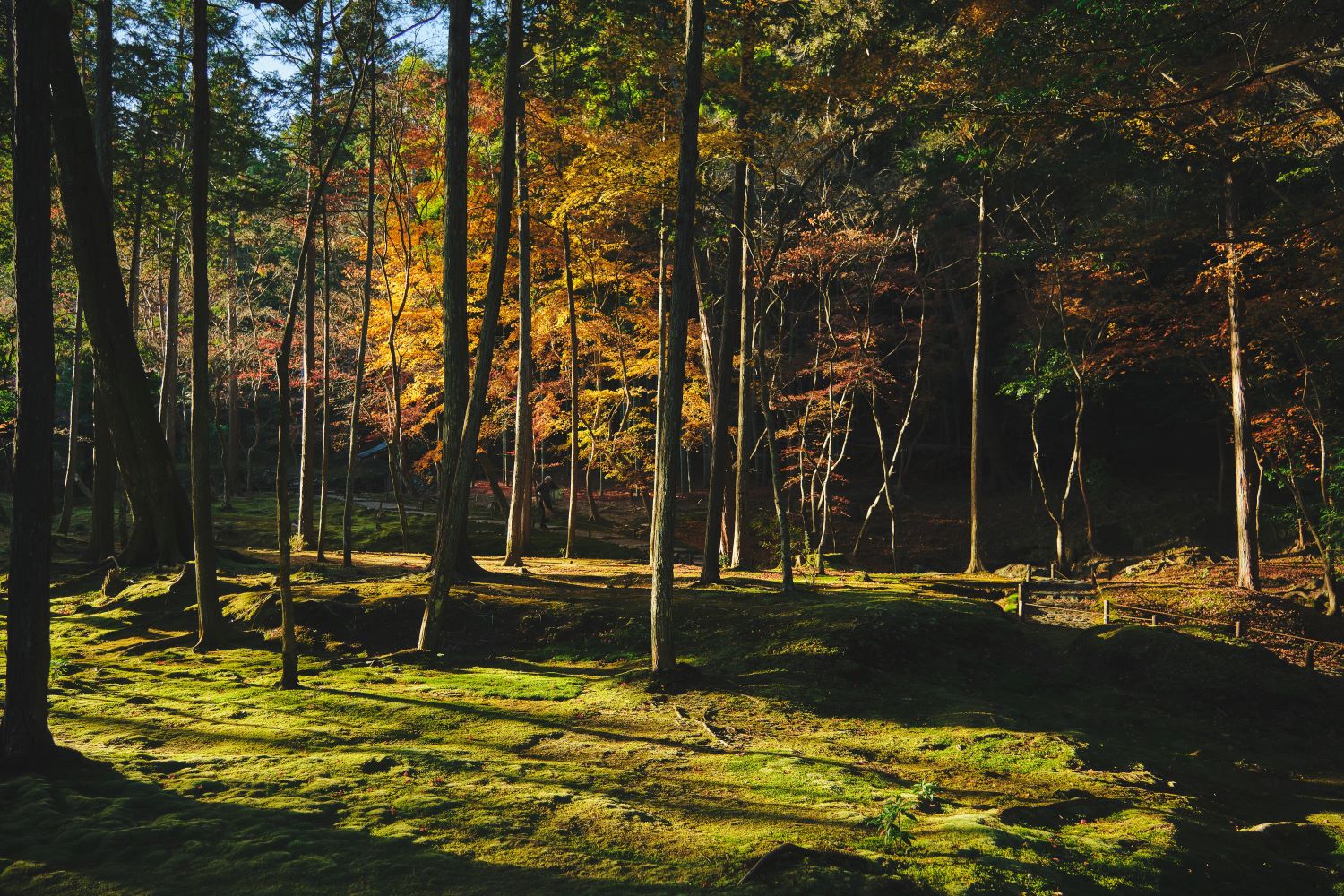
西芳寺のお庭の美しさに見惚れていると、鳥の鳴き声にまで意識が及ばないこともあるでしょう。ですが、そのさえずりも西芳寺ならではの素晴らしい体験のひとつ。お庭には、一年を通して多くの鳥が訪れます。なかでも私は、うぐいすが好きです。とても可愛らしく、大きさはコマドリほど。背中側には小さなオリーブブラウンの羽が、お腹側には灰色がかった羽がついています。いつも隠れているので、その姿を目にするよりも、鳴き声で存在に気づかれることが多い鳥です。毎年春になると、日本各地でうぐいすの美しい歌声が聞こえてきます。
最近ではこう呼ばれることも少なくなりましたが、うぐいすはその美しい歌声から、英語圏では「Japanese nightingale(日本のナイチンゲール)」として知られていました。これは、サヨナキドリというヨーロッパで「ナイチンゲール」と呼ばれる鳥も、美しい声で鳴くためです。違いといえば、サヨナキドリが夜に鳴く一方で、うぐいすは昼間に鳴くことです。
和歌には、うぐいすについて詠んだ歌が数えきれないほどあります。約1200年前に編纂された『万葉集』にまでさかのぼり、さらに1000年以上前の『古今和歌集』でも詠まれています。古くから、うぐいすは春を告げる鳥として知られてきました。そのため、うぐいすは和歌や連歌、俳句などにおいて、春の季語として定着していたのです。うぐいすは春にしか鳴かないと考えられていたので、夏の歌に題材として登場することはありませんでした。ですが実際、その鳴き声は夏の終わりまで聞こえてきます。歌の世界では、初春に咲く梅の花と一緒に詠まれることが多く、花札では梅の花と一緒に描かれています。しかし、あの独特の鳴き声が聞こえてくるのは、たいてい春の終わり頃。梅の花びらが散った頃です。

私の自宅の庭にも毎年、うぐいすが1羽やって来て、2月の頭から中頃に姿を見せます。ですが、昨年の冬はとても寒く、ようやく鳴き声が聞こえたのは、3月1日のことでした。毎年、春にうぐいすがやって来ると喜びで心が躍り、そして、鳴き声が聞こえなくなると、また戻ってくる頃まで少し寂しい気持ちになります。西芳寺でうぐいすの鳴き声を聞くと、もうひとつの我が家にいるかのような気持ちになるのです。
『万葉集』に収められている次の歌は、日本人が1000年以上にわたり、うぐいすの鳴き声を春の訪れを告げる存在として愛でてきたことをよく表しています。
冬ごもり 春さり来れば あしひきの 山にも野にも うぐひす鳴くも
(冬が終わって春が来たので、あしひきの山にも野にも鶯が鳴いている)
うぐいすの声が聞こえてきたとき、ぜひ心に留めていただきたいことがあります。それは、この歌を歌っているのは、1000年以上ものあいだ和歌のなかで尊ばれてきた、奈良や京都のうぐいすの子孫だということです。その祖先は、人間の行いによって庭園が荒廃したときでさえ、歌い続けていました。西芳寺は私たち人間の所有物ではなく、鳥たちの場所でもあるのです。ひいては、美しい歌声を聞かせてくれる鳥たちだけでなく、地球上の生きとし生けるものすべての場所でもあります。西芳寺で鳥の鳴き声を耳にしたとき、この星のすべての生命に想いを馳せいただければ幸いです。動物や鳥や虫、そして、ときには愛することが最も難しい存在である、人間に対してさえも。
The Song of the Bush Warbler
Sometimes visitors to Saihoji are so taken up with the beauty of the garden that they don’t pause to listen to the birdsong which is such a wonderful part of experience of visiting Saihoji. Many birds visit throughout the year and one of my favorite birds is the Japanese bush warbler, known in Japanese as uguisu. It is a very cute bird about the size of a robin with tiny olive brown feathers above and greyish feathers below, but as it always hides itself, it is more often heard than seen. Every spring its beautiful song can be heard throughout most of Japan.
Though this name is no longer commonly used, in the old days the song of the bush warbler was so lovely that it was known in English as the Japanese nightingale, because the European nightingale is famous for its beautiful song. However, the Japanese bush warbler does not sing at night as the European nightingale does.
There are countless poems about the bird in Japanese classical poetry dating from the Man’yōshū which was compiled 1,200 years ago, and Kokin Wakashū, a 1,000 year old collection. Since ancient times the arrival of the bush warbler was known as the harbinger of spring. As such it was one of the fixed topics for seasonal poems on spring in waka poetry, renga and haiku. It was thought to only sing in spring, so it did not appear as a motif in summer poems. But actually, it sings until late summer. In poetry the bush warbler is often associated with the plum blossom, which blooms in early spring, and it appears with plum on Japanese hanafuda or flower playing cards. However, the distinctive song is not usually heard until later in spring, after the plum blossoms have faded.
Every year one comes to my garden, too, and makes its appearance from early February to mid-February but last year the winter was quite cold, and I first heard it on the first of March. When it comes every spring my heart leaps with joy, and when I notice that I no longer hear him, I am sad till he returns. When I hear the bush warbler sing at Saihoji it makes me feel as if it is a home away from home.
The following poem from the oldest extant Japanese poetry collection, the Man’yōshū epitomizes the way in which the Japanese have treasured the song of the bush warbler as a harbinger of spring for over a thousand years:
Winter goes into retreat,
as the spring comes on
and in the mountains
and the fields
bush warblers sing.
When you hear their song, remember that the singers are the actual descendants of bush warblers from Nara and Kyoto that have been celebrated in poems for over one thousand years, and their ancestors never failed to sing even when the garden was abandoned by humans. Saihoji is thus not only ours, but also theirs too! And that is true not only for the birds with beautiful singing voices but for all living things on our planet, so let’s learn from the birdsong of Saihoji the love of all living beings on the planet, animals, birds insects, and—even though sometimes the most difficult to love—even humans, too.
Peter MacMillan ピーター・J・マクミラン
翻訳家・詩人。株式会社 月の舟(制作・翻訳会社) 代表取締役。
2008年に英訳『百人一首』を出版し、日米で翻訳賞を受賞。2016年9月には英訳『The Tales of Ise』(伊勢物語)、2017年には英訳『One Hundred Poets One Poem Each(新訳)』の2冊がPenguin Booksより出版される。近著に『日本の古典を英語で読む』『英語で味わう万葉集』など著書多数。2019年より朝日新聞にて「星の林に」、2022年より京都新聞にて「不思議の国の和歌ワンダーランド 英語で読む百人一首」を連載。

翻訳:福田安奈