
2026.1.20
体露金風 西芳寺第二十一景
ピーター・J・マクミラン
(翻訳家・詩人)
翻訳者であり詩人でもあるピーター・マクミラン氏が、西芳寺の魅力を綴る「体露金風 西芳寺」シリーズ。日本文化への造詣が深いピーター氏の感性と深い洞察が誘う、心の旅。ぜひ原文の美しい響きも、ご堪能ください。
本質だけが残された世界
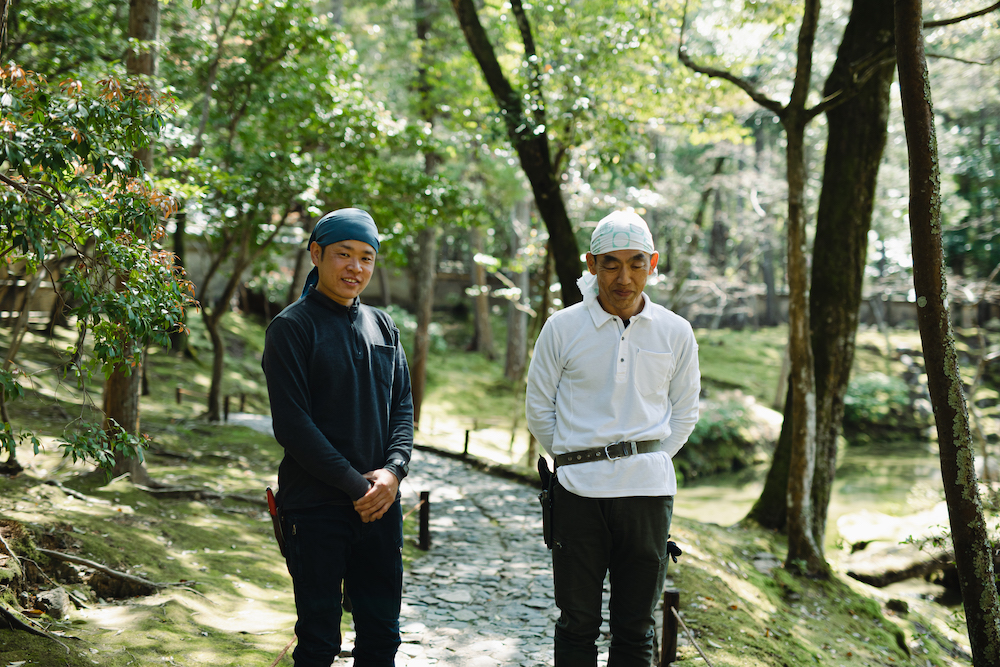
1月中旬の朝。お庭はとても穏やかな空気に包まれ、曇り空の下、やさしい雨が降り注いでいます。木々の葉は散り、お庭からは本堂がよりくっきりと見えます。音が冴えわたり、雨露に輝く石畳を歩くと、自分の足音が響きます。ヒヨドリの鳴き声は鋭く、静寂を貫きます。この灰色の世界では、まるですべてが削ぎ落とされ、お庭の本質的な要素があらわになっているかのようでした。この風景に残されているのは、石、雨、園路、池、苔、そして空です。
1月中旬から2月までは、日々参拝を休止しているそう。こうして苔を休ませ、庭園整備を行っているのです。この時期に来た参拝者の方々は、代わりに本堂をお参りし、堂本印象が描いた壮大な襖絵の数々を鑑賞します。
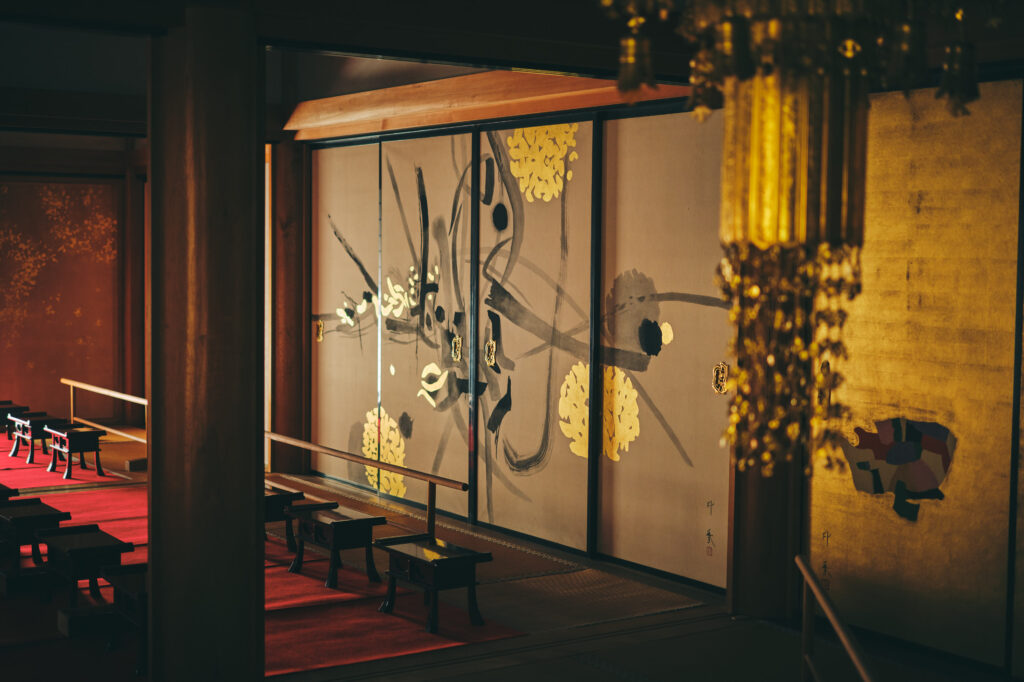
堂本印象は、大正から昭和にかけて京都で活躍した画家です。第二次世界大戦以前の印象は、花鳥画や仏画を手がけ、日本画の伝統様式において確固たる地位を築いていました。しかし戦後は、フランスを中心に広まったアンフォルメルをはじめとした多様な芸術的影響や、彼の深い仏教信仰により、その画風は次第に大きく変化してゆきます。印象は、「真の伝統芸術家は、従来の様式から脱却し、新たな芸術的形式を創らなければならない」と考えていました。そしてこの思想は、抽象絵画への転換として現れたのです。従来の襖絵に描かれていたのは、鳥や花といった伝統的な主題。中国絵画に由来するものでした。そのため当時、印象による抽象的な襖絵は、とても革新的だったのです。
1969年から1970年にかけて描かれた西芳寺の104枚の襖絵も、印象の画家人生における革新的時期に手掛けられた作品のひとつです。1969年5月に本堂が完成してから、襖絵が少しずつ堂内にはめ込まれていったそうです。
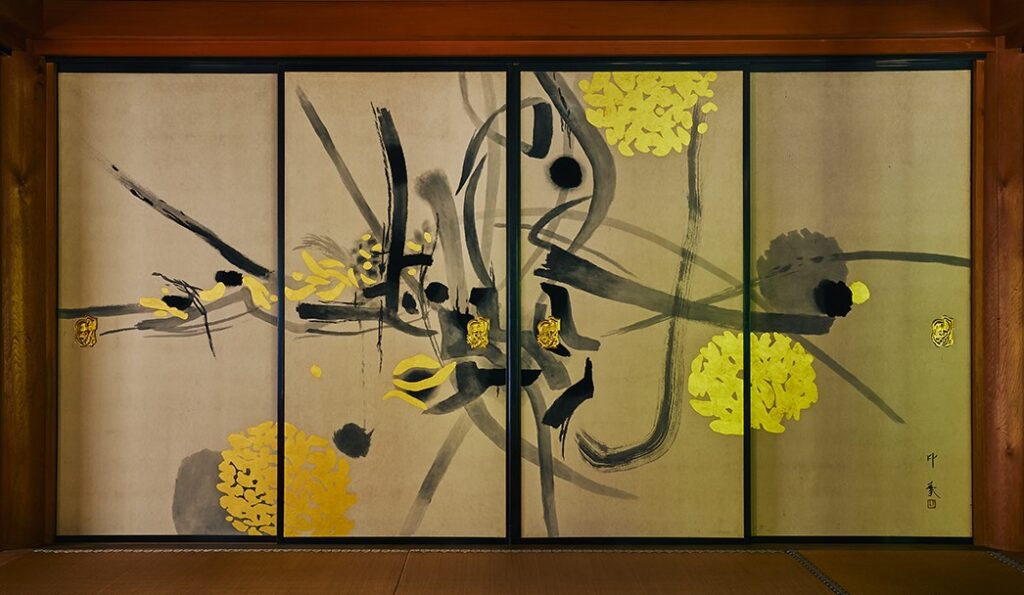
これらの作品のなかで、印象は仏教概念に基づき独自のテーマを編み出していったのです。仏教信仰の表現に抽象画を採用するというアイデアは斬新ですし、当時は戸惑った愛好家も多かったでしょう。ですが今になってみると、印象の襖絵は新鮮かつ独創的に感じられ、西洋の抽象と日本画の技法が見事に融合しているようです。余白や筆致には書道の趣が宿り、鮮やかな色使いからは西洋の抽象の影響がうかがえます。堂本印象美術館の元主任学芸員、山田由希代さんが「堂本印象による襖絵における抽象表現 : 西芳寺西来堂を中心に」で指摘しておられる通り、顔料の色合い、金銀箔、岩絵具、そして墨の濃淡など、印象は日本画独自の技法を巧みに駆使しています。印象の作品は、西洋的伝統の面影を強く残す一方、極めて日本的でもあるのです。西芳寺の襖絵には、印象が抽象画家として到達した絶頂の瞬間が表れています。
「抽象化」という概念には、私たちを取り巻く要素を取り除き、本質だけが残された世界を創造するという意味が含まれています。今朝、印象の作品を見たときに、お庭で見た本質的な要素が残された世界を、そこにも感じました。つまり、石、雨、園路、池、苔、そして空だけが残された世界です。それに加えて、印象はあらゆるもので満ちた豊かで輝かしい宇宙と、何より確かにブッダの存在を描いていました。ですから、彼の襖絵を言葉で表現するのであれば、先ほどのリストに書き加えなければならないことがあります。
石、雨、園路、池、苔、空
そして、仏の光背に包まれた全宇宙です。
ここで、ひとつの問いが浮かびます。
仏教思想が反映された西芳寺のお庭を、どのように表現すればよいのか、と。
私なら、こう答えます。
絵で表現するのも、ひとつの手段。
ですが、皆さんがどのような生き方を選ぶかによっても、それは体現してゆくことができるのです。
Rock, Rain, Path, Pond, Moss, Sky, ….
This morning the garden is very peaceful in a gently falling rain under a grey sky in the middle of January. There is less leaf coverage, and the main hall is more clearly visible from the garden. The sounds are so clear that I can hear my own feet walking along the glistening stone path, and cries of the brown-eared bulbul are sharp and piercing. In this grey world, it seems as if the garden has been reduced to its essential elements, rock, rain, path, pond, moss, sky.
From mid-January to February, the Nichi-nichi sanpai is closed to allow the moss to rest and for the garden to undergo maintenance work. During that time visitors can instead visit the temple’s main hall and see its many magnificent sliding screens painted by Domoto Insho.
Domoto Insho was an artist active in the Kyoto art world during the Taisho and Showa periods. Up to World War II, Domoto had established himself firmly in the tradition of Japanese paintings with his images of flower-and-bird landscapes and Buddhist paintings, but after the war various artistic influences such as the Art Informel, and his deep faith in Buddhism gradually led to profound changes in his style. He believed that the true traditional artist had to break away from tradition to create a new art form. In Domoto’s case the shift was to abstract painting. Screens up to that time generally depicted traditional scenes such as birds and flowers, a genre originally inherited from Chinese painting, so Domoto’s abtract sliding screen paintings were quite revolutionary at the time.
The 104 screen paintings at Saihoji which Domoto painted from 1969 to 1970 were also part of this revolutionary phase of his artistic life, and it is thought that the sliding door paintings were gradually installed after the main hall was completed in May 1969.
In these works, Domoto developed his own themes based on Buddhist concepts. The idea of employing abstraction to express Buddhist belief was a first and must have confused many of his admirers at the time. But looking at them now, they seem fresh and original, a perfect melding of Western abstraction with Japanese techniques. The empty spaces—yohaku— and brush strokes are reminiscent of Japanese calligraphy, while the rich coloring is suggestive of Western abstraction. As Yamada Yukiyo, a former curator at the Domoto Museum has written, Domoto skillfully utilizes materials unique to Japanese painting, such as pigment tones, gold and silver leaf, mineral pigments, ink color variation etc. His works are deeply reminiscent of the Western tradition, but at the same time quintessentially Japanese. The screen paintings at Saihoji Temple express a high pinnacle of Domoto’s development as an abstract painter.
One meaning of abstraction is the elimination of all peripheral elements around us to create a world where all things are reduced to the essential. Looking at Domoto’s works this morning, I can find the same world reduced to essential elements that I saw outside this morning—rock, rain, path, pond, moss, and sky. But Domoto has also added depictions of a rich and splendid universe filled with all things and, above all, the presence of the Buddha. So, to describe his screens, I end with a new list: rock, rain, path, pond, moss, sky, a whole universe imbued with the golden light of the Buddha!
And a question: How would you depict the Saihoji garden as a manifestation of Buddhist thought? Answer: It can be in a painting, too, but it can also be in the way you choose to live your life.
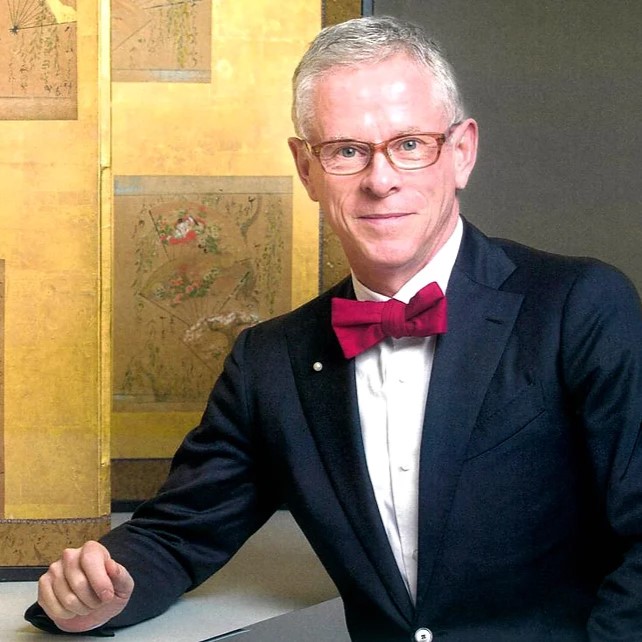
Peter MacMillan ピーター・J・マクミラン
翻訳家・詩人。株式会社 月の舟(制作・翻訳会社) 代表取締役。
2008年に英訳『百人一首』を出版し、日米で翻訳賞を受賞。2016年9月には英訳『The Tales of Ise』(伊勢物語)、2017年には英訳『One Hundred Poets One Poem Each(新訳)』の2冊がPenguin Booksより出版される。近著に『日本の古典を英語で読む』『英語で味わう万葉集』など著書多数。2019年より朝日新聞にて「星の林に」、2022年より京都新聞にて「不思議の国の和歌ワンダーランド 英語で読む百人一首」を連載。
翻訳:福田安奈
関連記事

おすすめの記事