
2026.3.20
体露金風 西芳寺第二十三景
ピーター・J・マクミラン
(翻訳家・詩人)
翻訳者であり詩人でもあるピーター・マクミラン氏が、西芳寺の魅力を綴る「体露金風 西芳寺」シリーズ。日本文化への造詣が深いピーター氏の感性と深い洞察が誘う、心の旅。ぜひ原文の美しい響きも、ご堪能ください。
心に佇む鳥居
西芳寺に着いたのは、8時の美しい朝。お庭の手前にある池で、古代蓮の若葉が広がりはじめていました。蓮は、世界各地で春の再来を象徴する花とされています。お庭では、早くもツツジの花が咲きはじめ、芽吹いたばかりのモミジの葉は、美しくほのかな黄緑に色づいています。
興味深いことに、日本のお寺には、神社の入り口であるはずの鳥居が建っていることがあります。これは、昔からある日本人の宗教的寛容の表れで、神社と寺院の共存を許し、両方の要素が同じ境内に存在することも許容してきました。神社は時に寺院を守る神様を祀るために建てられ、神様は時に仏の化身として捉えられることもありました。仏教と神道の融合的な関係は、日本の宗教の発展において重要な役割を果たしてきたのです。明治時代に入ると、政府によって神仏分離が行われ、多くの寺院が破却されました。それでもなお、仏教と神道は、日本人の日常生活において欠かせない存在であり続けています。
私は今日初めて、影向石の前に新しく建てられた鳥居を目にしました。この場所には、昭和初期まで鳥居が建っていました。影向石には、その神聖さを示す注連縄が掛けられています。ここで重要なのは、崇拝の対象が神様ではなく石であるということ。自然界のすべてのものに神が宿るという、神道の考えが表れています。
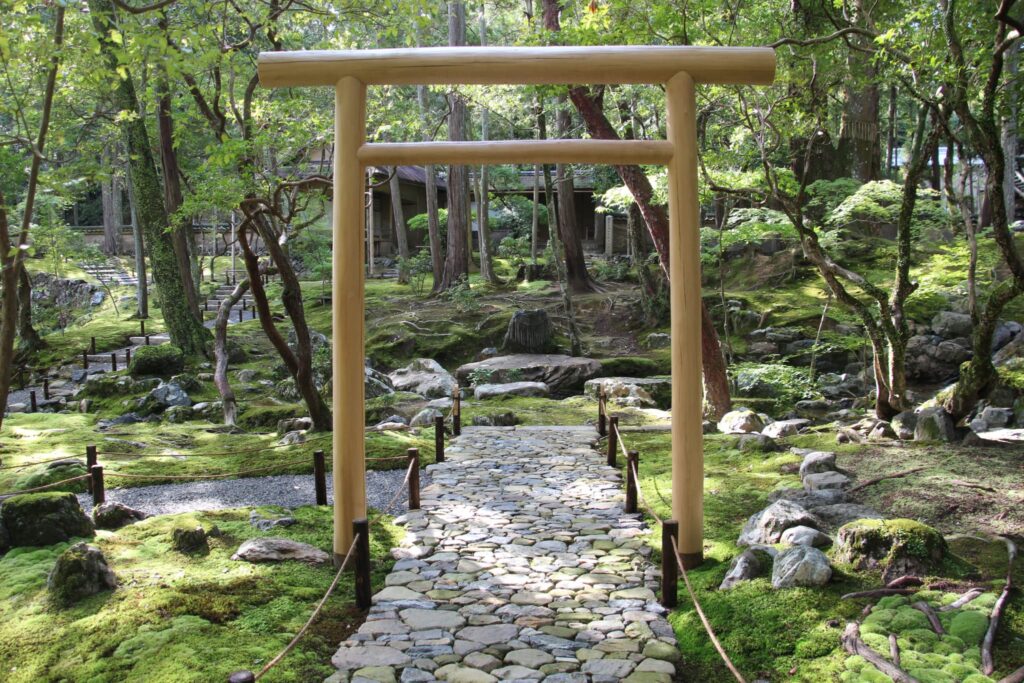
西芳寺は14世紀、荒廃の危機に瀕していました。しかし、当時の松尾大社の宮司である藤原親秀の夢枕に松尾明神が現れ、西芳寺を再建せよとの命を授けます。そこで親秀は夢窓国師を招き、西芳寺は1339年に再興されました。注連縄が掛けられた石のある場所が、松尾明神が現れたとされる場所。そしてこの石こそが、参拝者の方々が手を合わせる神聖な石なのです。
鳥居が設けられたことで、西芳寺で過ごす時間はより豊かなものになるはずです。なぜなら、新たな眺望が生まれただけでなく、神仏習合の雰囲気が再び感じられるようになったのですから。鳥居は本来、神社の入り口に設けられるものですが、夕日ヶ島にある小さなお堂に加え、庭園におけるもうひとつの神道的要素となっています。
この神仏習合という日本独特の宗教観は、異なる宗教同士であっても、歩みよること、そして寛容でいることの大切さを教えてくれます。紛争と宗教的対立が絶えず続く私たちの現代社会において、このことは忘れてはいけません。
鳥居とは、日常生活から神聖な空間への移り変わりを象徴しています。では、私たちの日常にある「神聖な空間」とは何なのでしょうか。その答えを考えてから、この回を締めくくりたいと思います。
伝統的な考えでは、鳥居をくぐることで神聖な空間に足を踏み入れるとされてきました。しかし神道の考えでは、木々や岩、鳥や動物、そして虫に至るまで、自然界のあらゆるものに神が宿るとされています。そう考えると、すべての場所が神聖な空間なのかもしれません。そうした鳥居のイメージを心に大切に抱いていれば、自分の周りに存在するものすべてが神聖なのだと気づくようになるでしょう。あらゆる存在を聖なるものとして受け止め、向き合ってみてください。ちいさなちいさな虫に対してさえもです。そうすればきっと、自分自身の高潔さと尊さにも、目を向けられるようになるでしょう。
The Torii Within Your Heart
It is a beautiful morning at 8 am when I arrive. The young leaves of the ancient lotus blossoms have just begun to spread in the pond in front of the entrance, a symbol of the re-birth of spring all over the world. Inside the entrance, azaleas are beginning to bloom early and the maple leaves which have just emerged are a beautiful pale yellowish green.
Have you ever noticed that sometimes we can see a torii that usually mark the entrance to a shrine in a temple? The reason for this is that Japan has since ancient times a tradition of religious tolerance that permits the co-existence of Shinto shrines and Buddhist temples even in the same precinct. The shrine was sometimes dedicated to the god that protects the temple, and Shinto gods were sometimes interpreted as manifestations of Buddhas. The syncretic relationship between both religions was very important in the development of Japanese religion. In the Meiji Period the government separated both Shinto and Buddhism and many temples were destroyed. However, Buddhism and Shinto are still an integral part of the everyday lives of the Japanese people.
Today it is my first day to see a new torii gate that has been newly erected in front of the sacred stone of the garden (yogoseki stone). There is a shimenawa rope hanging over it to show its sacred nature. Note that the object of worship is not a god but a rock, as Shinto believes that gods come upon all objects in nature.
Saihoji almost went to ruin in the 14th century. But the chief priest of Matsuno’o Taisha Shrine, Fujiwara Chikahide, had a dream in which Matsuno’o Myojin, a deity of Matsuo Taisha shirine, ordered him to restore Saihoji, so he called upon Muso Kokushi to rebuild the temple in 1339. The area around the stone with a rope is where the deity appeared in his dream. And this is the sacred stone that visitors can now pray in front of.
The torii will certainly enrich our experience of Saihoji by providing new vistas but also in restoring a syncretic religious element to the garden. Traditionally used at entrances to Shinto shrines, it joins the tiny shrine on Yuhi ga shima as another Shinto feature in the garden.
The idea of religious tolerance embedded in the syncretic nature of Japanese religion is called shinbutsu shugo (Buddhist and Shinto religious syncretism). It is a very potent reminder of the importance of ecumenism and tolerance in our contemporary world which is filled with conflict and religious strife.
Torri gates symbolically mark the transition from the mundane to the sacred, and I would like to end the essay by thinking of sacred spaces in our lives. The traditional view is that when we walk through the torii gate we are entering sacred spaces, but if we think of the Shinto idea that there is a god in each and every thing in nature, —in trees and rocks and birds and animals and insects —then everywhere is a sacred space. If you treasure this kind of image of the torii in your heart, then you will come to realize that everything around you is sacred and the more you relate to each being as a sacred being—even to the tiniest insect— the more you will also become conscious of the nobility and sacredness of your own existence.
Peter MacMillan ピーター・J・マクミラン
翻訳家・詩人。株式会社 月の舟(制作・翻訳会社) 代表取締役。
2008年に英訳『百人一首』を出版し、日米で翻訳賞を受賞。2016年9月には英訳『The Tales of Ise』(伊勢物語)、2017年には英訳『One Hundred Poets One Poem Each(新訳)』の2冊がPenguin Booksより出版される。近著に『日本の古典を英語で読む』『英語で味わう万葉集』など著書多数。2019年より朝日新聞にて「星の林に」、2022年より京都新聞にて「不思議の国の和歌ワンダーランド 英語で読む百人一首」を連載。
翻訳:福田安奈
関連記事
おすすめの記事